
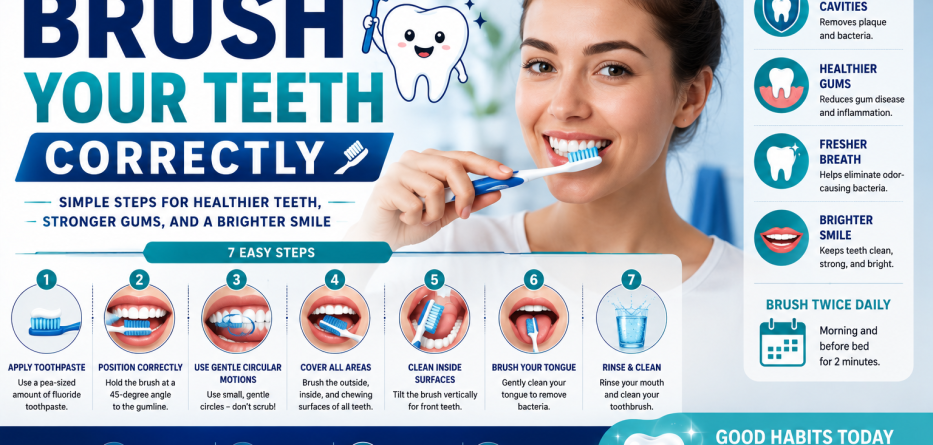
Brushing your teeth is one of the most important habits for maintaining good oral health. Yet, many people brush incorrectly without even realizing it. Using the wrong technique, brushing too hard, or not brushing long enough can leave plaque behind and increase the risk of cavities, gum disease, bad breath, and tooth sensitivity.
Learning how to brush your teeth correctly can significantly improve your oral hygiene and help protect your smile for years to come. Whether you’re teaching your child proper brushing habits or looking to improve your own routine, understanding the right technique is essential.
In this guide, you’ll learn the correct way to brush your teeth, common mistakes to avoid, and expert tips for keeping your teeth and gums healthy.
Why Proper Tooth Brushing Matters
Brushing removes plaque, a sticky film of bacteria that constantly forms on teeth.
If plaque is not removed, it can lead to:
- Tooth decay
- Gum disease
- Bad breath
- Tartar buildup
- Tooth loss
Proper brushing helps maintain:
- Healthy gums
- Strong teeth
- Fresh breath
- A brighter smile
Good brushing habits are the foundation of long-term oral health.
How Often Should You Brush Your Teeth?
Most dentists recommend:
Brush Twice Daily
- Once in the morning
- Once before bedtime
Brush for Two Minutes
Brushing for less than two minutes may leave plaque and bacteria behind.
Many electric toothbrushes include built-in timers to help ensure adequate brushing time.
Choosing the Right Toothbrush
Selecting the right toothbrush can improve brushing effectiveness.
Recommended Features
- Soft bristles
- Comfortable handle
- Appropriate head size
- ADA-approved design
Manual vs Electric Toothbrush
| Feature | Manual Toothbrush | Electric Toothbrush |
|---|---|---|
| Cost | Lower | Higher |
| Ease of Use | Good | Excellent |
| Plaque Removal | Effective | Often More Effective |
| Built-In Timer | No | Usually Yes |
Both can be effective when used properly.
Choosing the Right Toothpaste
Look for toothpaste that contains fluoride.
Benefits of Fluoride
- Strengthens enamel
- Prevents cavities
- Reduces tooth sensitivity
- Supports long-term oral health
Depending on your needs, specialized toothpastes may also help with:
- Whitening
- Sensitivity
- Gum health
- Tartar control
Step-by-Step: How to Brush Your Teeth Correctly
Step 1: Apply the Right Amount of Toothpaste
Use:
- A pea-sized amount for adults
- A rice-sized amount for young children
More toothpaste does not necessarily clean better.
Step 2: Position the Toothbrush Correctly
Hold the toothbrush at approximately a 45-degree angle toward the gumline.
This angle helps remove plaque where teeth and gums meet.
Step 3: Use Gentle Circular Motions
Instead of scrubbing aggressively, use small circular motions.
Focus On
- Outer tooth surfaces
- Inner tooth surfaces
- Chewing surfaces
Gentle brushing protects enamel and gums.
Step 4: Brush Every Section of Your Mouth
Divide your mouth into four sections:
- Upper right
- Upper left
- Lower right
- Lower left
Spend about 30 seconds on each section.
This ensures complete coverage.
Step 5: Don’t Forget the Inside Surfaces
The inner surfaces of front teeth are commonly missed.
Hold the brush vertically and use gentle up-and-down strokes.
Step 6: Brush Your Tongue
Bacteria can accumulate on the tongue and contribute to bad breath.
Benefits of tongue cleaning:
- Fresher breath
- Reduced bacteria
- Improved oral hygiene
Many toothbrushes include tongue cleaners on the back of the brush head.
Step 7: Rinse and Clean Your Toothbrush
After brushing:
- Rinse your mouth thoroughly
- Wash the toothbrush under running water
- Store upright to air-dry
Avoid covering the brush head, which can encourage bacterial growth.
Common Brushing Mistakes to Avoid
Many people unintentionally damage their teeth and gums through improper brushing.
Brushing Too Hard
Excessive pressure can cause:
- Gum recession
- Enamel wear
- Tooth sensitivity
Using a Hard-Bristled Toothbrush
Soft bristles are generally recommended by dentists.
Brushing Too Quickly
A quick 30-second brush is often insufficient.
Skipping the Gumline
Plaque frequently accumulates near the gums.
Forgetting the Tongue
This can contribute to bad breath and bacterial buildup.
Should You Brush Before or After Breakfast?
Dentists generally recommend brushing before breakfast.
Why?
Brushing before eating helps:
- Remove overnight bacteria
- Protect enamel
- Freshen breath
If you brush after consuming acidic foods or drinks, wait at least 30 minutes to avoid enamel damage.
Is Electric Brushing Better?
Electric toothbrushes can be particularly beneficial for:
- Children
- Older adults
- People with braces
- Individuals with limited dexterity
Advantages include:
- Built-in timers
- Consistent motion
- Better plaque removal
- Pressure sensors
However, proper technique remains more important than the type of toothbrush used.
The Importance of Flossing
Brushing alone cannot reach all areas between teeth.
Why Floss?
Flossing helps remove:
- Food particles
- Plaque between teeth
- Bacteria below the gumline
Dentists recommend flossing at least once daily.
Additional Oral Hygiene Tips
For optimal oral health:
Use mouthwash.
Antibacterial mouthwash may help reduce bacteria and freshen breath.
Stay Hydrated
Water helps wash away food particles and supports saliva production.
Replace Your Toothbrush Regularly
Replace your toothbrush or brush head every:
- Three to four months
- Sooner if bristles become frayed
Visit Your Dentist Regularly
Professional cleanings and exams help prevent serious dental problems.
Signs You May Not Be Brushing Properly
Watch for:
- Persistent bad breath
- Bleeding gums
- Plaque buildup
- Tooth sensitivity
- Frequent cavities
These symptoms may indicate a need to improve your brushing technique.
Frequently Asked Questions
How long should I brush my teeth?
Dentists recommend brushing for two minutes twice daily.
Should I brush my tongue?
Yes. Tongue cleaning helps reduce bacteria and improve breath freshness.
Is it bad to brush too hard?
Yes. Brushing aggressively can damage enamel and cause gum recession.
How often should I replace my toothbrush?
Every three to four months or when bristles become worn.
Is an electric toothbrush better than a manual one?
Both can be effective, but electric toothbrushes often make proper brushing easier and more consistent.
Conclusion
Knowing how to brush your teeth correctly is one of the simplest yet most effective ways to protect your oral health. Proper brushing removes plaque, prevents cavities, reduces gum disease risk, and helps maintain a bright, healthy smile.
By using the right toothbrush, following proper brushing techniques, and maintaining a consistent oral hygiene routine, you can significantly improve your dental health and avoid many common oral health problems. Remember, brushing correctly for just two minutes twice a day can make a lifetime of difference for your smile.
