
Cavities are one of the most common dental problems affecting people of all ages. Also known as dental caries or tooth decay, cavities occur when harmful bacteria in the mouth produce acids that gradually erode tooth enamel. Left untreated, cavities can lead to pain, infections, tooth loss, and costly dental procedures.
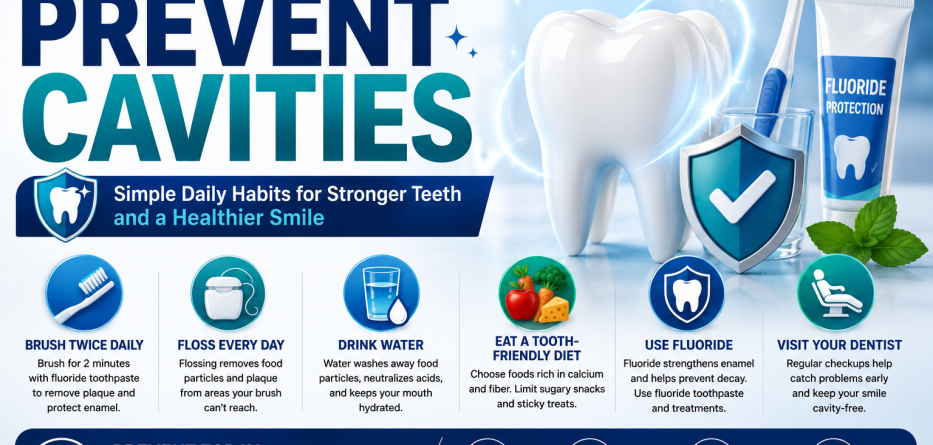
The good news is that cavities are largely preventable. By adopting proper oral hygiene habits, making smart dietary choices, and visiting your dentist regularly, you can significantly reduce your risk of tooth decay and maintain a healthy smile for years to come.
In this guide, we’ll explain what causes cavities, how they develop, and the most effective ways to prevent them.
What Are Cavities?
A cavity is a permanently damaged area in a tooth that develops into a small hole or opening.
Cavities form when:
- Plaque accumulates on teeth
- Oral bacteria feed on sugars
- Acids attack tooth enamel
- Enamel weakens and breaks down
Without treatment, decay can spread deeper into the tooth and affect sensitive inner structures.
What Causes Cavities?
Several factors contribute to cavity formation.
Common Causes
- Poor oral hygiene
- Frequent consumption of sugary foods
- Sugary drinks
- Dry mouth
- Inadequate fluoride exposure
- Poor diet
- Acidic foods and beverages
Understanding these risk factors is the first step toward prevention.
How Cavities Develop
The cavity formation process typically occurs in stages.
Stage 1: Plaque Formation
Plaque is a sticky film of bacteria that constantly forms on teeth.
Stage 2: Acid Production
When bacteria consume sugars and starches, they produce acids.
Stage 3: Enamel Demineralization
These acids begin removing minerals from the tooth surface.
Stage 4: Cavity Formation
Over time, repeated acid attacks create permanent damage in the enamel.
1. Brush Your Teeth Twice Daily
Brushing is the foundation of cavity prevention.
Dentists recommend brushing:
- Twice daily
- For at least two minutes
- Using fluoride toothpaste
Proper Brushing Tips
- Use a soft-bristled toothbrush.
- Brush all tooth surfaces.
- Replace your toothbrush every 3–4 months.
- Brush gently to avoid enamel damage.
Consistent brushing removes plaque before it can cause decay.
2. Use Fluoride Toothpaste
Fluoride is one of the most effective tools for preventing cavities.
Benefits of Fluoride
- Strengthens enamel
- Reverses early decay
- Reduces acid damage
- Protects teeth against cavities
Most dentists recommend fluoride toothpaste for both children and adults.
3. Floss Every Day
Brushing alone cannot reach all areas between teeth.
Flossing helps remove:
- Plaque
- Food particles
- Bacteria
Why Flossing Matters
Many cavities develop between teeth where toothbrush bristles cannot reach.
Daily flossing significantly reduces this risk.
4. Limit Sugary Foods and Drinks
Sugar is one of the primary contributors to tooth decay.
Common sources include:
- Candy
- Soft drinks
- Energy drinks
- Cookies
- Cakes
- Sweetened coffee beverages
Smart Alternatives
Choose:
- Water
- Fresh fruits
- Cheese
- Nuts
- Yogurt
Reducing sugar consumption decreases acid production in the mouth.
5. Drink Plenty of Water
Water helps protect teeth in several ways.
Benefits of Water
- Washes away food particles
- Reduces acid buildup
- Stimulates saliva production
- Supports enamel health
Fluoridated water provides additional protection against cavities.
6. Maintain Healthy Saliva Production
Saliva plays an important role in cavity prevention.
It helps:
- Neutralize acids
- Wash away bacteria
- Deliver minerals to enamel
Causes of Dry Mouth
- Certain medications
- Smoking
- Medical conditions
- Dehydration
If you experience chronic dry mouth, discuss treatment options with your dentist.
7. Eat a Tooth-Friendly Diet
Nutrition has a direct impact on oral health.
Foods That Support Strong Teeth
- Dairy products
- Leafy greens
- Fish
- Eggs
- Nuts
- Crunchy vegetables
These foods provide essential nutrients such as
- Calcium
- Phosphorus
- Vitamin D
Healthy nutrition strengthens enamel and supports oral health.
8. Visit Your Dentist Regularly
Routine dental checkups are essential for cavity prevention.
Professional examinations allow dentists to:
- Detect early decay
- Remove hardened plaque (tartar)
- Provide preventive treatments
- Monitor oral health changes
Recommended Frequency
Most patients benefit from dental visits every six months.
9. Consider Dental Sealants
Dental sealants are thin protective coatings applied to the chewing surfaces of molars.
Benefits
- Prevent food from becoming trapped
- Block bacteria
- Reduce cavity risk
Sealants are particularly beneficial for children and teenagers but may also help adults.
10. Use Fluoride Treatments When Recommended
Professional fluoride treatments provide a concentrated dose of enamel-strengthening fluoride.
Dentists may recommend fluoride treatments for:
- High-risk patients
- Children
- Patients with dry mouth
- Individuals with a history of cavities
These treatments can significantly reduce decay risk.
11. Avoid Frequent Snacking
Every time you eat sugary or starchy foods, bacteria produce acid.
Frequent snacking creates repeated acid attacks throughout the day.
Better Approach
- Limit snacking frequency
- Choose healthier snacks
- Drink water after meals
Giving teeth time to recover between meals helps protect enamel.
12. Consider a Smart Toothbrush
Modern electric and smart toothbrushes can help improve brushing habits by providing:
- Built-in timers
- Pressure sensors
- Brushing reminders
- Technique guidance
For some individuals, these features contribute to better plaque removal.
Foods That Help Prevent Cavities
| Food | Benefit |
|---|---|
| Cheese | Increases saliva production |
| Milk | Provides calcium and phosphorus |
| Leafy Greens | Rich in minerals |
| Apples | Stimulate saliva flow |
| Carrots | Help clean teeth naturally |
| Nuts | Low in sugar and nutrient-rich |
Including these foods regularly supports stronger teeth.
Common Mistakes That Increase Cavity Risk
Avoid these common habits:
- Skipping brushing before bed
- Not flossing
- Frequent sugary snacks
- Drinking soda throughout the day
- Ignoring dental appointments
- Using hard-bristled toothbrushes
Small daily mistakes can increase cavity risk over time.
Frequently Asked Questions
Can cavities be prevented completely?
While no method offers a 100% guarantee, proper oral hygiene and preventive care can dramatically reduce cavity risk.
Is fluoride safe?
Yes. When used as directed, fluoride is safe and highly effective for preventing tooth decay.
Are cavities reversible?
Early enamel damage may be reversed through fluoride treatment and improved oral hygiene, but established cavities require professional treatment.
Do adults get cavities?
Absolutely. Cavities can affect people of all ages.
How often should I brush to prevent cavities?
Dentists recommend brushing twice daily for at least two minutes.
Conclusion
Learning how to prevent cavities is one of the best investments you can make in your oral health. Simple habits such as brushing twice daily, flossing regularly, limiting sugar intake, drinking water, and visiting your dentist routinely can dramatically reduce your risk of tooth decay.
By taking a proactive approach to oral care, you can protect your teeth, avoid costly dental treatments, and enjoy a healthier smile for years to come. Prevention is always easier—and less expensive—than treating cavities after they develop.
