
Brushing your teeth twice a day is essential for maintaining good oral health, but brushing alone cannot clean every surface of your teeth. Nearly 40% of the tooth surface lies between teeth, where toothbrush bristles often can’t reach. That’s where flossing comes in.
Flossing removes plaque, food particles, and bacteria from between your teeth and along the gumline, helping prevent cavities, gum disease, and bad breath. Yet many people either skip flossing altogether or don’t do it correctly.
In this guide, you’ll learn how to floss properly, why it’s important, common mistakes to avoid, and expert tips for maintaining a healthier smile.
What Is Flossing?
Flossing is the process of cleaning between teeth using a thin strand of dental floss or an alternative interdental cleaning tool.
Unlike a toothbrush, floss can reach tight spaces where plaque and food debris accumulate.
Benefits of Flossing
- Removes plaque between teeth
- Prevents cavities
- Reduces gum inflammation
- Helps prevent gingivitis
- Freshens breath
- Supports overall oral health
Daily flossing is an essential part of a complete oral hygiene routine.
Why Is Flossing Important?
Plaque is a sticky film of bacteria that constantly forms on teeth.
If plaque is not removed, it can:
- Cause tooth decay
- Lead to gum disease
- Harden into tartar
- Trigger bad breath
Quick Fact
Even the best toothbrush cannot effectively clean all areas between teeth. Flossing helps remove bacteria from places brushing often misses.
How Often Should You Floss?
Most dentists recommend:
Flossing Frequency
- Once per day
- Preferably before bedtime
- Before or after brushing (either is acceptable)
Consistency matters more than the exact timing.
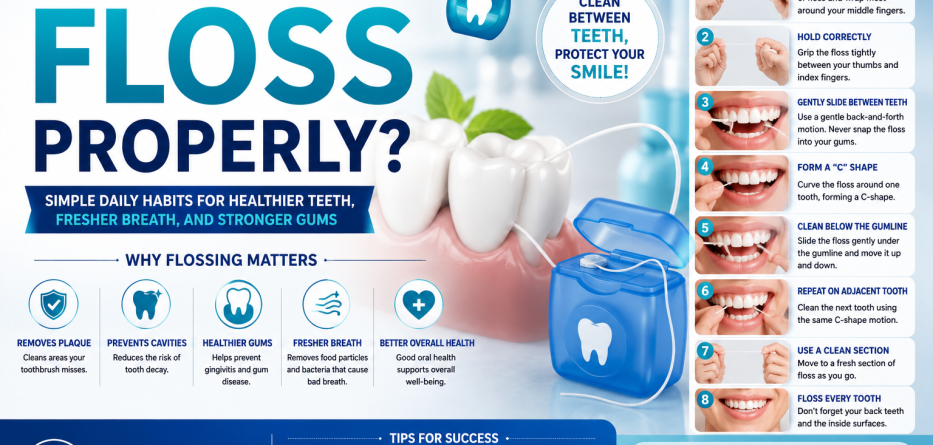
How to Floss Properly: Step-by-Step
Step 1: Use the Right Amount of Floss
Break off approximately 18 inches (45 cm) of dental floss.
Wrap most of it around the middle fingers of both hands, leaving about 1–2 inches to work with.
Step 2: Hold the Floss Correctly
Grip the floss firmly between your thumbs and index fingers.
Keep it taut while guiding it between your teeth.
Step 3: Gently Slide Between Teeth
Carefully slide the floss between two teeth using a gentle back-and-forth motion.
Avoid
- Snapping the floss into the gums
- Forcing the floss through tight spaces
Gentle movement helps prevent gum injury.
Step 4: Form a “C” shape.
Curve the floss around one tooth, creating a C-shape.
This allows the floss to wrap around the tooth surface and clean more effectively.
Step 5: Clean Below the Gumline
Move the floss gently up and down against the side of the tooth.
Extend slightly below the gumline without forcing it.
This helps remove plaque hiding beneath the gum tissue.
Step 6: Repeat on the Adjacent Tooth
Wrap the floss around the neighboring tooth and repeat the cleaning motion.
Step 7: Use a Clean Section of Floss
Move to a fresh section of floss before cleaning the next space between teeth.
This prevents transferring bacteria.
Step 8: Floss Every Tooth
Don’t forget:
- Back molars
- Areas behind the last teeth
- Both upper and lower teeth
Many people miss these areas.
Common Flossing Mistakes
1. Flossing Too Aggressively
Snapping floss into the gums can cause irritation and bleeding.
2. Using the Same Section Repeatedly
Dirty floss can spread bacteria throughout the mouth.
3. Skipping Back Teeth
Molars are especially prone to plaque buildup.
4. Flossing Inconsistently
Occasional flossing provides limited benefits.
5. Not Going Below the Gumline
Plaque often accumulates just beneath the gums.
Proper technique is just as important as flossing itself.
What If My Gums Bleed When I Floss?
Mild bleeding is common when starting a flossing routine.
Bleeding may indicate:
- Plaque buildup
- Early gum inflammation
- Inconsistent flossing
What to Do
- Continue flossing gently
- Maintain good oral hygiene
- Monitor improvement over several days
If bleeding persists for more than two weeks, consult your dentist.
Types of Dental Floss
Different floss types suit different needs.
Waxed Floss
- Slides easily between tight teeth
- Less likely to shred
Unwaxed Floss
- Thinner
- May fit tighter spaces
Dental Tape
- Wider and flatter
- Suitable for larger gaps
PTFE Floss
- Extremely smooth
- Resists shredding
Eco-Friendly Floss
- Biodegradable options available
- Popular among environmentally conscious users
Choose the floss that feels most comfortable and effective for you.
Alternatives to Traditional Floss
If traditional floss is difficult to use, consider:
Floss Picks
Convenient and portable.
Water Flossers
Use a stream of water to clean between teeth and along the gumline.
Interdental Brushes
Ideal for larger spaces and some orthodontic patients.
Soft Picks
Flexible rubber cleaners designed for interdental cleaning.
These alternatives can improve compliance and convenience.
How to Floss with Braces
Flossing with braces requires additional effort but remains essential.
Helpful Tools
- Orthodontic floss threaders
- Super floss
- Water flossers
- Interdental brushes
Cleaning around brackets and wires helps prevent cavities and gum problems.
Flossing for Children
Children should begin flossing when two teeth touch each other.
Parents should assist younger children until they develop sufficient coordination.
Benefits for Children
- Prevents cavities
- Establishes lifelong habits
- Supports healthy gum development
Making flossing fun can improve compliance.
Flossing and Gum Disease Prevention
Regular flossing plays a major role in preventing:
Gingivitis
Early-stage gum disease characterized by:
- Red gums
- Swelling
- Bleeding
Periodontitis
Advanced gum disease that can cause:
- Bone loss
- Gum recession
- Tooth loss
Removing plaque daily helps reduce risk.
Frequently Asked Questions
Should I floss before or after brushing?
Either is acceptable. The most important factor is flossing consistently every day.
How long should flossing take?
Most people can floss thoroughly in 2–3 minutes.
Is flossing really necessary?
Yes. Flossing removes plaque and bacteria from areas a toothbrush cannot reach.
Can I floss too much?
Excessive or aggressive flossing can irritate gums, but normal daily flossing is safe.
What is better: floss or a water flosser?
Both can be effective. Many dentists recommend using water flossers as a supplement rather than a complete replacement.
Conclusion
Learning how to floss properly is one of the simplest and most effective ways to improve your oral health. Daily flossing removes plaque, reduces the risk of cavities and gum disease, and helps maintain a cleaner, healthier smile.
By using proper technique, choosing the right flossing tools, and staying consistent, you can protect your teeth and gums for years to come. Combined with regular brushing and routine dental visits, flossing remains a cornerstone of excellent oral hygiene.
