
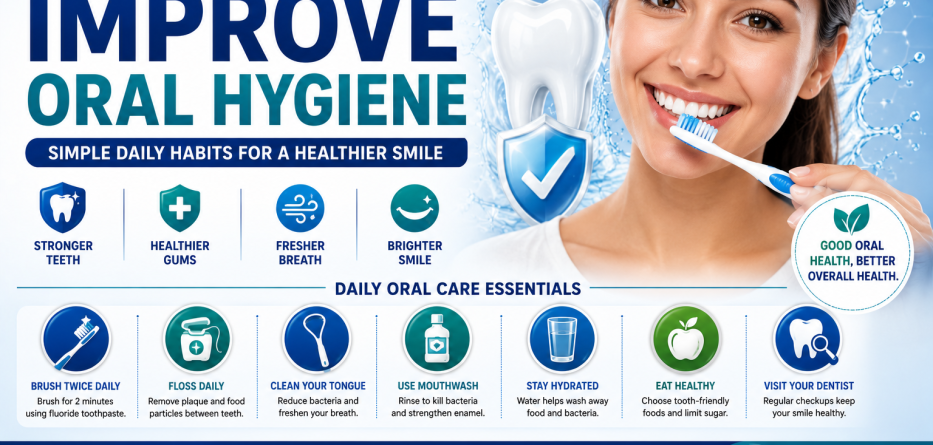
Good oral hygiene is essential for maintaining healthy teeth, gums, and overall well-being. While many people focus on brushing their teeth, effective oral hygiene involves much more than that. Poor oral health can lead to cavities, gum disease, bad breath, tooth loss, and even increase the risk of certain health conditions such as heart disease and diabetes.
The good news is that improving oral hygiene doesn’t require complicated routines or expensive treatments. By adopting a few simple daily habits and making smart lifestyle choices, you can significantly improve your oral health and enjoy a brighter, healthier smile.
In this guide, we’ll explore practical ways to improve oral hygiene, prevent dental problems, and maintain excellent oral health for years to come.
Why Is Oral Hygiene Important?
Oral hygiene is the practice of keeping your mouth clean and free from harmful bacteria.
Good oral hygiene helps:
- Prevent tooth decay
- Reduce plaque buildup
- Protect against gum disease
- Eliminate bad breath
- Preserve natural teeth
- Improve overall health
Maintaining a healthy mouth is one of the most effective ways to prevent costly and painful dental problems.
1. Brush Your Teeth Properly
Brushing is the foundation of good oral hygiene.
Dentists recommend brushing at least twice a day using fluoride toothpaste.
Proper Brushing Technique
- Hold the toothbrush at a 45-degree angle to the gums.
- Use gentle circular motions.
- Brush all tooth surfaces.
- Clean the tongue.
- Brush for at least two minutes.
Common Brushing Mistakes
- Brushing too hard
- Brushing too quickly
- Using an old toothbrush
- Missing hard-to-reach areas
Replacing your toothbrush every three to four months helps maintain effective cleaning.
2. Floss Daily
Brushing alone cannot reach all areas between teeth.
Flossing removes:
- Food particles
- Plaque buildup
- Bacteria between teeth
Benefits of Flossing
- Healthier gums
- Reduced plaque
- Lower risk of cavities
- Fresher breath
Daily flossing is one of the simplest ways to improve oral hygiene.
3. Use Fluoride Products
Fluoride strengthens tooth enamel and helps prevent cavities.
Sources of fluoride include:
- Fluoride toothpaste
- Fluoride mouthwash
- Professional fluoride treatments
- Fluoridated drinking water
Fluoride is widely recognized as one of the most effective tools for preventing tooth decay.
4. Clean Your Tongue
The tongue can harbor bacteria that contribute to:
- Bad breath
- Plaque buildup
- Oral infections
How to Clean Your Tongue
- Use a tongue scraper
- Brush your tongue gently
- Clean daily
Adding tongue cleaning to your routine can significantly improve oral freshness.
5. Rinse with Mouthwash
Mouthwash can help reduce bacteria and freshen breath.
Depending on your needs, mouthwash may:
- Reduce plaque
- Control gingivitis
- Strengthen enamel
- Fight bad breath
Ask your dentist which type of mouthwash is most suitable for your oral health needs.
6. Stay Hydrated
Saliva plays a crucial role in oral health.
It helps:
- Wash away food particles
- Neutralize acids
- Reduce bacterial growth
Drinking plenty of water throughout the day helps maintain a healthy oral environment.
7. Limit Sugary Foods and Drinks
Sugar feeds harmful oral bacteria that produce acids capable of damaging tooth enamel.
Foods and beverages to limit include:
- Candy
- Soda
- Sweetened coffee drinks
- Sports drinks
- Sugary snacks
Reducing sugar consumption can significantly lower cavity risk.
8. Eat a Tooth-Friendly Diet
A balanced diet supports strong teeth and healthy gums.
Foods That Promote Oral Health
- Dairy products
- Leafy greens
- Apples
- Carrots
- Nuts
- Fish
- Eggs
Important nutrients include:
- Calcium
- Vitamin D
- Phosphorus
- Vitamin C
Healthy eating contributes to stronger teeth and improved gum health.
9. Avoid Tobacco Products
Smoking and tobacco use can cause:
- Gum disease
- Tooth discoloration
- Bad breath
- Oral cancer
- Tooth loss
Quitting tobacco is one of the best decisions you can make for your oral and overall health.
10. Visit Your Dentist Regularly
Even excellent home care cannot replace professional dental care.
Regular dental visits help:
- Detect problems early
- Remove tartar buildup
- Monitor oral health
- Prevent major dental issues
Most dentists recommend checkups every six months.
11. Replace Your Toothbrush Regularly
An old toothbrush becomes less effective over time.
Replace your toothbrush:
- Every 3–4 months
- After illness
- When bristles become frayed
Fresh bristles provide more effective plaque removal.
12. Consider an Electric Toothbrush
Electric toothbrushes can improve plaque removal and make brushing easier.
Benefits include:
- Built-in timers
- Consistent brushing motion
- Improved cleaning efficiency
- Better gum health
Many dentists recommend electric toothbrushes for patients seeking enhanced oral hygiene.
13. Protect Your Teeth During Sports
Sports injuries can lead to the following:
- Broken teeth
- Tooth loss
- Gum injuries
A custom-fitted mouthguard helps protect your smile during physical activities.
Signs Your Oral Hygiene Needs Improvement
Watch for these warning signs:
- Persistent bad breath
- Bleeding gums
- Tooth sensitivity
- Plaque buildup
- Gum recession
- Frequent cavities
These symptoms may indicate the need for better oral care or professional evaluation.
Daily Oral Hygiene Routine
Morning
- Brush for two minutes
- Clean your tongue
- Rinse with mouthwash
Evening
- Floss thoroughly
- Brush for two minutes
- Clean your tongue
- Use mouthwash if recommended
Consistency is key to long-term oral health success.
Frequently Asked Questions
How often should I brush my teeth?
Dentists recommend brushing at least twice daily for two minutes each time.
Is flossing really necessary?
Yes. Flossing removes plaque and food particles from areas your toothbrush cannot reach.
What is the best toothpaste for oral hygiene?
Fluoride toothpaste is generally recommended for most adults.
How can I improve bad breath?
Brush and floss regularly, clean your tongue, stay hydrated, and visit your dentist if the problem persists.
Are electric toothbrushes better?
Many studies suggest electric toothbrushes can remove more plaque and improve gum health compared to manual brushes.
Conclusion
Improving oral hygiene doesn’t require drastic changes. Small, consistent habits such as brushing properly, flossing daily, staying hydrated, eating a balanced diet, and visiting your dentist regularly can make a significant difference in your oral health.
By following these simple yet effective strategies, you can reduce your risk of cavities, gum disease, and bad breath while maintaining a healthier, brighter smile for years to come. Good oral hygiene is an investment in both your dental health and your overall well-being.
