
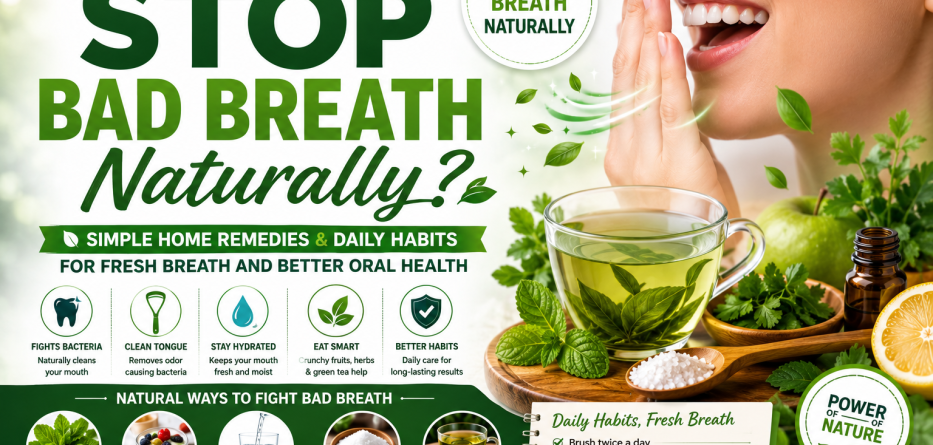
Bad breath, also known as halitosis, is a common problem that affects millions of people worldwide. It can be embarrassing, affect self-confidence, and even impact personal and professional relationships. While mouthwashes and breath fresheners may temporarily mask unpleasant odors, they often fail to address the root cause of the problem.
The good news is that many cases of bad breath can be improved naturally through proper oral hygiene, healthy lifestyle habits, and simple home remedies. Understanding what causes bad breath is the first step toward achieving long-lasting fresh breath.
In this guide, we’ll explore the common causes of bad breath, natural remedies that work, and practical tips to prevent it from returning.
What Causes Bad Breath?
Bad breath usually develops when bacteria accumulate in the mouth and produce foul-smelling sulfur compounds.
Common Causes of Bad Breath
- Poor oral hygiene
- Food particles trapped between teeth
- Dry mouth
- Gum disease
- Tooth decay
- Tongue bacteria
- Smoking and tobacco use
- Certain foods and beverages
- Sinus infections
- Digestive issues
Identifying the underlying cause is essential for effective treatment.
Signs That Bad Breath May Be a Problem
Many people are unaware they have bad breath.
Common signs include:
- Persistent unpleasant taste in the mouth
- Dry mouth
- White coating on the tongue
- Frequent need for breath mints
- Feedback from family or friends
If bad breath persists despite good oral hygiene, professional evaluation may be necessary.
1. Brush Your Teeth Properly
One of the simplest and most effective ways to eliminate bad breath is thorough brushing.
Best Practices
- Brush twice daily
- Use fluoride toothpaste
- Brush for at least two minutes
- Clean all tooth surfaces
Brushing removes food debris and bacteria that contribute to unpleasant odors.
2. Clean Your Tongue Daily
The tongue is one of the most common sources of bad breath.
Bacteria, food particles, and dead cells often accumulate on its surface.
How to Clean Your Tongue
- Use a tongue scraper
- Brush the tongue gently
- Clean from back to front
Regular tongue cleaning can significantly improve breath freshness.
3. Stay Hydrated
Dry mouth reduces saliva production, allowing odor-causing bacteria to thrive.
Benefits of Drinking More Water
- Increases saliva flow
- Washes away food particles
- Reduces bacterial growth
- Keeps the mouth fresh
Aim to drink water consistently throughout the day.
4. Use Natural Saltwater Rinses
Saltwater is a simple and effective natural mouth rinse.
How to Make a Saltwater Rinse
- Mix one teaspoon of salt into a glass of warm water.
- Swish for 30 seconds.
- Spit out and repeat as needed.
Benefits include:
- Reducing bacteria
- Soothing irritated gums
- Promoting oral cleanliness
5. Eat Crunchy Fruits and Vegetables
Certain foods naturally help clean the mouth.
Best Choices
- Apples
- Carrots
- Celery
- Cucumbers
These foods stimulate saliva production and help remove food debris from teeth.
6. Chew Fresh Herbs
Many herbs contain natural compounds that help neutralize odors.
Helpful Herbs
- Parsley
- Mint
- Basil
- Cilantro
These herbs contain chlorophyll, which may help reduce bad breath naturally.
7. Drink green tea.
Green tea contains antioxidants and antibacterial compounds that may reduce odor-causing bacteria.
Benefits of Green Tea
- Supports oral health
- Reduces bacterial growth
- Freshens breath naturally
Unsweetened green tea is the healthiest option.
8. Reduce Odor-Causing Foods
Certain foods can contribute to temporary bad breath.
Common Culprits
- Garlic
- Onions
- Strong spices
- Alcohol
- Coffee
While these foods are not necessarily unhealthy, limiting them before important social events may help.
9. Quit Smoking
Smoking is one of the leading causes of chronic bad breath.
It contributes to:
- Dry mouth
- Gum disease
- Tooth discoloration
- Persistent odor
Quitting smoking improves both oral and overall health.
10. Improve Gum Health
Gum disease is a major cause of persistent bad breath.
Signs of Gum Disease
- Bleeding gums
- Swollen gums
- Gum recession
- Persistent bad breath
Maintaining healthy gums is critical for long-term breath freshness.
11. Try Natural Probiotic Foods
Beneficial bacteria may help improve the balance of microorganisms in the mouth.
Probiotic Foods
- Yogurt
- Kefir
- Fermented vegetables
These foods may help reduce odor-producing bacteria over time.
12. Floss Every Day
Brushing alone cannot remove all trapped food particles.
Flossing helps eliminate debris and bacteria between teeth.
Benefits of Daily Flossing
- Fresher breath
- Healthier gums
- Reduced plaque buildup
- Lower risk of gum disease
Daily flossing is one of the most overlooked solutions for bad breath.
Natural Remedies That May Help
Quick Natural Breath Fresheners
- Sugar-free gum
- Fresh mint leaves
- Parsley
- Water
- Green tea
These remedies can provide temporary freshness while addressing underlying causes.
When Bad Breath May Signal a Health Problem
Persistent bad breath sometimes indicates an underlying medical condition.
Potential causes include the following:
- Chronic sinus infections
- Tonsil stones
- Diabetes
- Acid reflux
- Respiratory infections
If bad breath persists despite good oral hygiene, consult a dentist or healthcare provider.
Daily Routine for Fresh Breath
Morning
- Brush teeth
- Clean tongue
- Floss
- Drink water
Throughout the Day
- Stay hydrated
- Eat fresh fruits and vegetables
- Avoid tobacco products
Evening
- Brush thoroughly
- Floss
- Clean tongue
- Rinse with saltwater
Consistency is key to maintaining fresh breath naturally.
Frequently Asked Questions
What is the fastest natural way to get rid of bad breath?
Drinking water, cleaning your tongue, brushing your teeth, and chewing fresh parsley or mint can quickly improve breath freshness.
Can drinking water stop bad breath?
Yes. Water helps wash away bacteria and food particles while increasing saliva production.
Why does my breath still smell after brushing?
The cause may be tongue bacteria, gum disease, dry mouth, or an underlying health issue.
Does green tea help bad breath?
Yes. Green tea contains natural compounds that may reduce odor-causing bacteria.
Can bad breath be cured permanently?
Many cases can be resolved by treating the underlying cause and maintaining proper oral hygiene.
Conclusion
Bad breath can be frustrating, but in many cases, it can be improved naturally with simple daily habits. Proper brushing, tongue cleaning, flossing, hydration, healthy eating, and good gum care are among the most effective natural ways to stop bad breath.
While temporary solutions like mints and mouthwashes may provide short-term relief, addressing the root causes is essential for lasting freshness. By following these natural remedies and preventive measures, you can enjoy better oral health, increased confidence, and fresher breath every day.
