
Gum disease is one of the most common oral health problems worldwide, affecting millions of people every year. Despite its prevalence, many individuals are unaware that gum disease often begins silently, with few noticeable symptoms in its early stages.
If left untreated, gum disease can progress from mild gum inflammation to severe infection, tooth loss, and even complications that may affect overall health. Understanding how gum disease starts is the first step toward preventing serious dental problems and maintaining a healthy smile.
In this article, we’ll explore the causes of gum disease, its early warning signs, risk factors, stages of progression, and effective prevention strategies.
What Is Gum Disease?
Gum disease, also known as periodontal disease, is an infection and inflammation of the tissues that support your teeth.
It typically begins with bacterial plaque buildup along the gumline and can progress to affect:
- Gum tissue
- Periodontal ligaments
- Jawbone
- Tooth-supporting structures
Without treatment, gum disease can lead to tooth mobility and eventual tooth loss.
How Does Gum Disease Start?
The Role of Plaque
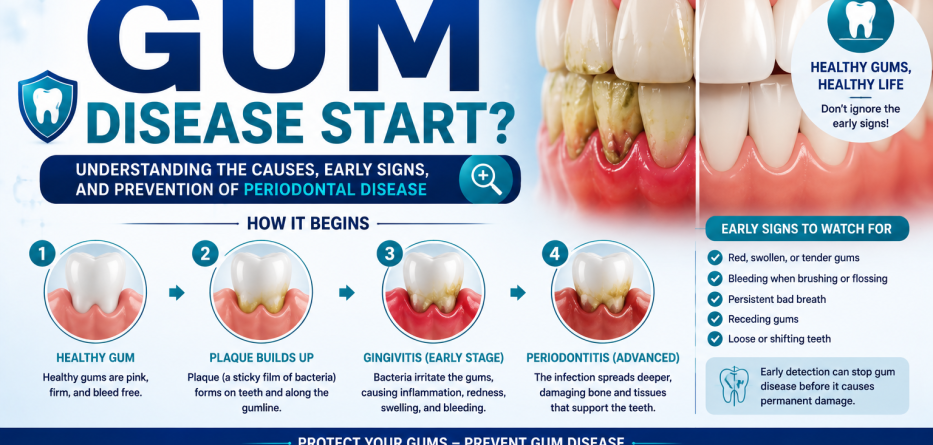
Gum disease begins when plaque accumulates on the teeth and along the gumline.
Plaque is a sticky film made up of:
- Bacteria
- Food particles
- Saliva
When plaque is not removed through regular brushing and flossing, harmful bacteria multiply and irritate the gums.
This irritation triggers inflammation, which marks the beginning of gum disease.
The First Stage: Gingivitis
The earliest stage of gum disease is called gingivitis.
At this point, the infection is limited to the gums and has not yet damaged the underlying bone or supporting structures.
Common Signs of Gingivitis
- Red gums
- Swollen gums
- Tender gums
- Bleeding when brushing or flossing
- Persistent bad breath
The good news is that gingivitis is usually reversible with proper oral hygiene and professional dental care.
What Happens If Gingivitis Is Left Untreated?
When gingivitis is ignored, the bacterial infection can spread below the gumline.
The body responds by releasing inflammatory substances that begin breaking down the tissues supporting the teeth.
This progression leads to a more serious condition called periodontitis.
The Second Stage: Periodontitis
Periodontitis occurs when the infection extends deeper into the gums and supporting bone.
As the disease progresses:
- Gum pockets form around teeth
- Bone begins to deteriorate
- Teeth may loosen
- Gum recession develops
Unlike gingivitis, damage caused by periodontitis cannot always be completely reversed.
Common Causes of Gum Disease
Poor Oral Hygiene
The leading cause of gum disease is inadequate plaque removal.
Failing to brush and floss regularly allows bacteria to thrive.
Smoking and Tobacco Use
Smoking significantly increases the risk of gum disease by:
- Reducing blood flow to the gums
- Weakening the immune system
- Slowing healing
Hormonal Changes
Hormonal fluctuations can make gums more sensitive.
This is common during:
- Pregnancy
- Puberty
- Menopause
Medical Conditions
Certain health conditions increase susceptibility to gum disease.
Examples include:
- Diabetes
- Autoimmune disorders
- Heart disease
- Immune system disorders
Certain Medications
Some medications reduce saliva production, creating an environment where bacteria can grow more easily.
Risk Factors for Gum Disease
Several factors can increase the likelihood of developing gum disease.
Major Risk Factors
- Poor oral hygiene
- Smoking
- Diabetes
- Genetics
- Stress
- Poor nutrition
- Dry mouth
- Advanced age
Understanding these risks can help individuals take preventive action.
Early Warning Signs of Gum Disease
Recognizing symptoms early allows for faster treatment and better outcomes.
Watch for These Signs
- Bleeding gums
- Persistent bad breath
- Swollen gums
- Red or purple gums
- Gum tenderness
- Gum recession
- Loose teeth
- Sensitivity
Many people mistakenly assume bleeding gums are normal, but they are often an early sign of disease.
How Gum Disease Affects Overall Health
Research suggests a connection between periodontal disease and several systemic health conditions.
Potential associations include:
- Heart disease
- Stroke
- Diabetes complications
- Respiratory infections
- Pregnancy complications
While more research continues, maintaining healthy gums is considered an important part of overall wellness.
How Dentists Diagnose Gum Disease
During a dental examination, dentists evaluate:
- Gum inflammation
- Pocket depth
- Bone loss
- Plaque and tartar buildup
- Tooth mobility
Diagnostic tools may include:
- Periodontal probing
- Dental X-rays
- Comprehensive oral examinations
Early diagnosis significantly improves treatment outcomes.
How to Prevent Gum Disease
Preventing gum disease is often easier than treating it.
Daily Prevention Tips
Brush Properly
Brush at least twice daily using fluoride toothpaste.
Floss Every Day
Flossing removes plaque from areas your toothbrush cannot reach.
Use antimicrobial mouthwash.
Mouthwash can help reduce bacterial growth.
Maintain Regular Dental Visits
Professional cleanings remove hardened plaque (tartar) that cannot be removed at home.
Avoid Tobacco Products
Quitting smoking dramatically improves gum health.
Eat a Balanced Diet
Nutrient-rich foods support healthy gums and immune function.
Treatment Options for Gum Disease
Treatment depends on the severity of the condition.
Gingivitis Treatment
- Professional cleaning
- Improved oral hygiene
- Antibacterial mouthwash
Periodontitis Treatment
- Scaling and root planing
- Antibiotic therapy
- Gum surgery
- Bone grafting in advanced cases
Early intervention often prevents more invasive procedures.
Can Gum Disease Be Reversed?
Gingivitis
Yes. Gingivitis can usually be reversed through:
- Proper brushing
- Daily flossing
- Professional cleanings
Periodontitis
While periodontitis cannot always be fully reversed, treatment can successfully control the disease and prevent further damage.
Frequently Asked Questions
What causes gum disease to start?
Gum disease starts when plaque and bacteria accumulate along the gumline and trigger inflammation.
Can gum disease develop without pain?
Yes. Early-stage gum disease often causes little or no discomfort.
Are bleeding gums normal?
No. Bleeding gums are often one of the earliest signs of gingivitis.
How quickly does gum disease progress?
Progression varies depending on oral hygiene, genetics, health conditions, and lifestyle habits.
Can children get gum disease?
Yes. Although less common, children and teenagers can develop gingivitis if plaque buildup is not properly controlled.
Conclusion
So, how does gum disease start?
It begins with plaque buildup along the gumline, which allows harmful bacteria to irritate and inflame the gums. What starts as mild gingivitis can eventually progress into serious periodontal disease if left untreated.
The good news is that gum disease is often preventable. By maintaining excellent oral hygiene, attending regular dental checkups, and recognizing early warning signs, you can protect your gums, preserve your teeth, and support your overall health for years to come.
