
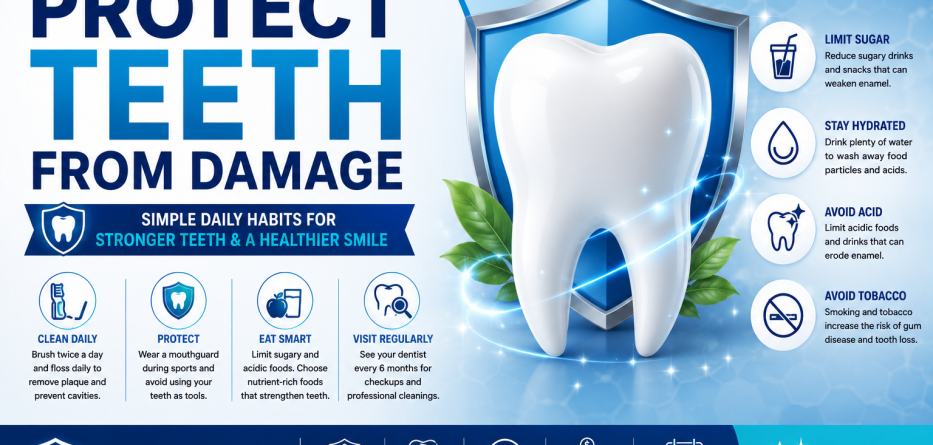
Your teeth are designed to last a lifetime, but daily habits, diet choices, accidents, and poor oral hygiene can cause significant damage over time. Tooth damage doesn’t just affect your smile—it can lead to pain, sensitivity, infections, costly dental treatments, and even tooth loss.
The good news is that most dental problems are preventable. By understanding the common causes of tooth damage and adopting healthy oral care habits, you can protect your teeth and maintain a healthy smile for years to come.
In this guide, we’ll explore the most effective ways to protect your teeth from damage, preserve enamel, and reduce your risk of dental problems.
Why Is It Important to Protect Your Teeth?
Your teeth play an essential role in:
- Chewing food properly
- Speaking clearly
- Maintaining facial structure
- Supporting overall health
- Enhancing confidence and appearance
Once tooth enamel is damaged, it cannot regenerate naturally. That’s why prevention is always better than treatment.
Common Causes of Tooth Damage
Understanding the causes of tooth damage is the first step toward prevention.
Major Causes Include:
- Poor oral hygiene
- Tooth decay
- Acidic foods and drinks
- Teeth grinding (bruxism)
- Sports injuries
- Smoking and tobacco use
- Using teeth as tools
- Hard foods and ice chewing
Identifying risk factors can help you take proactive measures.
1. Brush Your Teeth Properly
Brushing removes plaque, bacteria, and food particles that contribute to tooth decay and gum disease.
Best Brushing Practices
- Brush twice daily
- Use fluoride toothpaste
- Brush for at least two minutes
- Use a soft-bristled toothbrush
- Replace your toothbrush every 3 months
Avoid
- Brushing too aggressively
- Using hard-bristled brushes
- Skipping nighttime brushing
Gentle, consistent brushing protects both teeth and gums.
2. Floss Every Day
Brushing alone cannot clean between teeth effectively.
Daily flossing helps:
- Remove plaque
- Prevent cavities between teeth
- Reduce gum disease risk
- Improve oral health
Flossing should be a non-negotiable part of your dental routine.
3. Limit Sugary Foods and Drinks
Sugar feeds harmful bacteria that produce acids capable of damaging enamel.
Common Sources of Sugar
- Soft drinks
- Candy
- Energy drinks
- Sweetened coffee beverages
- Processed snacks
Reducing sugar intake lowers the risk of cavities and enamel erosion.
4. Protect Teeth from Acidic Foods
Acid can gradually wear away enamel.
Highly Acidic Foods and Drinks
- Soda
- Citrus fruits
- Sports drinks
- Wine
- Vinegar-based foods
Protective Tips
- Drink water afterward
- Use a straw when possible
- Avoid brushing immediately after acidic meals
Allowing saliva time to neutralize acids helps protect enamel.
5. Wear a Mouthguard During Sports
Sports-related injuries are a common cause of broken and knocked-out teeth.
A custom-fitted mouthguard can:
- Absorb impact forces
- Protect teeth and gums
- Reduce jaw injuries
Athletes of all ages should wear appropriate protective gear.
6. Address Teeth Grinding (Bruxism)
Many people grind or clench their teeth during sleep without realizing it.
Signs of Bruxism
- Jaw pain
- Worn teeth
- Headaches
- Tooth sensitivity
Prevention
Your dentist may recommend a custom nightguard to protect your teeth from excessive wear.
7. Don’t Use Teeth as Tools
Using teeth to open packages, crack nuts, or tear objects can lead to:
- Cracked teeth
- Chipped enamel
- Broken restorations
Always use the proper tool instead of risking dental damage.
8. Stay Hydrated
Saliva plays a crucial role in protecting teeth.
Benefits of saliva include:
- Neutralizing acids
- Washing away food particles
- Delivering minerals to enamel
- Reducing cavity risk
Drink plenty of water throughout the day to support natural oral defenses.
9. Avoid Smoking and Tobacco Products
Tobacco negatively affects oral health by increasing the risk of:
- Gum disease
- Tooth loss
- Oral cancer
- Tooth discoloration
- Delayed healing
Quitting tobacco is one of the best investments you can make in your oral and overall health.
10. Visit Your Dentist Regularly
Professional dental care helps identify problems before they become serious.
Benefits of Routine Checkups
- Early cavity detection
- Professional cleanings
- Oral cancer screenings
- Gum disease prevention
- Personalized recommendations
Most people should visit the dentist every six months.
11. Consider a Smart Toothbrush
Modern smart toothbrushes can improve brushing effectiveness through:
- Pressure sensors
- Brushing timers
- Coverage tracking
- Personalized coaching
These features help users develop healthier brushing habits.
12. Strengthen Teeth with Fluoride
Fluoride helps strengthen enamel and prevent cavities.
Sources of fluoride include:
- Fluoride toothpaste
- Fluoride mouth rinses
- Professional fluoride treatments
- Fluoridated water supplies
Fluoride remains one of the most effective tools for cavity prevention.
Foods That Help Protect Teeth
Certain foods promote stronger teeth and healthier gums.
Tooth-Friendly Foods
- Cheese
- Yogurt
- Milk
- Leafy greens
- Almonds
- Apples
- Carrots
- Celery
These foods provide important nutrients such as calcium, phosphorus, and vitamins.
Warning Signs of Tooth Damage
Seek dental evaluation if you experience:
- Tooth sensitivity
- Pain while chewing
- Visible cracks
- Dark spots
- Loose teeth
- Swollen gums
- Persistent bad breath
Early treatment can prevent more serious complications.
Daily Dental Protection Checklist
Follow these habits every day:
✅ Brush twice daily
✅ Floss once daily
✅ Drink plenty of water
✅ Limit sugar consumption
✅ Avoid tobacco products
✅ Wear a mouthguard when needed
✅ Eat a balanced diet
✅ Schedule regular dental visits
Consistency is the key to long-term dental health.
Frequently Asked Questions
What is the biggest cause of tooth damage?
Poor oral hygiene, sugary foods, acidic drinks, and teeth grinding are among the most common causes.
Can damaged tooth enamel grow back?
No. Enamel cannot regenerate naturally, but fluoride can help strengthen weakened enamel.
How can I protect my teeth from cavities?
Brush with fluoride toothpaste, floss daily, reduce sugar intake, and attend regular dental checkups.
Is chewing ice bad for teeth?
Yes. Chewing ice can crack or chip teeth and damage dental restorations.
Do mouthguards really protect teeth?
Yes. Mouthguards significantly reduce the risk of sports-related dental injuries.
Conclusion
Protecting your teeth from damage is one of the most important investments you can make in your long-term health and quality of life. Simple habits such as brushing properly, flossing daily, limiting sugar, wearing a mouthguard, and visiting your dentist regularly can dramatically reduce the risk of cavities, enamel erosion, and dental injuries.
By taking a proactive approach to oral care, you can preserve your natural teeth, avoid costly treatments, and enjoy a healthier, stronger smile for years to come.
