
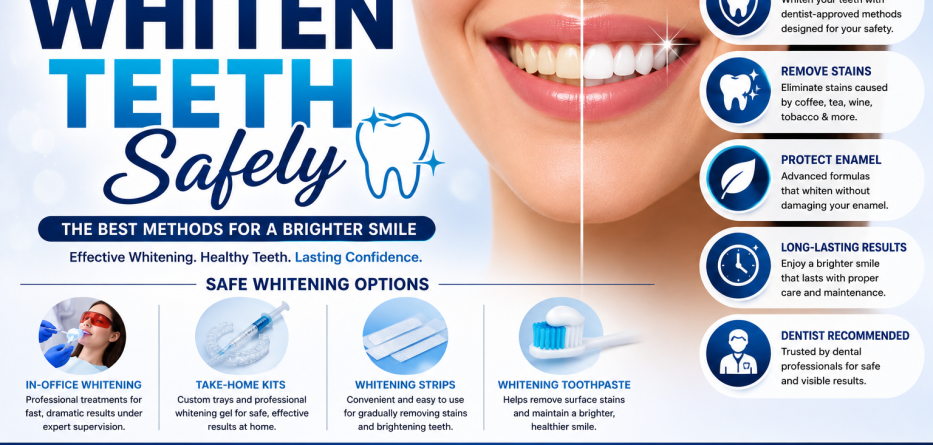
A bright, white smile is often associated with confidence, health, and good oral hygiene. It’s no surprise that teeth whitening has become one of the most popular cosmetic dental treatments worldwide. However, with countless whitening products, home remedies, and online advice available, many people wonder: How can you whiten teeth safely?
While teeth whitening can significantly improve the appearance of your smile, using the wrong products or techniques may lead to tooth sensitivity, gum irritation, or enamel damage. Understanding the safest and most effective whitening methods can help you achieve noticeable results while protecting your oral health.
In this guide, we’ll explore professional whitening treatments, at-home options, common mistakes to avoid, and expert tips for whitening teeth safely.
Why Do Teeth Become Discolored?
Before choosing a whitening method, it’s important to understand why teeth lose their brightness.
Common Causes of Tooth Stains
- Coffee and tea
- Red wine
- Tobacco use
- Poor oral hygiene
- Aging
- Certain medications
- Dark-colored foods and beverages
Tooth discoloration typically falls into two categories:
Extrinsic Stains
These occur on the outer surface of the teeth and are often caused by food, drinks, and smoking.
Intrinsic Stains
These occur inside the tooth structure and may result from aging, trauma, medications, or excessive fluoride exposure.
Different types of stains may require different whitening approaches.
Is Teeth Whitening Safe?
Quick Answer
Yes. Teeth whitening is generally safe when performed under professional supervision or when approved whitening products are used according to instructions.
Most modern whitening treatments use controlled concentrations of the following:
- Hydrogen peroxide
- Carbamide peroxide
These ingredients help break down stains without damaging healthy tooth structure when used properly.
Professional Teeth Whitening
Professional whitening performed by a dentist is often considered the safest and most effective option.
Benefits
- Faster results
- Stronger whitening agents
- Customized treatment
- Professional supervision
- Reduced risk of complications
Many patients achieve several shades of improvement in a single appointment.
In-Office Whitening Treatment
Professional in-office whitening typically involves:
- Examination of oral health.
- Protection of gums and soft tissues.
- Application of professional whitening gel.
- Activation using specialized technology when needed.
- Multiple treatment cycles.
Advantages
- Immediate results
- Safe monitoring
- Predictable outcomes
This option is ideal for patients seeking fast smile enhancement.
Dentist-Supervised Take-Home Whitening Kits
Many dental offices provide custom whitening trays designed specifically for your teeth.
Benefits
- Better fit than over-the-counter trays
- More even whitening
- Lower risk of gum irritation
- Convenient home use
Results usually appear within one to two weeks.
Over-the-Counter Whitening Products
Several store-bought whitening products are available.
Whitening Toothpaste
Whitening toothpaste removes surface stains through mild abrasives.
Benefits:
- Affordable
- Easy to use
- Good for maintenance
Limitations:
- Limited whitening power
- Does not change natural tooth color significantly
Whitening Strips
Whitening strips contain peroxide-based whitening agents.
Benefits:
- Convenient
- Effective for mild to moderate stains
- Widely available
Users should follow product instructions carefully to avoid sensitivity.
Whitening Pens and Gels
These products offer targeted stain removal but generally provide modest results compared to professional treatments.
Natural Teeth Whitening Methods
Many people search for natural whitening solutions.
Safer Natural Approaches
- Good oral hygiene
- Regular brushing and flossing
- Drinking water after meals
- Limiting stain-causing foods
- Professional dental cleanings
These methods help maintain a brighter smile without risking enamel damage.
Natural Remedies to Avoid
Some popular online whitening trends may be harmful.
Avoid:
Lemon Juice
Its high acidity can erode enamel.
Baking Soda Overuse
Excessive use may wear down enamel over time.
Activated Charcoal
Limited evidence supports its effectiveness, and aggressive use may damage tooth surfaces.
Hydrogen Peroxide Misuse
Using concentrated peroxide without professional guidance can irritate gums and increase sensitivity.
Always prioritize scientifically supported whitening methods.
Who Is a Good Candidate for Teeth Whitening?
Teeth whitening works best for individuals with:
- Healthy teeth and gums
- Yellowish stains
- Good oral hygiene habits
Whitening may be less effective for:
- Crowns
- Veneers
- Fillings
- Severe intrinsic stains
A dental consultation helps determine the most appropriate treatment.
Common Side Effects of Teeth Whitening
Most side effects are temporary.
Tooth Sensitivity
Some patients experience increased sensitivity to:
- Cold foods
- Hot beverages
- Air exposure
This typically resolves within a few days.
Gum Irritation
Improper application of whitening agents can irritate soft tissues.
Professional supervision helps minimize this risk.
Tips for Whitening Teeth Safely
1. Consult Your Dentist First
A professional evaluation identifies underlying dental issues that should be treated before whitening.
2. Follow Product Instructions Carefully
Overuse does not produce faster results and may increase complications.
3. Avoid DIY Whitening Hacks
Internet trends often lack scientific support and may damage enamel.
4. Use Approved Whitening Products
Choose products that have been tested for safety and effectiveness.
5. Maintain Excellent Oral Hygiene
Healthy teeth respond better to whitening treatments.
How to Maintain White Teeth After Whitening
Once you’ve achieved your desired results, maintenance is important.
Best Practices
- Brush twice daily
- Floss regularly
- Use whitening toothpaste occasionally
- Limit coffee, tea, and red wine
- Avoid tobacco products
- Schedule professional cleanings
These habits help extend whitening results.
Professional Whitening vs At-Home Whitening
| Feature | Professional Whitening | At-Home Whitening |
|---|---|---|
| Speed | Fast | Gradual |
| Strength | Higher | Lower |
| Supervision | Professional | Self-Guided |
| Cost | Higher | Lower |
| Results | More Dramatic | Moderate |
Both options can be effective when used properly.
Frequently Asked Questions
Is teeth whitening safe for enamel?
Yes. Approved whitening treatments do not damage enamel when used correctly.
How long do whitening results last?
Results may last from several months to several years depending on lifestyle habits and maintenance.
Can whitening remove all stains?
No. Some intrinsic stains may require alternative cosmetic treatments.
How often can I whiten my teeth?
Follow your dentist’s recommendations. Over-whitening may increase sensitivity.
Is professional whitening better than over-the-counter products?
Professional treatments generally provide faster, more predictable, and more dramatic results.
Conclusion
Knowing how to whiten teeth safely is essential for achieving a brighter smile without compromising oral health. Professional whitening treatments, dentist-supervised take-home kits, and approved over-the-counter products can all deliver effective results when used correctly.
The key to safe whitening is choosing evidence-based methods, avoiding harmful DIY trends, and maintaining excellent oral hygiene. By working with your dentist and following recommended guidelines, you can enjoy a whiter, healthier-looking smile with confidence.
