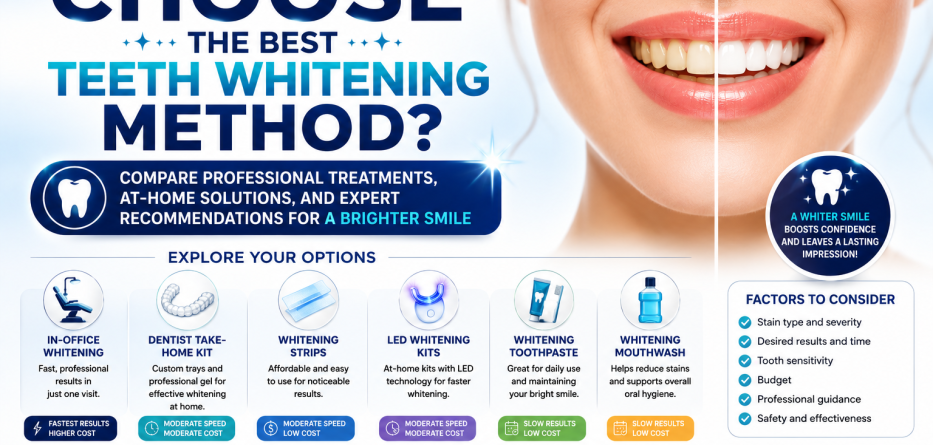
A brighter smile is one of the most sought-after cosmetic dental goals today. With countless whitening products and treatments available—from whitening toothpaste and strips to professional in-office procedures—choosing the best teeth whitening method can feel overwhelming.
The truth is that not every whitening solution works the same way for everyone. Factors such as the cause of tooth discoloration, budget, sensitivity levels, and desired results all play a role in determining the most effective option.
In this guide, we’ll explain how teeth whitening works, compare the most popular whitening methods, discuss their advantages and disadvantages, and help you choose the best solution for your smile.
Why Do Teeth Become Discolored?
Before selecting a whitening treatment, it’s important to understand what causes tooth discoloration.
Common Causes of Tooth Stains
- Coffee and tea
- Red wine
- Tobacco use
- Poor oral hygiene
- Aging
- Certain medications
- Excessive fluoride exposure
- Trauma to a tooth
Understanding the source of staining helps determine which whitening method will be most effective.
How Does Teeth Whitening Work?
Most whitening treatments use bleaching agents such as the following:
- Hydrogen peroxide
- Carbamide peroxide
These ingredients break down stain molecules within the enamel, making teeth appear whiter and brighter.
Quick Definition
Teeth whitening is a cosmetic dental treatment that removes stains and lightens the natural color of teeth without removing tooth structure.
Types of Teeth Whitening Methods
1. Professional In-Office Teeth Whitening
Professional whitening performed by a dentist is considered the fastest and most effective option.
Benefits
- Immediate results
- Strong whitening agents
- Professional supervision
- Safe application
- Customized treatment
Pros
✔ Fastest whitening results
✔ Can lighten teeth several shades in one visit
✔ Safe and controlled environment
Cons
✘ Higher cost
✘ Temporary sensitivity possible
Best For
People seeking dramatic results in the shortest time.
2. Dentist-Supervised Take-Home Whitening Kits
Dentists may provide customized trays and professional-grade whitening gel for at-home use.
Benefits
- More affordable than in-office treatment
- Customized fit
- Professional guidance
- Effective results
Pros
✔ Better results than over-the-counter products
✔ Convenient home treatment
✔ Reduced gum irritation
Cons
✘ Results take longer
Best For
Patients wanting professional results with greater flexibility.
3. Whitening Strips
Whitening strips are among the most popular over-the-counter whitening options.
Benefits
- Easy to use
- Affordable
- Widely available
Pros
✔ Budget-friendly
✔ Convenient
✔ Noticeable improvement for mild stains
Cons
✘ Limited whitening power
✘ Uneven results possible
✘ May cause sensitivity
Best For
Mild to moderate surface stains.
4. Whitening Toothpaste
Whitening toothpaste removes surface stains through gentle abrasives and polishing agents.
Benefits
- Easy daily use
- Low cost
- Helps maintain results
Pros
✔ Affordable
✔ Widely available
✔ Supports stain prevention
Cons
✘ Does not significantly change tooth color
✘ Limited whitening capability
Best For
Maintaining a bright smile after professional whitening.
5. Whitening Mouthwash
Whitening rinses contain mild whitening agents and stain-fighting ingredients.
Pros
✔ Convenient
✔ Freshens breath
✔ Easy addition to oral hygiene routine
Cons
✘ Minimal whitening effect
✘ Requires long-term use
Best For
Supplementing other whitening treatments.
6. LED Teeth Whitening Kits
Many at-home systems combine whitening gel with LED light technology.
Benefits
- Convenient
- Popular online
- Faster than strips in some cases
Pros
✔ Easy home treatment
✔ Modern technology appeal
✔ Moderate whitening results
Cons
✘ Results vary
✘ Quality differs between brands
Best For
Users seeking enhanced at-home whitening solutions.
Comparing Teeth Whitening Methods
| Whitening Method | Speed | Effectiveness | Cost |
|---|---|---|---|
| Professional Whitening | Fastest | Excellent | High |
| Dentist Take-Home Kit | Moderate | Very Good | Moderate |
| Whitening Strips | Moderate | Good | Low |
| LED Kits | Moderate | Good | Moderate |
| Whitening Toothpaste | Slow | Limited | Low |
| Whitening Mouthwash | Slow | Limited | Low |
How to Choose the Best Teeth Whitening Method
Consider Your Whitening Goals
Ask yourself:
- How white do I want my teeth?
- How quickly do I need results?
- What is my budget?
Patients seeking dramatic changes often benefit most from professional whitening.
Evaluate Tooth Sensitivity
Some whitening treatments can temporarily increase sensitivity.
If you have:
- Sensitive teeth
- Receding gums
- Thin enamel
A dentist can recommend safer options and desensitizing products.
Consider the Cause of Staining
Different stains respond differently to whitening treatments.
Surface Stains
Often caused by:
- Coffee
- Tea
- Smoking
Usually respond well to whitening products.
Deep Intrinsic Stains
May result from:
- Medication use
- Trauma
- Developmental conditions
These may require professional cosmetic solutions such as veneers.
Consult Your Dentist
A dental examination can identify:
- Cavities
- Gum disease
- Existing restorations
- Sensitivity concerns
Whitening should always be performed on healthy teeth and gums.
Who Should Avoid Teeth Whitening?
Teeth whitening may not be suitable for:
- Pregnant women
- Individuals with untreated cavities
- Patients with severe gum disease
- Children under professional age recommendations
- People with certain dental restorations
Professional consultation is recommended before treatment.
Common Teeth Whitening Mistakes
Avoid these common errors:
Overusing Whitening Products
Excessive whitening can increase sensitivity and irritate gums.
Using Unverified Products
Low-quality products may damage teeth or produce poor results.
Ignoring Dental Problems
Whitening should not replace necessary dental treatment.
Expecting Permanent Results
Teeth whitening requires maintenance over time.
How to Maintain Whitening Results
To keep your smile brighter for longer:
- Brush twice daily
- Floss regularly
- Limit staining foods and drinks
- Avoid tobacco products
- Use whitening toothpaste
- Schedule professional cleanings
These habits help extend whitening results.
Frequently Asked Questions
What is the most effective teeth whitening method?
Professional in-office whitening generally provides the fastest and most dramatic results.
Are whitening strips safe?
Yes, when used according to instructions.
How long do whitening results last?
Results may last several months to several years depending on lifestyle habits.
Does teeth whitening damage enamel?
When performed correctly and under professional guidance, whitening is considered safe for enamel.
Can yellow teeth become white again?
Many yellow teeth respond very well to whitening treatments.
Which whitening option is best for sensitive teeth?
Dentist-supervised whitening and desensitizing products are often recommended for sensitive patients.
Conclusion
Choosing the best teeth whitening method depends on your individual needs, goals, budget, and oral health condition. While professional whitening treatments offer the fastest and most noticeable results, at-home solutions such as whitening strips and custom trays can also provide effective improvements.
The most important step is understanding the cause of your tooth discoloration and selecting a safe, proven whitening option that fits your lifestyle. Consulting with a dental professional can help ensure you achieve a brighter smile while protecting your long-term oral health.