

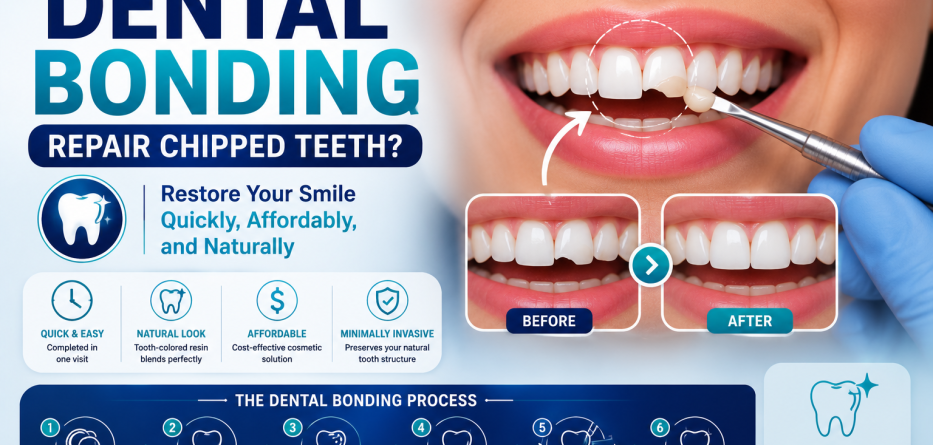
A chipped tooth can happen unexpectedly while eating hard foods, playing sports, or experiencing an accident. Even a minor chip can affect the appearance of your smile and, in some cases, compromise the strength of the tooth. Fortunately, modern cosmetic dentistry offers a simple, affordable, and effective solution known as dental bonding.
Dental bonding is one of the most popular treatments for repairing chipped teeth because it is minimally invasive, quick, and capable of producing natural-looking results. In many cases, the entire procedure can be completed in a single dental visit.
In this guide, we’ll explain how dental bonding repairs chipped teeth, its benefits, procedure, costs, longevity, and whether it’s the right option for your smile.
What Is Dental Bonding?
Dental bonding is a cosmetic dental procedure that uses a tooth-colored composite resin to repair damaged, chipped, cracked, or discolored teeth.
The resin material is carefully applied, shaped, and hardened using a special curing light. Once polished, the bonded area blends seamlessly with the surrounding natural tooth structure.
Common Uses of Dental Bonding
- Repairing chipped teeth
- Fixing small cracks
- Closing gaps between teeth
- Improving tooth shape
- Covering stains and discoloration
- Protecting exposed tooth roots
Dental bonding is often considered one of the most conservative cosmetic dental treatments available.
How Does Dental Bonding Repair Chipped Teeth?
Dental bonding restores the missing portion of a chipped tooth by rebuilding its shape with composite resin.
The dentist carefully matches the resin color to your natural teeth and sculpts it to recreate the original appearance of the tooth.
Step-by-Step Process
1. Tooth Evaluation
The dentist examines the chipped tooth to determine whether bonding is the most suitable treatment.
Minor to moderate chips are often ideal candidates.
2. Shade Matching
A shade guide is used to select a resin color that closely matches the surrounding teeth.
This ensures a natural and virtually invisible result.
3. Surface Preparation
The tooth surface is gently roughened, and a conditioning liquid is applied.
This helps the bonding material adhere securely to the tooth.
4. Resin Application
The composite resin is applied directly to the chipped area.
The dentist carefully molds and shapes the material to restore the tooth’s original appearance.
5. Curing Process
A specialized curing light is used to harden the resin.
The light activates the bonding material, creating a strong attachment to the tooth.
6. Final Shaping and Polishing
After curing, the dentist:
- Trims excess material
- Refines the shape
- Polishes the surface
The final result closely resembles a natural tooth.
Why Dental Bonding Is Popular for Chipped Teeth
Dental bonding offers several advantages over more complex restorative procedures.
Quick Treatment
Most bonding procedures take between 30 and 60 minutes per tooth.
Many patients complete treatment during a single appointment.
Minimally Invasive
Unlike crowns or veneers, bonding typically requires little or no removal of healthy tooth enamel.
This preserves more of the natural tooth structure.
Natural Appearance
Modern composite resins are available in various shades and can be customized to match natural teeth.
Benefits include:
- Seamless appearance
- Smooth finish
- Improved smile aesthetics
Affordable Solution
Dental bonding is generally less expensive than:
- Porcelain veneers
- Dental crowns
- Orthodontic treatments
This makes it an attractive option for cosmetic improvements.
Benefits of Dental Bonding for Chipped Teeth
Restores Tooth Appearance
Bonding effectively repairs chips and restores the natural shape of the tooth.
Improves Confidence
A repaired smile often enhances self-esteem and social confidence.
Protects Tooth Structure
Repairing a chip helps prevent further damage and sensitivity.
Fast Results
Patients can leave the dental office with an improved smile the same day.
Painless Procedure
In most cases, anesthesia is not required.
Who Is a Good Candidate for Dental Bonding?
Dental bonding is often recommended for patients with:
- Small to moderate chips
- Minor cracks
- Cosmetic imperfections
- Healthy teeth and gums
It may not be suitable for severely damaged teeth that require more extensive restoration.
Dental Bonding vs Veneers for Chipped Teeth
| Feature | Dental Bonding | Porcelain Veneers |
|---|---|---|
| Treatment Time | One Visit | Multiple Visits |
| Cost | Lower | Higher |
| Enamel Removal | Minimal | More Extensive |
| Longevity | 3–10 Years | 10–15+ Years |
| Repairability | Easy | More Complex |
Both treatments can effectively improve the appearance of chipped teeth, but bonding is often preferred for smaller repairs.
How Long Does Dental Bonding Last?
The lifespan of dental bonding depends on:
- Oral hygiene habits
- Bite forces
- Diet
- Location of the bonded tooth
Average Lifespan
Most bonded restorations last between 3 and 10 years before requiring touch-ups or replacement.
Proper care can significantly extend longevity.
Caring for Bonded Teeth
To maintain your dental bonding:
Practice Good Oral Hygiene
- Brush twice daily
- Floss regularly
- Use fluoride toothpaste
Avoid Hard Objects
Avoid chewing:
- Ice
- Pens
- Fingernails
- Hard candies
Limit Staining Foods and Drinks
Composite resin can stain over time.
Examples include:
- Coffee
- Tea
- Red wine
- Tobacco products
Schedule Regular Dental Checkups
Routine examinations help monitor the condition of bonded restorations.
Are There Any Risks or Limitations?
Dental bonding is safe and effective, but it does have some limitations.
Potential Drawbacks
- Less durable than porcelain veneers
- More susceptible to staining
- May chip under excessive pressure
- Requires occasional maintenance
For larger areas of damage, crowns or veneers may provide a longer-lasting solution.
Cost of Dental Bonding
The cost varies depending on the following:
- Number of teeth treated
- Complexity of the repair
- Geographic location
- Dentist’s experience
Because bonding is relatively simple and minimally invasive, it is often one of the most affordable cosmetic dental procedures.
Frequently Asked Questions
Is dental bonding painful?
No. Most bonding procedures are painless and do not require anesthesia.
Can bonding fix a large chipped tooth?
It can repair moderate chips, but severe damage may require a crown or veneer.
Does dental bonding look natural?
Yes. Composite resin can be color-matched to blend seamlessly with natural teeth.
Can bonded teeth stain?
Yes. Bonding material can stain over time, especially with frequent exposure to coffee, tea, wine, or tobacco.
How long does the procedure take?
Most dental bonding treatments take 30–60 minutes per tooth.
Conclusion
Dental bonding is one of the most effective and affordable ways to repair chipped teeth. By using tooth-colored composite resin, dentists can restore the shape, function, and appearance of damaged teeth in a single visit.
For patients seeking a quick, minimally invasive, and natural-looking solution, dental bonding offers excellent results with minimal discomfort and downtime. With proper care and regular dental visits, bonded teeth can remain attractive and functional for many years.

