

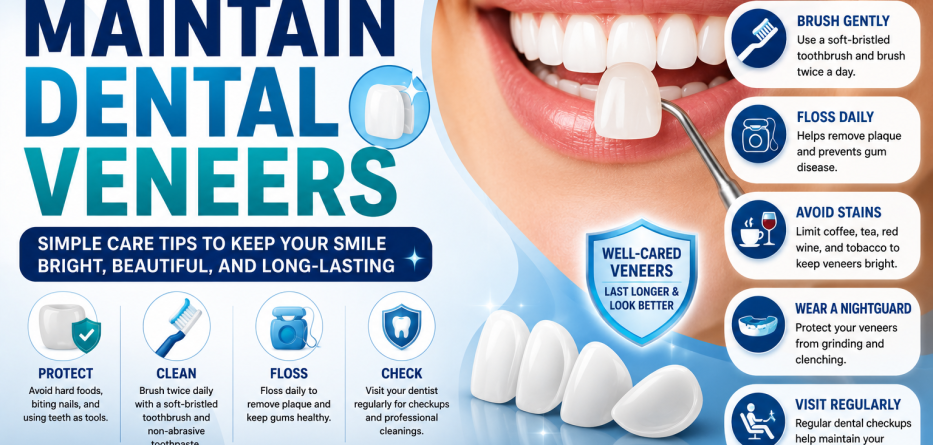
Dental veneers are one of the most popular cosmetic dentistry treatments for achieving a brighter, straighter, and more attractive smile. Whether made from porcelain or composite resin, veneers can dramatically improve the appearance of stained, chipped, worn, or slightly misaligned teeth.
While veneers are durable and stain-resistant, they are not indestructible. Proper maintenance is essential to keep them looking beautiful and functioning properly for many years. With the right care routine, porcelain veneers can last 10 to 15 years or even longer.
In this guide, we’ll explain how to maintain dental veneers, avoid common mistakes, and maximize the lifespan of your investment.
What Are Dental Veneers?
Dental veneers are thin, custom-made shells bonded to the front surface of teeth to improve their appearance.
They are commonly used to correct:
- Tooth discoloration
- Chipped teeth
- Small gaps
- Minor misalignment
- Uneven tooth shape
- Worn enamel
Types of Veneers
| Veneer Type | Average Lifespan |
|---|---|
| Porcelain Veneers | 10–15+ Years |
| Composite Veneers | 5–7 Years |
Proper care significantly influences longevity.
Why Is Veneer Maintenance Important?
Although veneers are designed to be durable, neglecting oral hygiene or developing harmful habits can shorten their lifespan.
Good maintenance helps the following:
- Preserve appearance
- Prevent damage
- Protect surrounding teeth
- Maintain gum health
- Reduce future repair costs
Taking care of veneers is also essential for overall oral health.
1. Brush Your Teeth Twice Daily
Daily brushing remains one of the most important aspects of veneer care.
Best Practices
- Brush at least twice per day
- Use a soft-bristled toothbrush
- Brush gently in circular motions
- Clean along the gumline
Avoid aggressive brushing, which may irritate gums and affect veneer margins over time.
2. Use Non-Abrasive Toothpaste
Some whitening and tartar-control toothpastes contain abrasive ingredients that may dull the surface of veneers.
Choose Toothpastes That Are
- Non-abrasive
- Veneer-safe
- Fluoride-based
- Recommended by your dentist
A gentle toothpaste helps maintain the smooth finish and shine of veneers.
3. Floss Every Day
Flossing removes plaque and food debris between teeth where toothbrushes cannot reach.
Healthy gums are crucial because veneers depend on surrounding gum tissue for long-term success.
Benefits of Daily Flossing
- Reduces plaque buildup
- Prevents gum disease
- Maintains fresh breath
- Protects natural tooth structure
Use gentle movements to avoid damaging gum tissue.
4. Avoid Using Teeth as Tools
One of the most common causes of veneer damage is misuse.
Never use your teeth to:
- Open packages
- Tear plastic
- Remove bottle caps
- Cut tape
Even durable porcelain veneers can chip or crack under excessive force.
5. Limit Hard Foods
Although veneers are strong, biting extremely hard objects can cause fractures.
Foods to Be Cautious With
- Ice cubes
- Hard candies
- Popcorn kernels
- Nuts with shells
- Hard crusts
Chewing carefully helps prevent accidental damage.
6. Reduce Staining Habits
Porcelain veneers resist stains better than natural teeth, but surrounding teeth can still discolor.
Common staining sources include:
- Coffee
- Tea
- Red wine
- Tobacco products
- Dark-colored sodas
Helpful Tip
Rinse your mouth with water after consuming staining beverages.
7. Stop Smoking
Smoking negatively affects both oral health and the appearance of your smile.
Tobacco use can contribute to:
- Gum disease
- Bad breath
- Tooth discoloration
- Veneer margin staining
Quitting smoking helps maintain a healthier and brighter smile.
8. Wear a Nightguard If You Grind Your Teeth
Teeth grinding (bruxism) places excessive pressure on veneers.
Over time, grinding can cause:
- Chipping
- Cracking
- Wear
- Bond failure
A custom nightguard protects veneers while you sleep.
9. Maintain Healthy Gums
Healthy gums are essential for maintaining the appearance and longevity of veneers.
Signs of gum problems include:
- Bleeding gums
- Swelling
- Redness
- Receding gums
Regular oral hygiene and professional cleanings help keep gums healthy.
10. Schedule Regular Dental Checkups
Routine dental visits allow your dentist to
- Examine veneer condition
- Check bonding integrity
- Monitor gum health
- Identify problems early
Most dentists recommend checkups every six months.
Professional evaluations can help extend the lifespan of your veneers.
Common Mistakes That Can Damage Veneers
Avoid these habits:
Nail-Biting
Repeated pressure can chip veneers.
Chewing Ice
Extreme hardness increases fracture risk.
Biting Pens or Pencils
This habit creates unnecessary stress on restorations.
Skipping Dental Visits
Small issues can become major problems if left untreated.
Ignoring Teeth Grinding
Untreated bruxism is a leading cause of veneer damage.
How Long Do Dental Veneers Last?
Several factors influence veneer longevity.
Porcelain Veneers
Typically last:
- 10–15 years
- Often longer with excellent care
Composite Veneers
Typically last:
- 5–7 years
- Require more maintenance
Proper oral hygiene and healthy habits can significantly extend their lifespan.
Signs Your Veneers May Need Replacement
Contact your dentist if you notice:
- Chips or cracks
- Discoloration
- Rough edges
- Loose veneers
- Gum recession around veneers
- Changes in fit
Early treatment often prevents further complications.
Veneers vs Natural Teeth: Maintenance Comparison
| Care Requirement | Veneers | Natural Teeth |
|---|---|---|
| Brushing | Yes | Yes |
| Flossing | Yes | Yes |
| Dental Exams | Yes | Yes |
| Stain Prevention | Recommended | Recommended |
| Nightguard for Grinding | Often Helpful | Helpful |
Veneers require many of the same care habits as natural teeth.
Frequently Asked Questions
Can veneers get cavities?
The veneer itself cannot develop cavities, but the underlying natural tooth can still decay.
Can I whiten dental veneers?
No. Veneers do not respond to traditional teeth-whitening treatments.
Is flossing safe with veneers?
Yes. Daily flossing is recommended and helps maintain healthy gums.
Can veneers stain?
Porcelain veneers are highly stain-resistant, while composite veneers may stain more easily over time.
How often should veneers be professionally cleaned?
Most patients benefit from professional cleanings every six months.
Conclusion
Dental veneers are an excellent investment in your smile, but their longevity depends largely on how well you care for them. By maintaining good oral hygiene, avoiding damaging habits, attending regular dental visits, and protecting your veneers from excessive force, you can enjoy a bright, beautiful smile for many years.
Following these simple maintenance tips can help maximize the lifespan of your veneers while preserving both their appearance and function.

