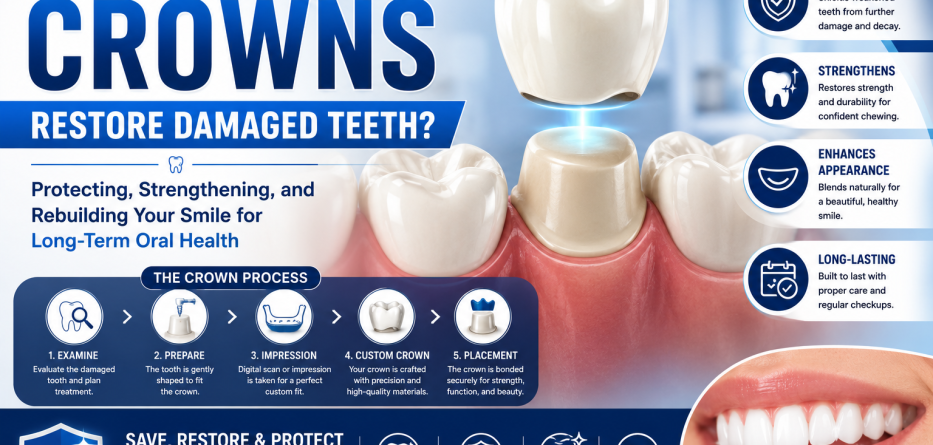
A damaged tooth can affect more than just your smile. It can make chewing uncomfortable, increase sensitivity, weaken the tooth structure, and raise the risk of further dental problems. Fortunately, modern dentistry offers an effective solution: dental crowns.
Dental crowns are one of the most commonly recommended restorative treatments because they can protect, strengthen, and restore damaged teeth while maintaining a natural appearance. Whether a tooth has been weakened by decay, injury, or a root canal procedure, a crown can help restore its function and longevity.
In this guide, we’ll explain how dental crowns restore damaged teeth, the different types available, their benefits, and what patients can expect during treatment.
What Is a Dental Crown?
A dental crown is a custom-made cap that completely covers the visible portion of a damaged tooth.
The crown is designed to:
- Restore tooth shape
- Improve strength
- Protect weakened structures
- Enhance appearance
- Restore normal chewing function
Once placed, the crown acts like a protective shell around the natural tooth.
Quick Definition
A dental crown is a tooth-shaped restoration that covers and protects a damaged, weakened, or severely decayed tooth while restoring its appearance and functionality.
Why Do Teeth Become Damaged?
Several factors can weaken or damage teeth.
Common Causes Include
- Tooth decay
- Large fillings
- Cracked teeth
- Fractures
- Teeth grinding (bruxism)
- Root canal treatment
- Dental trauma
- Excessive wear over time
When significant tooth structure is lost, a crown may be the best option to restore strength and function.
How Do Crowns Restore Damaged Teeth?
Dental crowns work by encasing the damaged tooth and providing a strong external layer that supports normal daily function.
1. Protecting Weak Teeth
When a tooth becomes weakened, it is more susceptible to cracking or breaking.
A crown helps by:
- Covering the entire tooth
- Distributing biting forces evenly
- Reducing the risk of fractures
- Providing long-term protection
This is particularly important after large fillings or root canal treatment.
2. Restoring Tooth Structure
A damaged tooth may lose a significant amount of its natural structure.
Crowns rebuild:
- Tooth shape
- Tooth size
- Surface anatomy
- Functional chewing surfaces
This allows patients to eat and speak comfortably again.
3. Improving Chewing Function
Damaged teeth often make chewing difficult or painful.
A properly fitted crown restores the following:
- Bite strength
- Chewing efficiency
- Comfort during meals
- Balanced bite alignment
Patients can often return to normal eating habits once treatment is complete.
4. Preventing Further Damage
Without protection, a weakened tooth can deteriorate further.
Crowns act as a barrier against:
- Additional fractures
- Bacterial invasion
- Wear and tear
- Future structural damage
Early intervention often helps avoid tooth extraction.
5. Enhancing Appearance
Modern crowns are designed to blend naturally with surrounding teeth.
They can improve:
- Tooth color
- Tooth shape
- Tooth alignment
- Overall smile aesthetics
This makes crowns both restorative and cosmetic.
When Is a Dental Crown Needed?
Dentists may recommend a crown in several situations.
Common Reasons Include
After Root Canal Treatment
Root canal-treated teeth become more brittle over time.
A crown helps protect the remaining tooth structure.
Large Cavities
When decay removes too much tooth structure, a filling alone may not provide enough support.
Cracked Teeth
Crowns help prevent cracks from spreading.
Broken Teeth
Fractured teeth often require crowns to restore strength and function.
Dental Implants
Crowns serve as the visible replacement tooth attached to a dental implant.
Types of Dental Crowns
Several materials are available for dental crowns.
Porcelain Crowns
Benefits:
- Highly aesthetic
- Natural appearance
- Excellent color matching
Best for front teeth.
Zirconia Crowns
Benefits:
- Exceptional strength
- High durability
- Natural appearance
Popular for both front and back teeth.
Porcelain-Fused-to-Metal (PFM) Crowns
Benefits:
- Good strength
- Improved aesthetics
Often used when both durability and appearance are important.
Metal Crowns
Benefits:
- Extremely durable
- Minimal wear
Usually recommended for molars where appearance is less critical.
The Dental Crown Procedure
Step 1: Examination and Evaluation
The dentist examines the tooth and determines whether a crown is necessary.
Digital X-rays may be taken to assess the following:
- Tooth structure
- Root health
- Surrounding bone
Step 2: Tooth Preparation
A small amount of enamel is removed to create space for the crown.
This ensures a proper fit.
Step 3: Impressions or Digital Scans
The dentist captures detailed measurements of the tooth.
Modern practices often use digital scanners for greater accuracy.
Step 4: Temporary Crown Placement
A temporary crown protects the prepared tooth while the permanent restoration is fabricated.
Step 5: Permanent Crown Placement
Once the custom crown is ready, it is securely bonded to the tooth.
The dentist checks:
- Fit
- Bite alignment
- Appearance
Adjustments are made if necessary.
Benefits of Dental Crowns
Long-Term Protection
Crowns shield weakened teeth from damage.
Improved Appearance
They restore a natural-looking smile.
Better Function
Patients regain normal chewing and speaking ability.
Durability
Many crowns last 10 to 15 years or longer.
Tooth Preservation
Crowns help save natural teeth that might otherwise require extraction.
How Long Do Dental Crowns Last?
The lifespan of a crown depends on the following:
- Material used
- Oral hygiene habits
- Bite forces
- Teeth-grinding habits
- Regular dental care
Average Lifespan
| Crown Type | Average Lifespan |
|---|---|
| Porcelain | 10–15 Years |
| Zirconia | 15+ Years |
| Metal | 15–20+ Years |
| PFM | 10–15 Years |
Proper care can significantly extend longevity.
Caring for a Dental Crown
To maximize crown lifespan:
Daily Care
- Brush twice daily
- Floss carefully around the crown
- Use fluoride toothpaste
Regular Checkups
Professional cleanings help maintain healthy gums and surrounding teeth.
Avoid Harmful Habits
Avoid:
- Chewing ice
- Biting hard objects
- Using teeth as tools
Patients who grind their teeth may benefit from a custom nightguard.
Frequently Asked Questions
Is getting a dental crown painful?
Most patients experience little to no discomfort because local anesthesia is used during treatment.
Can a crown restore a severely damaged tooth?
Yes. Crowns are specifically designed to strengthen and restore weakened teeth.
How long does a dental crown procedure take?
Traditional crowns usually require two visits, while some offices offer same-day crowns.
Can a crowned tooth still get cavities?
The crown itself cannot decay, but the underlying tooth can develop decay near the crown margins.
Are dental crowns noticeable?
Modern crowns are highly aesthetic and often indistinguishable from natural teeth.
Conclusion
Dental crowns play a vital role in modern restorative dentistry by protecting, strengthening, and rebuilding damaged teeth. Whether a tooth has been weakened by decay, injury, or a root canal procedure, a crown can restore both function and appearance while helping preserve the natural tooth for years to come.
With advances in dental materials and technology, today’s crowns offer exceptional durability, comfort, and aesthetics. By maintaining good oral hygiene and attending regular dental checkups, patients can enjoy the benefits of a healthy, restored smile for many years.