

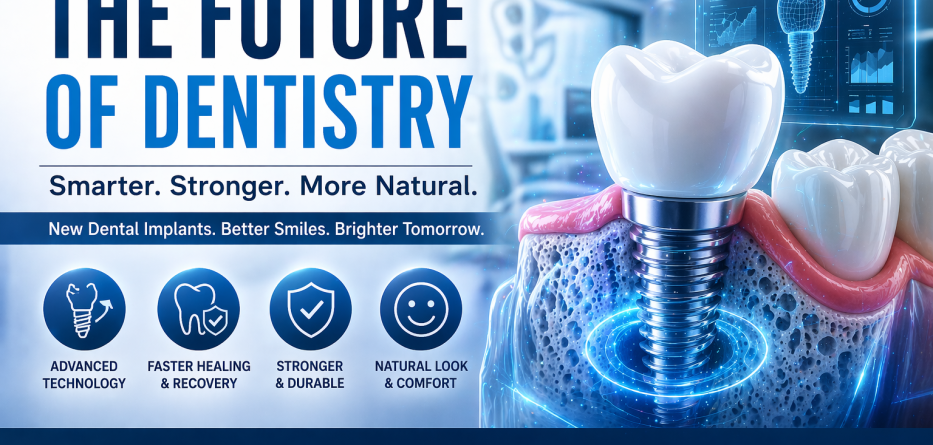
The field of dentistry is rapidly evolving, and new dental implant technologies are at the center of this transformation. Once considered a simple solution for missing teeth, dental implants are now becoming smarter, faster, and more natural than ever before. These innovations are reshaping patient expectations and setting new standards for oral healthcare.
What Are New Dental Implants?
New dental implants refer to the latest advancements in implant design, materials, and procedures. Unlike traditional implants, which mainly focus on replacing the tooth structure, modern implants aim to improve:
- Healing time
- Comfort and function
- Long-term durability
- Natural feel and appearance
These next-generation implants are designed to work more closely with the body’s biology, offering a more seamless and efficient tooth replacement solution.
Key Innovations in Dental Implants:
1. Smart Implants with Sensory Feedback
Researchers are developing implants that can mimic natural tooth sensation, helping patients feel pressure and improve bite control.
2. Regenerative Materials (Bone Glue Technology)
New biomaterials, including innovative “bone glue,” are being tested to regenerate bone and enhance implant stability, reducing the need for complex grafting procedures.
3. Faster Osseointegration
Modern implants are designed to speed up Osseointegration, allowing the implant to fuse with the jawbone more quickly and securely.
4. Minimally Invasive Procedures
Advanced tools and digital planning are making implant surgeries less invasive, resulting in reduced pain and quicker recovery.
Benefits for Patients:
These new developments bring a wide range of benefits:
- Quicker Recovery Time – Patients can return to normal life faster
- Improved Comfort – Less pain and more natural feel
- Higher Success Rates—Stronger integration reduces failure risks
- Better Aesthetics—Implants look and function like real teeth
What Experts Are Saying?
Dental professionals believe these advancements could revolutionize implant dentistry. With ongoing research and clinical trials, experts expect these technologies to become more accessible in the coming years.
Organizations like the U.S. Food and Drug Administration are actively evaluating new materials and procedures to ensure safety and effectiveness before they are widely adopted.
Growing Demand for Advanced Implants:
The demand for dental implants is increasing globally due to:
- Rising awareness of oral health
- Growing interest in cosmetic dentistry
- An aging population seeking long-term solutions
With new technology entering the market, more patients are now choosing implants as a preferred option for tooth replacement.
DentalImplants, #FutureOfDentistry, #DentalInnovation, #AdvancedDentistry, #ImplantDentistry, #DentalTechnology, #SmartDentalImplants, #ModernDentistry, #ToothReplacement, #OralHealth, #DentalCare, #SmileTransformation, #CosmeticDentistry, #HealthySmile, #DentalScience, #MedicalInnovation, #NextGenDentistry, #DigitalDentistry, #DentalTrends, #ImplantTechnology, #DentalExperts, #SmileCare, #HealthcareInnovation, #DentalAwareness, #InnovationInHealthcare

