
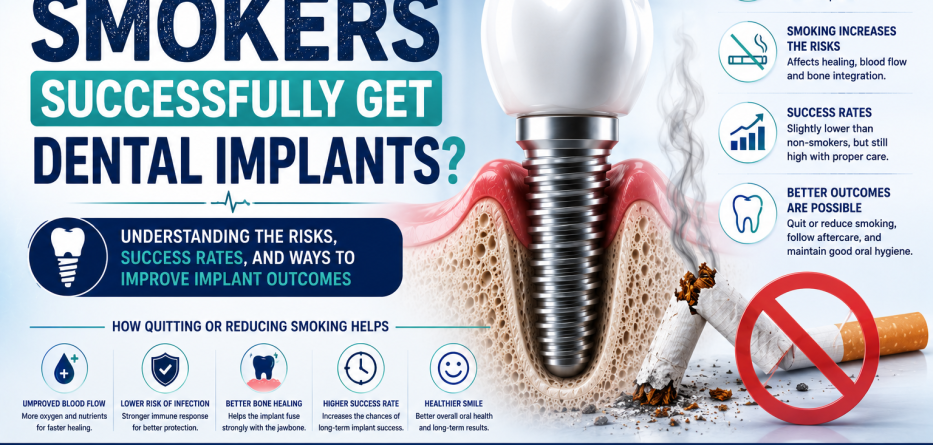
Dental implants are one of the most effective and long-lasting solutions for replacing missing teeth. However, smokers often wonder whether their habit will prevent them from being eligible for implant treatment. Since smoking is known to affect healing and oral health, it’s natural to ask: Can smokers successfully get dental implants?
The good news is that many smokers do receive successful dental implants and enjoy long-term results. However, smoking does increase certain risks and can affect the healing process. Understanding these risks and learning how to improve your chances of success can help you make an informed decision about dental implant treatment.
In this article, we’ll explore how smoking affects dental implants, success rates, potential complications, and what smokers can do to improve outcomes.
Can Smokers Get Dental Implants?
Quick Answer
Yes, smokers can often get dental implants. However, smoking increases the risk of implant complications and failure compared to non-smokers.
Many smokers successfully receive dental implants, especially when treatment is carefully planned and proper aftercare instructions are followed.
The key is understanding the risks and taking steps to reduce them.
Why Smoking Affects Dental Implants
Dental implants rely on healthy gums, adequate blood flow, and successful bone healing.
Smoking interferes with these essential processes.
Effects of Smoking on Oral Health
Smoking can:
- Reduce blood circulation
- Slow tissue healing
- Increase inflammation
- Weaken the immune response
- Promote bacterial growth
- Increase the risk of gum disease
These factors can negatively affect implant healing and long-term stability.
The Role of Osseointegration
One of the most important stages of implant treatment is osseointegration.
What Is Osseointegration?
Osseointegration is the process where the jawbone fuses with the titanium implant, creating a strong and stable foundation.
How Smoking Interferes
Nicotine and other chemicals found in tobacco can:
- Reduce oxygen delivery to tissues
- Restrict blood vessels
- Delay bone healing
- Increase the likelihood of implant failure
Successful osseointegration is essential for long-term implant success.
Dental Implant Success Rates for Smokers
Dental implants remain highly successful overall, but smoking can slightly lower success rates.
General Success Rates
| Patient Type | Average Success Rate |
|---|---|
| Non-Smokers | 95–98% |
| Smokers | 85–95% |
Success rates vary depending on:
- Number of cigarettes smoked
- Duration of smoking habit
- Overall health
- Oral hygiene
- Bone quality
Many smokers still achieve excellent long-term results.
Potential Risks for Smokers
Delayed Healing
Smoking slows the body’s natural healing process.
This may lead to:
- Longer recovery times
- Increased discomfort
- Higher risk of complications
Increased Risk of Infection
Smoking weakens the immune system and increases bacterial buildup around implants.
Potential problems include the following:
- Gum infections
- Peri-implantitis
- Bone loss
Higher Risk of Implant Failure
In severe cases, the implant may fail to integrate properly with the jawbone.
This is more common among heavy smokers who continue smoking throughout the healing period.
Are Heavy Smokers at Greater Risk?
Yes.
The risk generally increases with:
- Number of cigarettes smoked daily
- Length of smoking history
- Continued smoking after surgery
Patients who smoke heavily may require additional evaluation before treatment.
Dentists often recommend reducing or quitting smoking to improve outcomes.
Can Quitting Smoking Improve Implant Success?
Absolutely.
Even temporarily stopping smoking can significantly improve healing.
Benefits of Quitting Before Implant Surgery
- Improved blood circulation
- Better oxygen supply
- Faster healing
- Reduced infection risk
- Higher implant success rates
Many implant specialists recommend quitting at least 1–2 weeks before surgery and avoiding smoking for several weeks afterward.
How Dentists Help Smokers Achieve Successful Implants
Modern dentistry offers several strategies to improve outcomes for smokers.
Comprehensive Treatment Planning
Dentists evaluate:
- Bone density
- Gum health
- Smoking history
- Overall medical condition
Advanced Imaging Technology
Tools such as CBCT scans help ensure accurate implant placement and identify potential challenges.
Bone Grafting When Necessary
Smoking-related bone loss may require bone grafting to create adequate support for implants.
Close Monitoring
Regular follow-up visits help detect problems early and improve long-term success.
Tips for Smokers Considering Dental Implants
If you’re a smoker interested in dental implants, consider these recommendations:
Before Treatment
- Reduce smoking if possible
- Schedule a comprehensive dental evaluation
- Treat existing gum disease
- Improve oral hygiene habits
After Surgery
- Avoid smoking during the healing period
- Follow all post-operative instructions
- Attend follow-up appointments
- Maintain excellent oral hygiene
These steps can greatly improve implant outcomes.
Alternatives to Dental Implants
If smoking-related risks are too high, your dentist may discuss alternative treatments.
Common Alternatives
- Dental bridges
- Partial dentures
- Complete dentures
- Implant-supported dentures (in selected cases)
Each option has advantages and limitations, which should be discussed during consultation.
Common Myths About Smokers and Dental Implants
Myth 1: Smokers Cannot Get Dental Implants
Fact: Many smokers successfully receive dental implants.
Myth 2: All Implants Fail in Smokers
Fact: While risk increases, success rates remain high for many smokers.
Myth 3: Quitting Smoking Doesn’t Help
Fact: Even short-term smoking cessation can significantly improve healing and implant success.
Myth 4: Smoking Only Affects the Gums
Fact: Smoking affects bone healing, blood flow, immunity, and overall implant stability.
Frequently Asked Questions
Can smokers successfully get dental implants?
Yes. Many smokers achieve successful implant treatment, although the risks are generally higher than for non-smokers.
How long should I stop smoking before dental implant surgery?
Many dentists recommend stopping at least one to two weeks before surgery and avoiding smoking during healing.
Does vaping affect dental implants?
Yes. Nicotine from vaping may also affect blood flow and healing, potentially increasing implant risks.
What is the biggest risk for smokers receiving implants?
Delayed healing and failed osseointegration are among the most significant concerns.
Are dental implants worth it for smokers?
For many patients, yes. With proper planning and care, smokers can enjoy the same functional and aesthetic benefits as non-smokers.
Conclusion
So, can smokers successfully get dental implants?
The answer is yes. While smoking increases the risk of complications, many smokers receive successful dental implants and enjoy long-lasting results. The key lies in proper treatment planning, excellent oral hygiene, and minimizing smoking before and after surgery.
By working closely with an experienced implant dentist and following recommended guidelines, smokers can significantly improve their chances of achieving a healthy, functional, and confident smile.
