
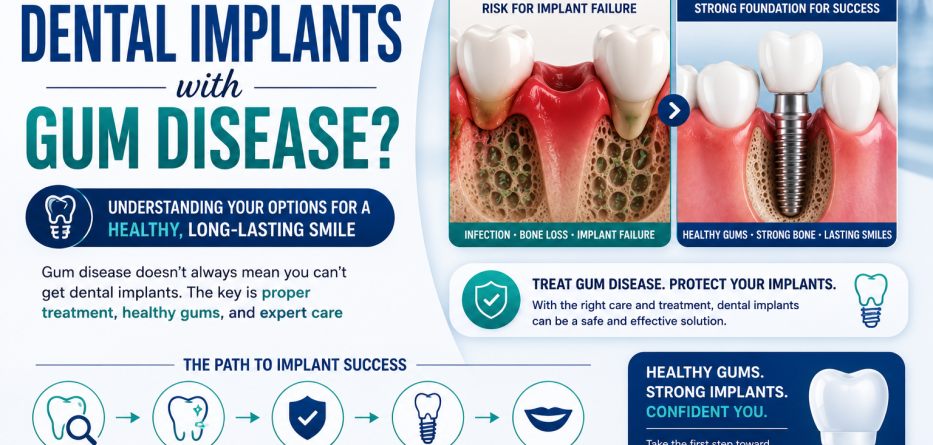
Dental implants are one of the most effective and long-lasting solutions for replacing missing teeth. However, many patients who suffer from gum disease wonder whether they are still eligible for implant treatment. Since healthy gums and strong bone support are essential for implant success, gum disease can present unique challenges.
The good news is that having gum disease does not automatically disqualify you from receiving dental implants. In many cases, patients can successfully undergo implant treatment after proper periodontal care and stabilization of their oral health.
In this article, we’ll explore the relationship between gum disease and dental implants, discuss treatment options, and explain how dentists determine implant eligibility.
What Is Gum Disease?
Gum disease, also known as periodontal disease, is a bacterial infection that affects the gums and supporting structures of the teeth.
It typically develops in stages:
Gingivitis
The earliest stage of gum disease.
Common symptoms include:
- Red gums
- Swollen gums
- Bleeding during brushing
- Mild gum irritation
At this stage, damage is usually reversible with proper treatment.
Periodontitis
An advanced form of gum disease.
Symptoms may include:
- Gum recession
- Bone loss
- Loose teeth
- Persistent bad breath
- Tooth loss
Periodontitis can significantly impact the success of dental implants if left untreated.
Can You Get Dental Implants If You Have Gum Disease?
The Short Answer
Yes, many patients with gum disease can still receive dental implants. However, the disease must usually be treated and controlled before implant placement.
Dentists carefully evaluate:
- Gum health
- Bone density
- Infection levels
- Overall oral condition
The goal is to create a healthy environment that supports successful osseointegration and long-term implant stability.
Why Gum Health Matters for Dental Implants
Dental implants rely on healthy gums and strong jawbone support.
When gum disease progresses, it can cause:
- Bone loss around teeth
- Gum recession
- Chronic inflammation
- Increased bacterial activity
These conditions may compromise implant healing and increase the risk of implant failure.
Healthy gum tissue acts as a protective barrier that helps prevent infection around the implant.
How Gum Disease Affects Implant Success
Patients with untreated periodontal disease face a higher risk of complications.
Potential issues include the following:
Poor Osseointegration
Inflammation may interfere with the implant’s ability to fuse properly with the jawbone.
Increased Infection Risk
Harmful bacteria can affect the implant site during healing.
Perimplantitis
This condition is similar to gum disease but affects tissues surrounding a dental implant.
Symptoms include:
- Bleeding gums
- Swelling
- Bone loss
- Implant mobility
If untreated, peri-implantitis can lead to implant failure.
What Happens Before Dental Implant Treatment?
If gum disease is present, your dentist will typically recommend periodontal treatment first.
Comprehensive Examination
The evaluation may include:
- Digital X-rays
- 3D imaging
- Periodontal measurements
- Bone density assessment
This helps determine the severity of gum disease and the amount of available bone support.
Treatments That May Be Needed Before Implants
Professional Deep Cleaning
Also known as scaling and root planing.
This procedure removes:
- Plaque
- Tartar
- Bacterial deposits below the gumline
Periodontal Therapy
More advanced cases may require specialized gum treatment to reduce infection and inflammation.
Bone Grafting
If significant bone loss has occurred, bone grafting may be necessary to rebuild the jawbone before implant placement.
Gum Grafting
For patients with severe gum recession, gum grafting can improve tissue support around future implants.
How Long Must You Wait After Gum Disease Treatment?
The timeline varies depending on the severity of the condition.
| Treatment | Typical Healing Time |
|---|---|
| Deep Cleaning | 2–6 Weeks |
| Periodontal Therapy | Several Weeks |
| Bone Grafting | 3–6 Months |
| Gum Grafting | 4–8 Weeks |
Your dentist will monitor healing before proceeding with implant surgery.
Are Dental Implants Safe for Patients with a History of Gum Disease?
Yes, many patients with previously treated gum disease enjoy successful implant outcomes.
Success depends on:
- Effective disease control
- Good oral hygiene
- Regular dental visits
- Healthy lifestyle habits
A history of gum disease may increase the need for ongoing maintenance, but it does not automatically prevent implant treatment.
How to Improve Implant Success After Gum Disease
Patients can significantly improve outcomes by following these recommendations:
Maintain Excellent Oral Hygiene
- Brush twice daily
- Floss carefully around implants
- Use recommended cleaning tools
Attend Regular Dental Checkups
Professional maintenance helps detect problems early.
Avoid smoking.
Smoking is one of the leading risk factors for both gum disease and implant failure.
Manage Health Conditions
Proper control of conditions such as diabetes can improve healing and reduce complications.
Alternatives If You’re Not Ready for Dental Implants
If active gum disease prevents immediate implant placement, other temporary solutions may be considered:
Dental Bridges
Replace one or more missing teeth using neighboring teeth for support.
Partial Dentures
Removable option for replacing several missing teeth.
Complete Dentures
Suitable for patients missing all teeth in one arch.
Your dentist can help determine the best option while gum health is being restored.
Signs You May Be Ready for Dental Implants
Your dentist may approve implant treatment if:
- Gum infection has been eliminated
- Bone levels are stable
- No active bleeding is present
- Oral hygiene is well maintained
- Overall health supports healing
These factors create an ideal foundation for long-term implant success.
Frequently Asked Questions
Can gum disease cause dental implant failure?
Yes. Untreated gum disease increases the risk of infection, bone loss, and peri-implantitis, which can lead to implant failure.
Can implants be placed immediately after treating gum disease?
In some cases, yes. However, many patients require a healing period before implant placement.
What if I have bone loss from gum disease?
Bone grafting procedures can often rebuild lost bone and make implant treatment possible.
Is peri-implantitis the same as gum disease?
They are similar. Peri-implantitis affects tissues around dental implants, while periodontal disease affects natural teeth.
How successful are implants in patients with previous gum disease?
Success rates remain high when the disease is treated, controlled, and followed by proper maintenance.
Conclusion
So, can you get dental implants with gum disease?
The answer is often yes—but successful treatment begins with addressing the underlying periodontal condition first. Healthy gums and adequate bone support are essential for long-term implant success. Fortunately, modern periodontal treatments, bone grafting techniques, and advanced implant technologies allow many patients with a history of gum disease to enjoy the benefits of dental implants.
If you’re considering implants and have concerns about gum disease, a comprehensive evaluation by an experienced dental professional can help determine the best treatment path for restoring your smile and oral health.
