
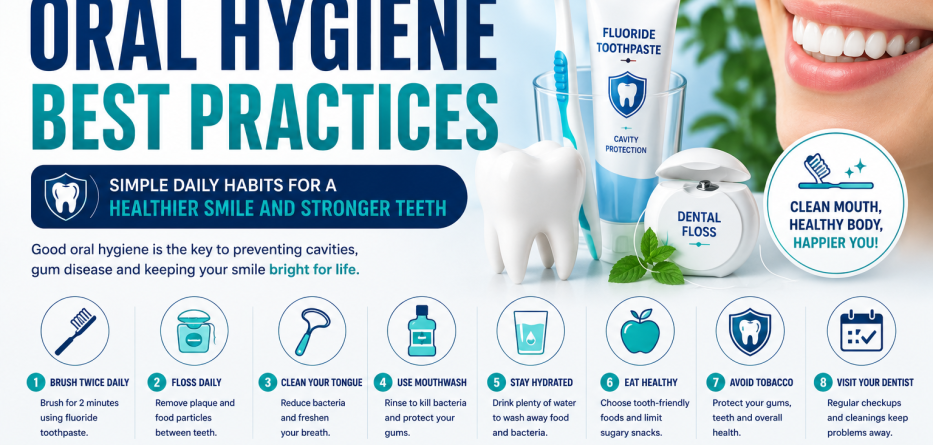
Good oral hygiene is the foundation of a healthy smile and overall well-being. While most people know they should brush and floss regularly, many are unaware of the best practices that truly protect their teeth and gums from decay, disease, and other oral health problems.
Poor oral hygiene can lead to cavities, gum disease, bad breath, tooth loss, and even affect your general health. Fortunately, maintaining excellent oral health doesn’t require complicated routines—it simply requires consistency and the right habits.
In this guide, we’ll explore the most effective oral hygiene best practices, common mistakes to avoid, and professional recommendations for keeping your teeth and gums healthy for life.
Why Is Oral Hygiene Important?
Oral hygiene involves keeping your mouth clean and free of harmful bacteria that can cause dental problems.
Good oral hygiene helps:
- Prevent cavities
- Reduce plaque buildup
- Protect against gum disease
- Eliminate bad breath
- Preserve natural teeth
- Support overall health
Research has linked poor oral health to conditions such as heart disease, diabetes, and respiratory infections, making oral hygiene an essential part of overall wellness.
1. Brush Your Teeth Twice Daily
Brushing is the most important step in any oral hygiene routine.
Best Brushing Practices
- Brush at least twice a day
- Use a soft-bristled toothbrush
- Brush for two full minutes
- Hold the brush at a 45-degree angle
- Clean all tooth surfaces
Many dentists recommend brushing after breakfast and before bedtime.
Why It Matters
Brushing removes:
- Plaque
- Food particles
- Harmful bacteria
Regular brushing helps prevent cavities and gum disease.
2. Use Fluoride Toothpaste
Fluoride strengthens tooth enamel and helps prevent tooth decay.
Benefits of Fluoride
- Remineralizes enamel
- Reduces cavity risk
- Protects against acid attacks
- Supports long-term oral health
When selecting toothpaste, look for products containing fluoride approved by dental professionals.
3. Floss Every Day
Brushing alone cannot effectively clean between teeth.
Flossing removes:
- Food debris
- Plaque buildup
- Bacteria from hard-to-reach areas
Proper Flossing Technique
- Use approximately 18 inches of floss.
- Gently guide it between teeth.
- Curve it around each tooth.
- Move it up and down carefully.
- Avoid snapping the floss into the gums.
Daily flossing significantly reduces the risk of gum disease.
4. Clean Your Tongue
The tongue can harbor large amounts of bacteria.
Neglecting tongue cleaning may contribute to:
- Bad breath
- Plaque accumulation
- Increased bacterial growth
Effective Methods
- Use a tongue scraper
- Brush your tongue gently
- Rinse thoroughly afterward
Cleaning your tongue should be part of your daily routine.
5. Use an Antibacterial Mouthwash
Mouthwash can help reduce bacteria that brushing and flossing may miss.
Benefits include:
- Fresher breath
- Reduced plaque
- Healthier gums
- Additional cavity protection
Ask your dentist which mouthwash is best for your specific needs.
6. Stay Hydrated Throughout the Day
Water plays a critical role in oral health.
Benefits of Drinking Water
- Washes away food particles
- Neutralizes acids
- Promotes saliva production
- Reduces dry mouth
Saliva naturally protects teeth by helping control harmful bacteria.
7. Follow a Tooth-Friendly Diet
Nutrition directly impacts oral health.
Foods That Support Healthy Teeth
- Dairy products
- Leafy greens
- Nuts
- Fish
- Fresh fruits and vegetables
Foods to Limit
- Sugary snacks
- Sticky candies
- Carbonated beverages
- Excessive acidic foods
A balanced diet helps maintain strong teeth and healthy gums.
8. Avoid Tobacco Products
Smoking and tobacco use significantly increase the risk of oral health problems.
Potential consequences include the following:
- Gum disease
- Tooth discoloration
- Tooth loss
- Oral cancer
- Delayed healing
Quitting tobacco is one of the best steps you can take for your oral and overall health.
9. Replace Your Toothbrush Regularly
A worn toothbrush becomes less effective over time.
When to Replace
- Every 3–4 months
- After illness
- When bristles become frayed
Using a fresh toothbrush improves cleaning effectiveness.
10. Schedule Regular Dental Checkups
Professional dental visits remain essential, even with excellent home care.
Benefits of Routine Exams
- Early cavity detection
- Gum disease monitoring
- Professional cleanings
- Oral cancer screenings
- Personalized advice
Most dentists recommend checkups every six months.
Common Oral Hygiene Mistakes to Avoid
Many people unknowingly make mistakes that compromise their oral health.
Brushing Too Hard
Aggressive brushing can damage enamel and irritate gums.
Skipping Flossing
Neglecting flossing leaves plaque between teeth.
Using an Old Toothbrush
Worn bristles clean less effectively.
Frequent Sugary Snacks
Constant sugar exposure increases cavity risk.
Missing Dental Appointments
Regular professional care helps identify problems before they become serious.
Oral Hygiene for Dental Implant Patients
Dental implants require the same level of care as natural teeth.
Implant Care Tips
- Brush twice daily
- Floss around implants
- Use recommended cleaning aids
- Attend maintenance appointments
- Avoid smoking
Good oral hygiene helps prevent peri-implant disease and extends implant lifespan.
Oral Hygiene Best Practices by Age
Children
- Supervised brushing
- Fluoride toothpaste
- Healthy eating habits
Adults
- Consistent brushing and flossing
- Professional cleanings
- Lifestyle management
Seniors
- Monitor dry mouth
- Maintain dentures properly
- Continue regular dental visits
Every age group benefits from strong oral hygiene habits.
Daily Oral Hygiene Checklist
Use this simple routine:
☑ Brush twice daily
☑ Floss once daily
☑ Clean your tongue
☑ Use mouthwash
☑ Drink water regularly
☑ Limit sugary foods
☑ Avoid tobacco
☑ Visit your dentist every six months
Following these habits consistently can significantly improve oral health.
Frequently Asked Questions
How often should I brush my teeth?
Dentists recommend brushing at least twice daily for two minutes each time.
Is flossing really necessary?
Yes. Flossing removes plaque and debris from areas a toothbrush cannot reach.
What is the best mouthwash for oral hygiene?
The best mouthwash depends on your individual needs. Consult your dentist for recommendations.
How often should I visit the dentist?
Most people should schedule dental checkups and cleanings every six months.
Does oral health affect overall health?
Yes. Poor oral health has been linked to several systemic health conditions, including heart disease and diabetes.
Can good oral hygiene prevent gum disease?
Yes. Consistent brushing, flossing, and professional cleanings significantly reduce the risk of gum disease.
Conclusion
Maintaining excellent oral hygiene is one of the most effective ways to protect your teeth, gums, and overall health. By following proven oral hygiene best practices such as brushing twice daily, flossing regularly, eating a balanced diet, and visiting your dentist routinely, you can prevent many common dental problems and enjoy a healthier smile for years to come.
Consistency is the key. Small daily habits can make a significant difference in your long-term oral health and help you maintain strong, beautiful teeth throughout your life.
