
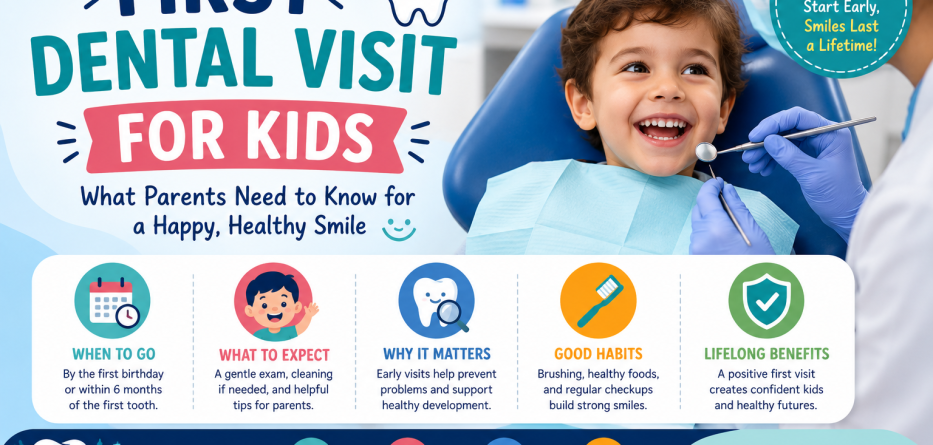
A child’s first dental visit is an important milestone in their journey toward lifelong oral health. Many parents wonder when they should schedule their child’s first appointment, what happens during the visit, and how to prepare their little one for the experience.
The good news is that a first dental visit is usually simple, gentle, and designed to help children feel comfortable in a dental setting. Starting dental care early can prevent cavities, identify potential issues, and establish healthy habits that last a lifetime.
In this guide, we’ll explain when your child should see a dentist for the first time, what to expect during the appointment, and how parents can make the experience positive and stress-free.
When Should a Child Have Their First Dental Visit?
According to pediatric dental experts, children should visit a dentist by:
- Their first birthday, or
- Within six months of their first tooth erupting
Many parents wait until a problem develops, but early visits help prevent dental issues before they become serious.
Why Early Visits Matter
Early dental checkups help:
- Detect tooth decay
- Monitor oral development
- Educate parents about oral hygiene
- Establish a dental home
- Reduce dental anxiety
The earlier children become familiar with dental visits, the more comfortable they tend to be in the future.
Why Is the First Dental Visit Important?
Baby teeth may be temporary, but they play a vital role in a child’s development.
They help with:
- Proper chewing
- Speech development
- Maintaining space for adult teeth
- Facial growth and development
Early dental care helps protect these important functions.
Benefits of an Early Dental Visit
- Prevents cavities
- Identifies developmental concerns
- Encourages healthy habits
- Builds trust with the dentist
- Promotes lifelong oral health
What Happens During a Child’s First Dental Visit?
The first appointment is usually short, friendly, and educational.
The dentist focuses on making the child feel comfortable while assessing oral health.
Typical Steps Include
1. Oral Examination
The dentist will check the following:
- Teeth
- Gums
- Jaw development
- Bite alignment
- Oral tissues
2. Cavity Assessment
Even infants and toddlers can develop cavities.
The dentist will look for early signs of tooth decay.
3. Cleaning (If Appropriate)
A gentle cleaning may be performed to remove plaque and demonstrate proper oral hygiene.
4. Parent Education
The dentist will discuss:
- Brushing techniques
- Fluoride recommendations
- Thumb sucking
- Pacifier use
- Nutrition habits
5. Questions and Answers
Parents can discuss any concerns regarding their child’s oral health and development.
How to Prepare Your Child for Their First Dental Visit
Preparation can make a big difference in helping children feel relaxed.
Tips for Parents
Talk Positively
Use encouraging language such as the following:
- “The dentist will count your teeth.”
- “The dentist helps keep your smile healthy.”
Avoid using words that may create fear, including:
- Pain
- Needle
- Drill
- Hurt
Read Children’s Books About the Dentist
Storybooks can help children understand what to expect and reduce anxiety.
Schedule Wisely
Choose a time when your child is:
- Well rested
- Fed
- In a good mood
Morning appointments often work best for younger children.
Stay calm.
Children often mirror their parents’ emotions.
A calm and positive attitude helps create a reassuring experience.
Common Concerns Parents Have
Will My Child Need X-Rays?
Not always.
X-rays are only taken when necessary to evaluate dental development or detect hidden problems.
Will the Visit Be Painful?
Most first dental visits are completely painless.
The focus is on examination, education, and comfort.
What If My Child Cries?
This is completely normal.
Pediatric dentists are trained to work with nervous or anxious children and understand that some adjustment may be needed.
Tips for Maintaining Oral Health After the First Visit
The first dental appointment is only the beginning.
Healthy habits at home are essential.
Daily Oral Care Tips
- Brush twice daily
- Use age-appropriate toothpaste
- Floss when teeth begin touching
- Limit sugary snacks and drinks
- Encourage water consumption
Consistent oral hygiene helps prevent cavities and supports healthy development.
Foods That Support Healthy Teeth
A balanced diet contributes significantly to oral health.
Tooth-Friendly Foods
- Milk
- Cheese
- Yogurt
- Apples
- Carrots
- Leafy greens
- Eggs
Foods to Limit
- Candy
- Sticky snacks
- Sugary drinks
- Soda
- Frequent juice consumption
Healthy nutrition helps strengthen developing teeth.
Signs Your Child May Need a Dental Visit Sooner
Parents should contact a dentist if they notice:
- Tooth discoloration
- White spots on teeth
- Tooth pain
- Swollen gums
- Delayed tooth eruption
- Injury to the mouth or teeth
Early treatment often prevents more serious problems.
How Often Should Kids Visit the Dentist?
Most children should visit the dentist every six months.
Regular checkups allow dentists to:
- Monitor growth
- Detect cavities early
- Provide preventive treatments
- Reinforce healthy habits
Consistent care helps maintain optimal oral health throughout childhood.
Benefits of Choosing a Pediatric Dentist
Pediatric dentists receive specialized training in children’s oral health.
Advantages include:
- Child-friendly environments
- Age-specific expertise
- Behavioral guidance techniques
- Preventive care focus
Many children feel more comfortable in pediatric dental practices.
Frequently Asked Questions
At what age should my child first visit the dentist?
Children should visit a dentist by their first birthday or within six months of their first tooth appearing.
How long does a first dental visit take?
Most first visits last between 30 and 45 minutes.
Are baby teeth really important?
Yes. Baby teeth support chewing, speech development, and proper alignment of adult teeth.
What should I bring to my child’s first dental appointment?
Bring medical information, insurance details, and a list of any concerns or questions.
How can I prevent cavities in my child?
Brush regularly, limit sugary foods, encourage healthy eating habits, and schedule routine dental checkups.
Is thumb sucking harmful?
Thumb sucking is normal in infancy, but prolonged habits may affect tooth alignment and should be discussed with a dentist.
Conclusion
A child’s first dental visit sets the foundation for a lifetime of healthy smiles. Early dental care helps prevent cavities, supports proper oral development, and teaches children that visiting the dentist is a positive experience.
By scheduling your child’s first dental appointment by age one, practicing good oral hygiene at home, and maintaining regular checkups, you can help ensure strong, healthy teeth for years to come. A positive first dental visit can make all the difference in creating lifelong confidence and excellent oral health habits.
