

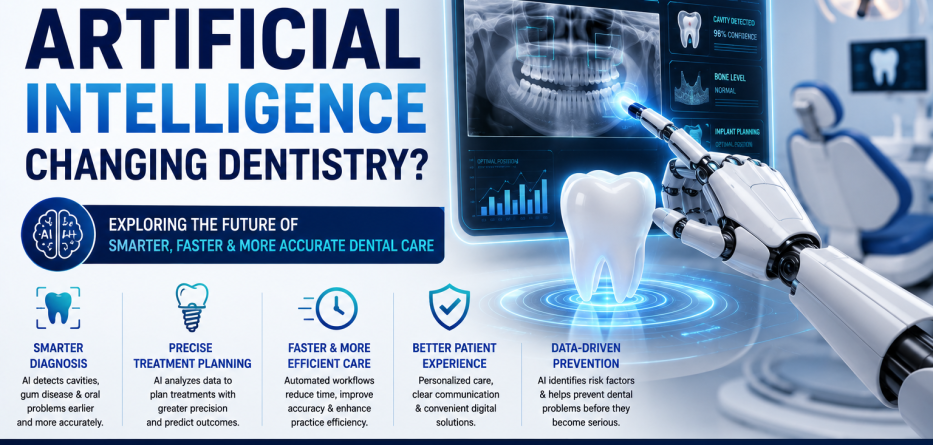
Artificial Intelligence (AI) is transforming industries worldwide, and dentistry is no exception. What once seemed like futuristic technology is now helping dentists diagnose diseases more accurately, plan treatments more efficiently, and deliver better patient experiences.
From analyzing dental X-rays to predicting oral health risks, AI is revolutionizing how dental professionals approach patient care. As technology continues to evolve, artificial intelligence is becoming an essential tool in modern dental practices.
In this article, we’ll explore how AI is changing dentistry, the benefits it offers patients and dentists, and what the future of AI-powered dental care may look like.
What Is Artificial Intelligence in Dentistry?
“Artificial intelligence in dentistry” refers to the use of computer systems and machine learning algorithms that can analyze data, recognize patterns, and assist dentists in making clinical decisions.
AI systems can process large amounts of information quickly and accurately, helping dental professionals detect problems that might otherwise be overlooked.
Quick Definition
Artificial Intelligence in dentistry uses advanced software and machine learning technologies to improve diagnosis, treatment planning, patient communication, and overall dental care.
Why Is AI Becoming Important in Dentistry?
Modern dentistry generates enormous amounts of data through the following:
- Digital X-rays
- CBCT scans
- Intraoral photographs
- Patient records
- Treatment histories
AI helps organize and analyze this information more efficiently, allowing dentists to make faster and more informed decisions.
Key Benefits
- Improved diagnostic accuracy
- Enhanced treatment planning
- Faster workflows
- Better patient outcomes
- Reduced human error
AI-Powered Dental Diagnostics
One of the most significant applications of AI is diagnostic assistance.
Detecting Cavities Earlier
AI software can analyze dental radiographs and identify early signs of tooth decay that may be difficult to detect with the naked eye.
Benefits include:
- Earlier intervention
- Less invasive treatments
- Better preservation of natural teeth
Identifying Gum Disease
AI can evaluate:
- Bone loss
- Gum recession
- Periodontal disease progression
This helps dentists develop more targeted treatment plans.
Detecting Oral Pathologies
Advanced AI systems can assist in identifying:
- Oral cancers
- Cysts
- Lesions
- Abnormal tissue changes
Earlier detection often leads to better treatment outcomes.
AI and Dental Imaging
Modern dental imaging has become more sophisticated with AI integration.
AI-Assisted X-Ray Analysis
AI software can:
- Highlight suspicious areas
- Measure bone levels
- Detect hidden abnormalities
- Improve diagnostic consistency
This supports dentists in making more accurate assessments.
CBCT Scan Interpretation
Cone Beam Computed Tomography (CBCT) scans generate highly detailed 3D images.
AI helps analyze:
- Bone density
- Nerve pathways
- Implant placement sites
- Sinus anatomy
This enhances precision and safety during procedures.
AI in Dental Implant Planning
Dental implants require careful planning to ensure success.
AI-assisted treatment planning can:
- Evaluate bone quality
- Recommend implant positioning
- Predict treatment outcomes
- Improve surgical precision
Benefits for Implant Patients
- Higher success rates
- Reduced complications
- Improved accuracy
- Faster treatment planning
AI and Orthodontics
Artificial intelligence is changing orthodontic treatment in remarkable ways.
Clear Aligner Planning
AI can:
- Simulate tooth movement
- Predict treatment timelines
- Optimize aligner designs
Patients can often preview their expected results before treatment begins.
Monitoring Progress Remotely
AI-powered applications allow orthodontists to monitor treatment progress through patient-submitted photos.
Benefits include:
- Fewer office visits
- Faster adjustments
- Improved patient convenience
AI in Preventive Dentistry
Prevention is a major focus of modern dentistry.
AI can analyze patient data and identify risk factors for:
- Tooth decay
- Gum disease
- Tooth loss
- Oral infections
Predictive Dentistry
By identifying risks early, dentists can recommend preventive strategies before serious problems develop.
AI and Patient Communication
Artificial intelligence is improving patient experiences through better communication.
Virtual Assistants and Chatbots
AI-powered systems can:
- Schedule appointments
- Answer common questions
- Send reminders
- Provide educational information
This improves convenience and reduces administrative workload.
AI in Treatment Planning
Treatment planning often involves evaluating multiple factors.
AI can assist by analyzing:
- Dental history
- Imaging data
- Oral health conditions
- Treatment options
The result is more personalized care and informed decision-making.
Benefits of Artificial Intelligence in Dentistry
For Patients
- Earlier disease detection
- More accurate diagnoses
- Better treatment outcomes
- Personalized care
- Increased convenience
For Dentists
- Improved efficiency
- Reduced diagnostic errors
- Enhanced clinical decision-making
- Better workflow management
Limitations of AI in Dentistry
Despite its advantages, AI is not a replacement for dental professionals.
Current Challenges
- Data privacy concerns
- Technology costs
- Need for human oversight
- Regulatory considerations
AI works best as a tool that supports dentists rather than replacing them.
The Future of Artificial Intelligence in Dentistry
The future of AI-powered dentistry is exciting.
Emerging innovations include:
- Real-time diagnostic assistance
- AI-guided robotic dentistry
- Personalized treatment recommendations
- Predictive oral health analytics
- Advanced disease detection systems
As technology advances, AI will continue to improve accuracy, efficiency, and patient care.
Will AI Replace Dentists?
The simple answer is no.
Dentistry requires:
- Clinical judgment
- Hands-on treatment
- Patient communication
- Emotional understanding
AI can assist with data analysis and decision support, but human expertise remains essential.
The future is likely to involve collaboration between dentists and AI systems rather than replacement.
Frequently Asked Questions
How is AI used in dentistry?
AI assists with diagnostics, imaging analysis, treatment planning, orthodontics, implant placement, and patient communication.
Can AI detect cavities?
Yes. AI-powered software can identify early signs of tooth decay on dental X-rays.
Does AI improve dental implant success?
AI helps optimize implant planning by analyzing bone structure and recommending precise implant placement.
Is AI replacing dentists?
No. AI supports dentists by providing insights and improving efficiency, but it cannot replace professional expertise and patient care.
What are the benefits of AI in dentistry?
Benefits include improved diagnostics, earlier disease detection, enhanced treatment planning, and better patient experiences.
Conclusion
Artificial intelligence is reshaping the future of dentistry by improving diagnostic accuracy, treatment planning, patient communication, and preventive care. From detecting cavities earlier to assisting with dental implant placement, AI is helping dentists provide safer, faster, and more personalized treatments.
While AI will not replace dental professionals, it is becoming a powerful partner in delivering high-quality oral healthcare. As technology continues to evolve, patients can expect even more innovative and efficient dental experiences in the years ahead.

