
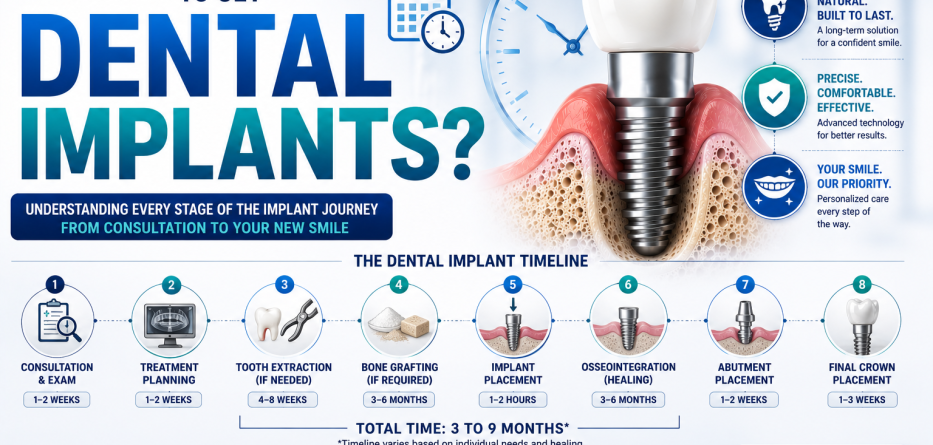
Dental implants are one of the most effective and long-lasting solutions for replacing missing teeth. They look natural, function like real teeth, and can last for decades with proper care. However, one of the most common questions patients ask before starting treatment is, “How long does it take to get dental implants?
The answer depends on several factors, including your oral health, bone density, healing ability, and whether additional procedures are required. While some patients may complete treatment in a few months, others may need a longer timeline to achieve the best possible results.
In this guide, we’ll break down every stage of the dental implant process, explain what affects treatment time, and help you understand what to expect from start to finish.
Quick Answer: How Long Does the Dental Implant Process Take?
For most patients, the complete dental implant process takes 3 to 9 months.
However, treatment may take:
| Treatment Type | Average Timeline |
|---|---|
| Simple Implant Case | 3–6 Months |
| Implant with Bone Graft | 6–12 Months |
| Full-Mouth Implants | 4–12 Months |
| Same-Day Implants | 1 Day + Healing Period |
The timeline varies depending on individual needs and healing progress.
Understanding the Dental Implant Process
Dental implant treatment occurs in several stages.
Main Stages Include
- Initial Consultation
- Treatment Planning
- Tooth Extraction (if needed)
- Bone Grafting (if required)
- Implant Placement
- Osseointegration (Healing)
- Abutment Placement
- Final Crown Placement
Each stage plays an important role in ensuring long-term implant success.
Stage 1: Initial Consultation
Timeline: 1–2 Weeks
Your implant journey begins with a comprehensive dental evaluation.
During this appointment, your dentist will:
- Review your medical history
- Examine your teeth and gums
- Take digital X-rays
- Perform a CBCT scan if needed
- Evaluate jawbone health
The goal is to determine whether you’re a suitable candidate for implants.
Stage 2: Treatment Planning
Timeline: 1–2 Weeks
Once your examination is complete, your dentist creates a personalized treatment plan.
This includes:
- Implant location
- Number of implants required
- Restoration type
- Additional procedures if needed
Advanced digital planning improves precision and treatment outcomes.
Stage 3: Tooth Extraction (If Necessary)
Timeline: Healing Period 4–8 Weeks
If a damaged or failing tooth remains in place, it may need to be extracted before implant placement.
Some patients can receive an implant immediately after extraction, while others require additional healing time.
Factors affecting timing include:
- Bone condition
- Infection presence
- Gum health
Stage 4: Bone Grafting (If Required)
Timeline: 3–6 Months
Bone grafting may be necessary if significant bone loss has occurred.
Common causes of bone loss include:
- Long-term tooth loss
- Gum disease
- Trauma
- Infection
The graft helps rebuild the jawbone and create a stable foundation for the implant.
Why Bone Grafting Extends Treatment Time
The graft must fully integrate with the surrounding bone before implant placement can occur.
Stage 5: Dental Implant Placement
Timeline: 1–2 Hours Per Implant
Implant surgery is typically performed under local anesthesia.
During the procedure:
- The gum is opened.
- A small space is prepared in the bone.
- The titanium implant is placed.
- The site is closed and allowed to heal.
Most patients return to normal activities within a few days.
Stage 6: Osseointegration (Most Important Stage)
Timeline: 3–6 Months
Osseointegration is the process in which the implant fuses with the jawbone.
This stage is critical because it provides the following:
- Implant stability
- Long-term durability
- Natural chewing function
Why It Takes Time
Bone cells gradually grow around the implant and create a secure bond.
Factors affecting healing include:
- Age
- Bone density
- Overall health
- Smoking status
- Oral hygiene
Patience during this stage is essential for long-term success.
Stage 7: Abutment Placement
Timeline: 1–2 Weeks
After successful osseointegration, the dentist attaches an abutment.
The abutment serves as the connector between the following:
- Implant post
- Final restoration
Minor healing typically occurs before the final restoration is placed.
Stage 8: Final Crown Placement
Timeline: 1–3 Weeks
Once healing is complete, impressions or digital scans are taken to create the custom crown.
The crown is designed to:
- Match surrounding teeth
- Restore function
- Improve aesthetics
Once placed, the implant functions much like a natural tooth.
Can Dental Implants Be Done in One Day?
Same-Day Dental Implants
In certain cases, patients may qualify for immediate-load implants.
This approach allows the following:
- Implant placement
- Temporary restoration placement
on the same day.
Benefits
- Faster aesthetics
- Reduced treatment visits
- Immediate smile improvement
However, not every patient is a candidate.
Factors That Affect Dental Implant Treatment Time
Bone Density
Healthy bones often lead to faster treatment.
Smoking
Smoking can slow healing and increase complications.
Oral Hygiene
Healthy gums support quicker recovery.
Medical Conditions
Conditions such as diabetes may influence healing speed.
Number of Implants
Full-mouth restorations often require longer planning and treatment.
How Long Is Recovery After Implant Surgery?
First 24–72 Hours
Patients may experience:
- Mild swelling
- Minor discomfort
- Tenderness
First Week
Most swelling and discomfort improve significantly.
Long-Term Healing
The bone continues integrating with the implant for several months.
Most patients find recovery easier than expected.
Tips for Faster Healing
To promote successful healing:
- Follow your dentist’s instructions
- Avoid smoking
- Maintain excellent oral hygiene
- Eat soft foods initially
- Attend follow-up appointments
- Stay hydrated
Good habits can improve recovery and treatment outcomes.
Benefits of Taking Time for Proper Healing
While many patients want immediate results, allowing adequate healing provides important advantages.
Benefits Include
- Stronger implant stability
- Better bone integration
- Reduced risk of failure
- Longer-lasting results
Rushing treatment can compromise long-term success.
Frequently Asked Questions
How long do dental implants take from start to finish?
Most implant treatments take between 3 and 9 months.
Can I get dental implants immediately after extraction?
In some cases, yes. Immediate implant placement may be possible depending on bone and gum health.
Why does osseointegration take so long?
Bone cells need time to grow around the implant and create a stable bond.
How painful is the dental implant process?
Most patients report only mild discomfort that can be managed with medication.
Can treatment be completed faster?
Certain patients may qualify for same-day implants, but eligibility depends on individual circumstances.
Conclusion
So, how long does it take to get dental implants?
For most patients, the complete process takes between 3 and 9 months, although more complex cases involving bone grafting or multiple implants may take longer. While the timeline may seem lengthy, each stage is designed to ensure proper healing, strong bone integration, and long-term success.
Dental implants are a significant investment in your oral health, and taking the time to complete treatment properly can provide a strong, natural-looking smile that lasts for decades.
