
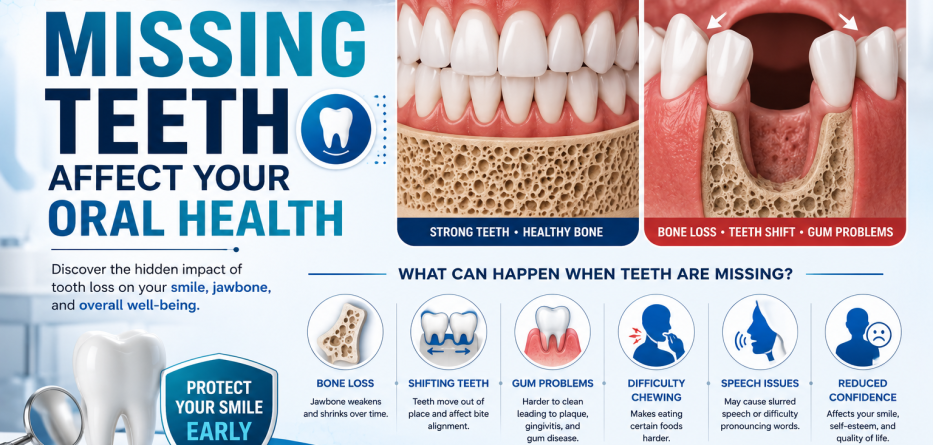
Many people think a missing tooth is mainly a cosmetic issue. While gaps in your smile can affect confidence, the impact goes much deeper. Missing teeth can trigger a chain reaction that affects your oral health, facial structure, ability to eat, and even your overall well-being.
Whether you’ve lost a tooth due to injury, decay, or gum disease, understanding the consequences of tooth loss is essential. The sooner you address missing teeth, the better your chances of preventing long-term dental complications.
In this article, we’ll explore how missing teeth affect your oral health and why timely treatment is important.
What Happens When You Lose a Tooth?
Your teeth work together as a system. Each tooth helps maintain proper alignment, supports chewing function, and stimulates the jawbone.
When a tooth is lost, neighboring teeth no longer have support, and the underlying jawbone stops receiving stimulation. Over time, this can lead to several oral health problems.
1. Bone Loss in the Jaw
One of the most significant consequences of missing teeth is jawbone deterioration.
Natural tooth roots stimulate the jawbone every time you chew. When a tooth is missing, that stimulation disappears, causing the bone to gradually shrink.
Effects of Jawbone Loss
- Reduced bone density
- Changes in facial appearance
- Premature aging around the mouth
- Increased risk of additional tooth loss
Studies show that significant bone loss can occur within the first year after tooth extraction.
2. Shifting of Nearby Teeth
Your teeth naturally help keep each other in position. When a gap is left untreated, adjacent teeth begin to move toward the empty space.
Problems Caused by Tooth Shifting
- Crooked teeth
- Bite misalignment
- Increased plaque buildup
- Difficulty cleaning teeth properly
- Greater risk of cavities and gum disease
Even a single missing tooth can affect the alignment of your entire smile over time.
3. Increased Risk of Gum Disease
Gaps created by missing teeth can become areas where food particles and bacteria accumulate.
These hard-to-clean spaces often contribute to:
- Gum inflammation
- Gingivitis
- Periodontal disease
- Bad breath
If gum disease develops, it can further damage surrounding teeth and bone structures.
4. Difficulty Chewing Food Properly
Missing teeth can significantly affect your ability to chew certain foods.
Many patients avoid foods such as:
- Apples
- Nuts
- Steak
- Raw vegetables
Poor chewing may lead to digestive issues because food isn’t broken down properly before swallowing.
In addition, limited food choices can impact nutritional intake and overall health.
5. Speech Problems
Teeth play an important role in pronunciation and speech clarity.
Missing front teeth, in particular, may make it difficult to pronounce certain sounds correctly.
Common speech-related issues include:
- Whistling sounds
- Slurred speech
- Difficulty pronouncing “S” and “F” sounds
These challenges can affect confidence in social and professional settings.
6. Higher Risk of Tooth Wear and Damage
When teeth are missing, the remaining teeth often absorb additional pressure during chewing.
This extra stress can result in:
- Cracked teeth
- Enamel wear
- Tooth sensitivity
- Increased risk of fractures
Over time, excessive force can shorten the lifespan of healthy teeth.
7. Changes in Facial Appearance
Many people are surprised to learn that missing teeth can affect facial structure.
As the jawbone shrinks, the face may begin to appear:
- Sunken
- Hollow
- Older than its actual age
This process can create wrinkles around the mouth and reduce facial support.
8. Reduced Self-Confidence
Oral health affects emotional well-being as much as physical health.
Many individuals with missing teeth experience:
- Embarrassment when smiling
- Social anxiety
- Lower self-esteem
- Reluctance to speak in public
Restoring missing teeth often improves both confidence and quality of life.
Long-Term Health Consequences of Untreated Tooth Loss
Ignoring missing teeth can lead to a cycle of worsening oral health problems.
Potential long-term effects include:
- Progressive bone loss
- Additional tooth loss
- Chronic gum disease
- Bite disorders
- Temporomandibular joint (TMJ) problems
- Higher dental treatment costs in the future
The earlier tooth loss is addressed, the easier it is to maintain a healthy smile.
Treatment Options for Missing Teeth
Several effective solutions are available to replace missing teeth.
Dental Implants
Dental implants are considered the gold standard for tooth replacement because they:
- Look and feel natural
- Preserve jawbone health
- Offer long-term durability
- Restore full chewing function
Dental Bridges
Bridges replace one or more missing teeth by anchoring to neighboring teeth.
Dentures
Dentures remain a popular option for replacing multiple missing teeth and restoring appearance and function.
Your dentist can recommend the most suitable treatment based on your oral health needs.
How to Prevent Tooth Loss
Protecting your teeth today can reduce the risk of future tooth loss.
Prevention Tips
- Brush twice daily
- Floss every day
- Schedule regular dental checkups
- Treat cavities early
- Manage gum disease promptly
- Wear a mouthguard during sports
- Avoid tobacco products
Consistent preventive care remains the best defense against tooth loss.
Conclusion
Missing teeth are much more than a cosmetic concern. They can lead to bone loss, shifting teeth, gum disease, chewing difficulties, speech problems, and changes in facial appearance. Left untreated, even a single missing tooth can have a significant impact on your oral health and overall quality of life.
If you’ve lost one or more teeth, seeking treatment as early as possible can help preserve your oral health, restore function, and protect your smile for years to come.
