
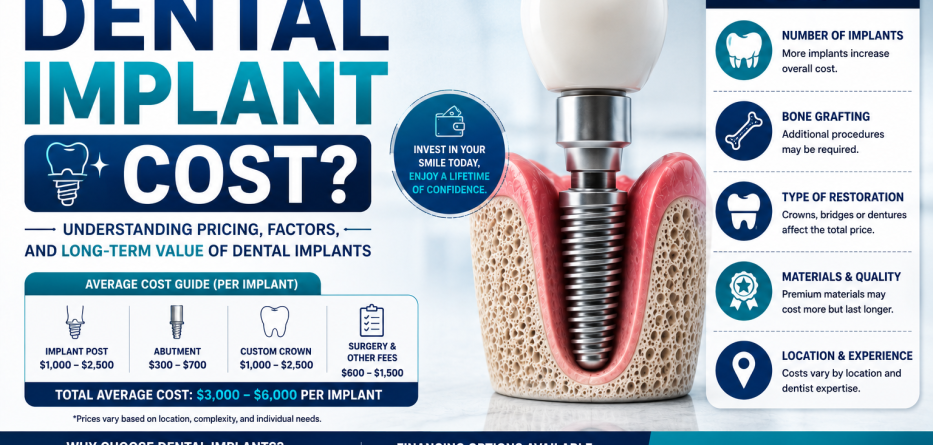
Dental implants are widely considered the gold standard for replacing missing teeth. They look natural, function like real teeth, and can last for decades with proper care. However, one of the most common questions patients ask before starting treatment is, “How much does a dental implant cost?”
The answer depends on several factors, including the number of implants needed, the complexity of the procedure, the materials used, and the location of the dental practice. While dental implants typically require a higher upfront investment than bridges or dentures, many patients find the long-term benefits well worth the cost.
In this guide, we’ll break down dental implant costs, explain what influences pricing, and help you understand what to expect when planning your treatment.
What Is Included in the Cost of a Dental Implant?
Many patients assume they’re paying only for the implant itself. In reality, a complete dental implant treatment involves several components.
A complete implant system includes the following:
- Initial consultation
- Diagnostic X-rays or CBCT scans
- Titanium implant post
- Abutment
- Custom dental crown
- Surgical placement
- Follow-up appointments
Each stage contributes to the overall cost.
Average Dental Implant Cost
The cost of a single dental implant varies depending on location and treatment complexity.
Typical Cost Range
| Treatment | Average Cost |
|---|---|
| Single Dental Implant | $3,000 – $6,000 |
| Implant + Crown | $3,500 – $7,000 |
| Implant-Supported Bridge | $5,000 – $15,000 |
| Full Mouth Dental Implants | $20,000 – $60,000+ |
These estimates may vary based on individual needs and geographic location.
Factors That Affect Dental Implant Cost
1. Number of Implants Needed
The more teeth that need replacement, the higher the overall treatment cost.
Examples include:
- Single tooth implant
- Multiple implants
- Full arch restoration
- Full mouth reconstruction
Some patients may require only one implant, while others may need several.
2. Bone Grafting Requirements
Dental implants require sufficient jawbone support.
If bone loss has occurred, additional procedures may be necessary.
Bone Grafting Costs
Bone grafting may add the following:
- Minor grafts: $300–$1,500
- Major grafts: $2,000 or more
This procedure improves implant stability and long-term success.
3. Sinus Lift Procedures
Patients receiving implants in the upper jaw may need a sinus lift if bone height is insufficient.
Additional costs can range from the following:
- $1,500–$5,000
Not every patient requires this procedure.
4. Type of Restoration
The final restoration significantly affects pricing.
Options include:
- Single crown
- Implant-supported bridge
- Implant-supported denture
- Full-arch restoration
Larger restorations generally involve higher laboratory and material costs.
5. Materials Used
Most implants are made from titanium, but some practices offer zirconia implants.
Premium materials may increase treatment costs but can offer specific aesthetic or biocompatibility advantages.
6. Dentist Experience and Expertise
Highly experienced implant dentists often charge more due to:
- Advanced training
- Specialized equipment
- Proven success rates
- Complex case management
Choosing an experienced provider can reduce the risk of complications and improve long-term outcomes.
7. Geographic Location
Dental implant costs often vary depending on:
- City
- State
- Country
- Local cost of living
Urban areas typically have higher treatment fees than smaller communities.
Why Are Dental Implants More Expensive Than Other Options?
At first glance, dental implants may seem expensive compared to bridges or dentures.
However, implants offer unique advantages:
Long-Term Benefits
- Preserve jawbone health
- Prevent shifting teeth
- Provide superior stability
- Improve chewing efficiency
- Natural appearance
- Long lifespan
Many patients find that implants provide better value over time due to their durability.
Dental Implants vs Other Tooth Replacement Costs
| Treatment Option | Average Cost | Average Lifespan |
|---|---|---|
| Dental Implant | $3,000–$6,000 | 20+ Years |
| Dental Bridge | $2,000–$5,000 | 5–15 Years |
| Partial Denture | $1,000–$3,000 | 5–10 Years |
| Complete Denture | $1,500–$5,000 | 5–10 Years |
While implants have higher initial costs, they often require fewer replacements.
Are Dental Implants Worth the Cost?
Many dentists and patients believe dental implants are one of the best long-term investments in oral health.
Reasons Patients Choose Implants
- Long-lasting results
- Improved confidence
- Better speech
- Comfortable chewing
- Bone preservation
- Natural appearance
For many individuals, these benefits outweigh the higher upfront cost.
Does Dental Insurance Cover Dental Implants?
Insurance coverage varies widely.
Some plans may cover:
- Extractions
- Diagnostic imaging
- Crowns
- Portions of implant treatment
Other plans may exclude implants entirely.
Patients should contact their insurance provider for specific coverage details.
Financing Options for Dental Implants
Many dental offices offer financing solutions to make treatment more affordable.
Common Options
- Monthly payment plans
- Healthcare financing programs
- Third-party financing
- Flexible spending accounts (FSA)
- Health savings accounts (HSA)
These options help spread treatment costs over time.
How to Save Money on Dental Implants
Compare Treatment Plans
Seek consultations from qualified implant providers.
Address Dental Problems Early
Treating missing teeth sooner can help prevent bone loss and additional procedures.
Ask About Financing
Many practices offer affordable monthly payment plans.
Maintain Excellent Oral Hygiene
Protecting your investment helps avoid costly complications.
Hidden Costs Patients Should Know About
When evaluating treatment estimates, ask whether the following are included:
- Consultation fees
- CBCT scans
- Bone grafting
- Sedation
- Temporary restorations
- Follow-up visits
A complete treatment estimate helps prevent unexpected expenses.
Frequently Asked Questions
What is the average cost of a single dental implant?
Most single dental implants cost between $3,000 and $6,000, including the implant, abutment, and crown.
Why are dental implants so expensive?
The cost reflects advanced materials, surgical expertise, laboratory work, and long-term durability.
Does insurance pay for dental implants?
Some insurance plans provide partial coverage, while others may not cover implants.
Can dental implants last a lifetime?
Yes. With proper care, many dental implant posts can last a lifetime.
Are cheaper implants a good option?
Cost should not be the only factor. Provider experience, materials, and treatment quality are equally important.
Conclusion
So, how much does a dental implant cost?
While the price can range from a few thousand dollars for a single implant to tens of thousands for full-mouth restoration, dental implants offer unmatched durability, functionality, and aesthetic benefits. Factors such as bone grafting, restoration type, materials, and provider expertise all influence the final cost.
Although implants require a greater upfront investment, their long lifespan and ability to preserve oral health often make them one of the most cost-effective tooth replacement solutions available. By understanding the factors that affect pricing and exploring financing options, patients can make informed decisions about their dental implant treatment.
