
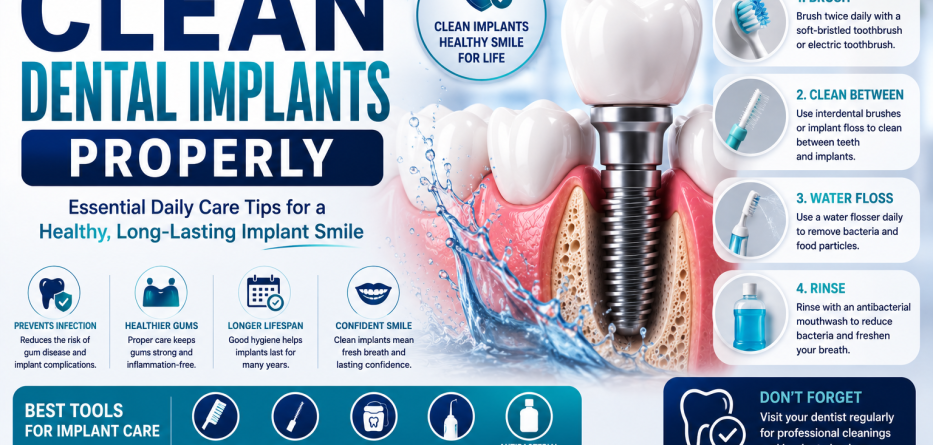
Dental implants are one of the most durable and effective solutions for replacing missing teeth. While implants cannot develop cavities like natural teeth, they still require proper care to remain healthy and functional. Neglecting oral hygiene around implants can lead to gum inflammation, bone loss, and even implant failure.
Many patients mistakenly assume that dental implants require little maintenance. In reality, proper cleaning is essential for protecting the surrounding gum tissue and ensuring the long-term success of the implant.
In this guide, you’ll learn how to clean dental implants properly, the best tools to use, common mistakes to avoid, and expert tips for maintaining a healthy smile.
Why Is Cleaning Dental Implants Important?
Although dental implants are made from titanium and ceramic materials that cannot decay, plaque and bacteria can still accumulate around them.
Poor implant hygiene can cause:
- Gum inflammation
- Peri-implant mucositis
- Peri-implantitis
- Bone loss
- Implant failure
Proper cleaning helps protect both the implant and the surrounding tissues.
Benefits of Good Implant Hygiene
- Longer implant lifespan
- Healthier gums
- Reduced risk of infection
- Fresher breath
- Better overall oral health
Can Dental Implants Get Infected?
Yes.
While implants themselves cannot develop cavities, the surrounding gums and bone can become infected.
One of the most common implant complications is peri-implantitis, an inflammatory condition caused by bacterial buildup around the implant.
Symptoms may include:
- Red gums
- Swelling
- Bleeding while brushing
- Bad breath
- Gum recession
- Implant looseness
Consistent cleaning is the best defense against these problems.
Daily Dental Implant Cleaning Routine
Step 1: Brush Twice Daily
Brushing removes plaque and food debris from around the implant.
Best Practices
- Brush at least twice a day
- Use gentle circular motions
- Clean along the gumline
- Brush for two minutes
Recommended Toothbrushes
- Soft-bristled manual toothbrush
- Electric toothbrush
- Implant-specific toothbrush
Avoid hard-bristled brushes that may irritate gum tissue.
Step 2: Clean Between Teeth and Implants
The areas between teeth and implants often trap plaque.
Recommended Tools
Interdental Brushes
These small brushes effectively clean hard-to-reach spaces.
Benefits:
- Easy to use
- Effective plaque removal
- Gentle on implants
Choose brushes with nylon-coated wires to avoid scratching implant surfaces.
Implant Floss
Specialized implant floss is designed to clean around implant restorations.
It helps remove:
- Plaque
- Food particles
- Bacteria
Daily flossing remains an important part of implant care.
Step 3: Use an Oral Irrigator (Water Flosser)
Water flossers are highly recommended for implant patients.
Benefits include:
- Removing debris around implants
- Cleaning under bridges
- Reaching difficult areas
- Improving gum health
Many dentists consider water flossers an excellent addition to daily implant maintenance.
Step 4: Rinse with an Antibacterial Mouthwash
An antimicrobial mouth rinse may help reduce harmful bacteria.
Benefits:
- Fresh breath
- Reduced plaque accumulation
- Additional gum protection
Always follow your dentist’s recommendations regarding mouthwash use.
Best Products for Cleaning Dental Implants
Soft-Bristled Toothbrush
Provides gentle cleaning while protecting gums.
Electric Toothbrush
Offers consistent plaque removal and ease of use.
Implant Floss
Designed specifically for implant-supported restorations.
Interdental Brushes
Help clean around implant abutments and hard-to-reach spaces.
Water Flosser
Provides additional cleaning power for implant maintenance.
Combining multiple cleaning tools often delivers the best results.
How Often Should Dental Implants Be Cleaned?
Daily Care
- Brush twice daily
- Floss once daily
- Use interdental brushes as needed
Professional Maintenance
Visit your dentist every six months, or more frequently if recommended.
Professional implant cleanings help remove hardened plaque and monitor gum health.
Professional Dental Implant Cleanings
Routine dental visits play an important role in implant longevity.
During professional cleanings, your dentist may:
- Assess implant stability
- Measure gum health
- Remove plaque and tartar
- Check for early signs of peri-implant disease
Regular monitoring helps detect problems before they become serious.
Common Mistakes to Avoid
Using Hard-Bristled Toothbrushes
These can irritate gum tissue and cause recession.
Skipping Flossing
Plaque between implants and teeth often goes unnoticed.
Ignoring Bleeding Gums
Bleeding may indicate inflammation or infection.
Missing Dental Checkups
Professional evaluations are critical for long-term success.
Smoking
Smoking increases the risk of implant complications and failure.
Signs Your Dental Implant Needs Attention
Contact your dentist if you notice:
- Bleeding gums
- Persistent bad breath
- Swelling around the implant
- Gum recession
- Pain while chewing
- Implant mobility
Early treatment can prevent more serious complications.
Special Care for Full-Arch Implant Restorations
Patients with implant-supported bridges or full-arch restorations require additional attention.
Cleaning Recommendations
- Use water flossers daily
- Clean underneath the bridge
- Use implant floss threaders
- Attend regular maintenance appointments
These restorations have additional areas where plaque can accumulate.
Dental Implant Cleaning vs Natural Tooth Cleaning
| Feature | Natural Teeth | Dental Implants |
|---|---|---|
| Cavities | Yes | No |
| Gum Disease Risk | Yes | Yes |
| Plaque Accumulation | Yes | Yes |
| Flossing Needed | Yes | Yes |
| Professional Cleanings | Yes | Yes |
Although implants cannot decay, their maintenance requirements remain very similar to natural teeth.
Tips to Keep Dental Implants Healthy for Life
- Brush twice daily.
- Floss every day.
- Use interdental brushes.
- Consider a water flosser.
- Attend regular dental visits.
- Avoid smoking.
- Follow your dentist’s recommendations.
These habits can help your implants remain healthy and functional for decades.
Frequently Asked Questions
Do dental implants need special cleaning?
Yes. While the basics are similar to natural teeth, implants often benefit from specialized floss, interdental brushes, and water flossers.
Can dental implants get cavities?
No. Dental implants cannot develop cavities, but the surrounding gums and bone can become infected.
Is a water flosser good for implants?
Yes. Water flossers are often recommended because they help clean difficult-to-reach areas around implants.
How often should I floss around implants?
At least once daily, unless otherwise instructed by your dentist.
What happens if I don’t clean my dental implants?
Poor hygiene can lead to peri-implantitis, bone loss, and potentially implant failure.
Conclusion
Knowing how to clean dental implants properly is essential for protecting your investment and maintaining long-term oral health. While implants are highly durable, they still require daily care to prevent plaque buildup, gum disease, and complications that can threaten their success.
By brushing regularly, flossing daily, using appropriate cleaning tools, and attending routine dental appointments, you can keep your dental implants healthy, functional, and beautiful for many years to come. Consistent care today can help ensure a confident smile for decades.
