
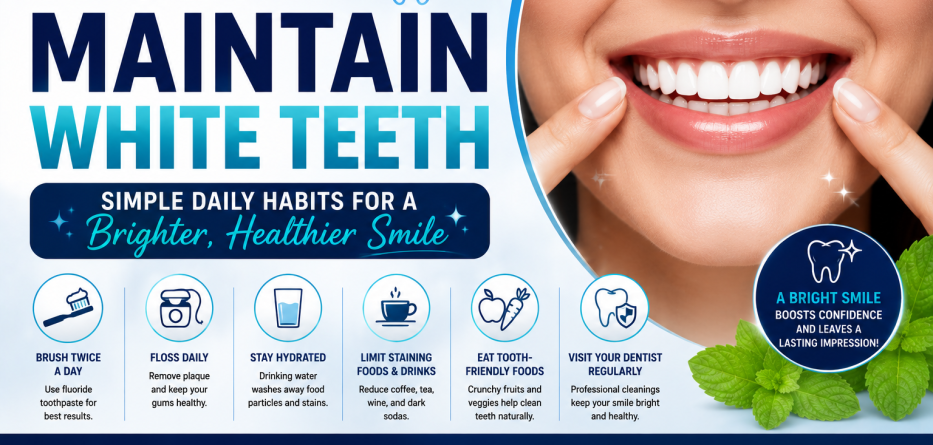
A bright, white smile is often associated with good health, confidence, and personal hygiene. While professional teeth whitening treatments can dramatically improve tooth color, maintaining those results requires consistent care and healthy habits. Without proper maintenance, teeth can gradually become stained or discolored from food, drinks, tobacco use, and everyday wear.
The good news is that keeping your teeth white doesn’t have to be complicated. By following a few simple strategies and making smart lifestyle choices, you can enjoy a brighter smile for years to come.
In this guide, we’ll explore the best ways to maintain white teeth, prevent staining, and protect your overall oral health.
Why Do Teeth Become Discolored?
Before learning how to maintain white teeth, it’s important to understand what causes staining.
Common Causes of Tooth Discoloration
- Coffee and tea
- Red wine
- Dark-colored sodas
- Tobacco use
- Poor oral hygiene
- Aging
- Certain medications
- Highly pigmented foods
Over time, stains accumulate on the enamel, causing teeth to appear yellow or dull.
1. Brush Your Teeth Properly Twice a Day
Daily brushing is the foundation of a white and healthy smile.
Brushing removes:
- Plaque
- Surface stains
- Food debris
- Harmful bacteria
Best Practices
- Brush for at least two minutes
- Use a soft-bristled toothbrush
- Replace your toothbrush every three months
- Use fluoride toothpaste
Consistent brushing helps prevent stain buildup and keeps teeth looking brighter.
2. Use Whitening Toothpaste
Whitening toothpaste can help remove surface stains caused by everyday foods and beverages.
Benefits
- Polishes enamel
- Removes minor stains
- Supports whitening treatments
- Maintains brightness
However, whitening toothpaste cannot dramatically change the natural color of your teeth.
3. Floss Every Day
Many people overlook flossing when trying to maintain white teeth.
Flossing removes plaque and food particles from areas that toothbrushes cannot reach.
Benefits include:
- Reduced plaque accumulation
- Healthier gums
- Cleaner tooth surfaces
- Improved overall appearance
Daily flossing contributes to a brighter smile and better oral health.
4. Limit Stain-Causing Foods and Drinks
Certain foods and beverages are notorious for causing tooth discoloration.
Common Culprits
- Coffee
- Black tea
- Red wine
- Cola
- Berries
- Tomato-based sauces
- Soy sauce
Helpful Tips
- Drink through a straw when possible.
- Rinse your mouth with water afterward.
- Avoid prolonged sipping.
Reducing exposure can significantly slow staining.
5. Quit Smoking and Tobacco Use
Tobacco products are among the leading causes of tooth discoloration.
Smoking can cause:
- Yellow teeth
- Brown stains
- Bad breath
- Gum disease
Quitting tobacco improves both the appearance and health of your smile.
6. Rinse Your Mouth After Eating
A simple rinse with water can help reduce staining.
Benefits include:
- Removing food particles
- Neutralizing acids
- Reducing pigment buildup
- Protecting enamel
This quick habit is especially helpful after consuming dark-colored foods or beverages.
7. Stay Hydrated
Drinking plenty of water supports oral health and helps maintain white teeth.
Water helps:
- Wash away food debris
- Stimulate saliva production
- Reduce bacterial growth
- Minimize stain accumulation
Saliva naturally protects teeth against staining and decay.
8. Eat Crunchy Fruits and Vegetables
Certain foods act as natural tooth cleaners.
Examples include:
- Apples
- Carrots
- Celery
- Cucumbers
These foods help remove plaque and stimulate saliva production while promoting healthier teeth and gums.
9. Schedule Regular Dental Cleanings
Professional dental cleanings remove stains that cannot be eliminated through brushing alone.
Benefits of Professional Cleanings
- Removal of tartar buildup
- Stain reduction
- Early detection of dental problems
- Improved oral health
Most dentists recommend professional cleanings every six months.
10. Consider Professional Whitening Treatments
If your teeth begin to lose brightness despite good oral hygiene, professional whitening may help restore your smile.
Whitening Options
- In-office whitening
- Custom take-home trays
- Dentist-supervised treatments
Professional whitening generally produces faster and more noticeable results than over-the-counter products.
11. Avoid Overusing Whitening Products
Excessive whitening can damage enamel and increase tooth sensitivity.
Signs of overuse include:
- Tooth sensitivity
- Gum irritation
- Uneven whitening
Always follow product instructions and consult your dentist when necessary.
12. Use a Smart Toothbrush or Electric Toothbrush
Electric toothbrushes often provide more consistent plaque removal than manual brushing.
Benefits include:
- Improved cleaning efficiency
- Better stain removal
- Built-in timers
- Pressure sensors
Many people find electric toothbrushes helpful for maintaining a cleaner, brighter smile.
Foods That Help Keep Teeth White
Tooth-Friendly Foods
| Food | Benefit |
|---|---|
| Apples | Natural cleansing action |
| Celery | Stimulates saliva |
| Carrots | Helps remove plaque |
| Cheese | Supports enamel health |
| Yogurt | Provides calcium |
| Leafy Greens | Rich in minerals |
Including these foods in your diet can support both oral health and tooth brightness.
Habits That Can Stain Teeth
Avoid or Limit
- Smoking
- Excessive coffee consumption
- Frequent tea drinking
- Red wine
- Sugary sodas
- Poor oral hygiene
Reducing these habits can significantly improve the appearance of your teeth over time.
Frequently Asked Questions
How can I keep my teeth white naturally?
Brush twice daily, floss regularly, drink water, avoid tobacco, and limit stain-causing foods and drinks.
Does whitening toothpaste really work?
Whitening toothpaste can remove surface stains but does not provide the same results as professional whitening treatments.
How often should I whiten my teeth?
The frequency depends on the whitening method used. Your dentist can recommend a safe schedule based on your needs.
Can yellow teeth become white again?
In many cases, yes. Professional whitening treatments and good oral hygiene can significantly improve tooth color.
Is professional whitening safe?
Yes. Dentist-supervised whitening treatments are generally safe and effective when performed correctly.
Conclusion
Maintaining white teeth requires a combination of good oral hygiene, healthy lifestyle choices, and regular professional care. By brushing and flossing consistently, limiting stain-causing foods and beverages, staying hydrated, and scheduling regular dental cleanings, you can keep your smile bright and healthy for years to come.
While teeth naturally change color over time, adopting these habits can significantly slow discoloration and help you enjoy a confident, radiant smile every day.
