
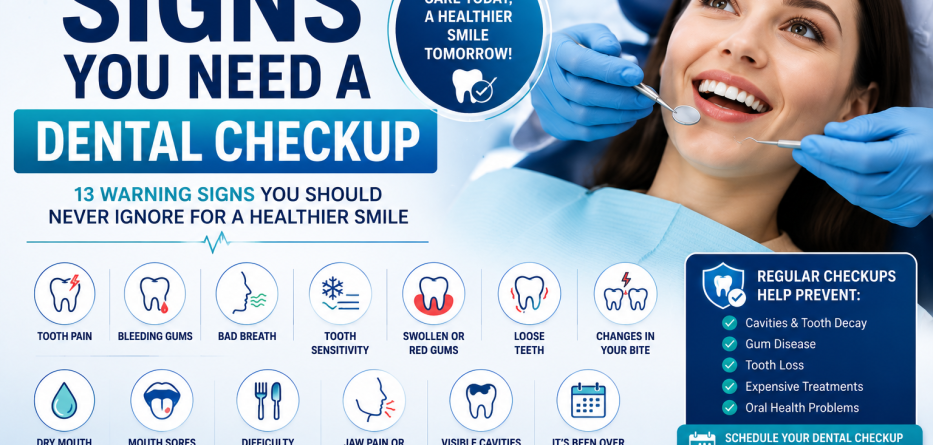
Many people only visit the dentist when they experience pain or discomfort. However, waiting until a dental problem becomes severe can lead to more complex treatments, higher costs, and potential oral health complications. Regular dental checkups play a vital role in preventing problems before they become serious.
Your mouth often provides early warning signs when something isn’t right. Recognizing these symptoms and scheduling a dental checkup promptly can help protect your teeth, gums, and overall health.
In this article, we’ll discuss the most common signs you need a dental checkup, why regular dental visits matter, and how early intervention can save you time, money, and discomfort.
Why Regular Dental Checkups Are Important
Routine dental examinations help dentists identify and treat issues in their earliest stages.
Benefits of regular dental visits include:
- Early cavity detection
- Prevention of gum disease
- Professional teeth cleaning
- Oral cancer screenings
- Monitoring dental restorations
- Improved overall oral health
Most dentists recommend a checkup every six months, although some patients may require more frequent visits.
1. Persistent Tooth Pain
Tooth pain is one of the most obvious signs that something may be wrong.
Possible causes include the following:
- Tooth decay
- Dental abscess
- Cracked tooth
- Gum infection
- Exposed tooth roots
Even mild discomfort should not be ignored, as untreated problems often worsen over time.
When to See a Dentist
Schedule a dental appointment if you have tooth pain:
- Lasts more than a day or two
- Becomes severe
- Interferes with eating or sleeping
- Is accompanied by swelling
2. Bleeding Gums
Healthy gums generally do not bleed during brushing or flossing.
Bleeding gums may indicate:
- Gingivitis
- Periodontitis
- Improper brushing technique
- Vitamin deficiencies
Early gum disease is often reversible when treated promptly.
Ignoring bleeding gums can lead to more advanced periodontal problems.
3. Bad Breath That Won’t Go Away
Occasional bad breath is normal, but persistent bad breath may signal an underlying dental issue.
Common causes include:
- Gum disease
- Tooth decay
- Oral infections
- Dry mouth
- Poor oral hygiene
A dental examination can help identify and address the root cause.
4. Tooth Sensitivity
Do you experience discomfort when consuming hot, cold, sweet, or acidic foods?
Tooth sensitivity may result from:
- Enamel erosion
- Gum recession
- Cavities
- Cracked teeth
- Worn fillings
A dentist can determine the exact cause and recommend appropriate treatment.
5. Swollen or Red Gums
Inflamed gums often indicate infection or irritation.
Warning signs include:
- Redness
- Swelling
- Tenderness
- Gum recession
These symptoms should be evaluated before they progress into more serious periodontal disease.
6. Loose Teeth
Adult teeth should never feel loose.
Loose teeth may indicate:
- Advanced gum disease
- Bone loss
- Dental trauma
- Bite problems
Prompt evaluation can help prevent tooth loss and preserve oral health.
7. Changes in Your Bite
If your teeth suddenly feel different when biting or chewing, it may indicate an underlying issue.
Possible causes include the following:
- Tooth movement
- Jaw problems
- Worn restorations
- Teeth grinding
A dental examination can identify the source of the change.
8. Dry Mouth
Saliva plays an essential role in protecting teeth and gums.
Chronic dry mouth can increase the risk of the following:
- Tooth decay
- Gum disease
- Oral infections
- Bad breath
Dry mouth may be caused by medications, medical conditions, or lifestyle factors.
9. Mouth Sores That Don’t Heal
Most minor mouth sores heal within one to two weeks.
Seek a dental evaluation if a sore
- Persists longer than two weeks
- Continues to grow
- Causes pain
- Bleeds frequently
Persistent sores may require further investigation.
10. Difficulty Chewing or Swallowing
Pain or difficulty while chewing can indicate:
- Tooth damage
- Gum disease
- Jaw disorders
- Oral infections
A dental examination can help determine the underlying cause and appropriate treatment.
11. Jaw Pain or Clicking
Jaw discomfort can affect daily activities and quality of life.
Common causes include:
- TMJ disorders
- Teeth grinding
- Arthritis
- Bite misalignment
Signs may include:
- Clicking sounds
- Jaw locking
- Facial pain
- Headaches
Early treatment can prevent worsening symptoms.
12. Visible Cavities or Tooth Damage
You should schedule a dental checkup if you notice the following:
- Holes in teeth
- Cracks
- Chips
- Dark spots
- Broken fillings
Small problems are often easier and less expensive to treat when detected early.
13. You Haven’t Seen a Dentist in More Than Six Months
Even if you have no symptoms, routine dental visits remain essential.
Many dental problems develop silently and may not cause pain until significant damage has occurred.
Preventive examinations help maintain long-term oral health.
How Often Should You Get a Dental Checkup?
While six-month checkups are common, your dentist may recommend a personalized schedule.
Patients Who May Need More Frequent Visits
- Smokers
- Diabetic patients
- Individuals with gum disease
- Patients prone to cavities
- People with weakened immune systems
Regular monitoring helps reduce the risk of complications.
What Happens During a Dental Checkup?
A typical dental examination may include the following:
Comprehensive Oral Examination
Your dentist evaluates:
- Teeth
- Gums
- Tongue
- Jaw joints
- Existing restorations
Professional Cleaning
Dental hygienists remove:
- Plaque
- Tartar
- Surface stains
Diagnostic Imaging
Digital X-rays may be taken to detect hidden issues.
Oral Cancer Screening
Early detection significantly improves treatment outcomes.
Benefits of Early Dental Checkups
Seeking treatment early offers several advantages.
Better Oral Health
Early intervention prevents disease progression.
Lower Treatment Costs
Small problems often require simpler treatments.
Reduced Pain
Addressing issues early can prevent discomfort.
Tooth Preservation
Prompt treatment helps save natural teeth whenever possible.
Frequently Asked Questions
What are the signs that I need a dental checkup?
Common signs include tooth pain, bleeding gums, bad breath, sensitivity, loose teeth, and swollen gums.
Is bleeding gums a reason to see a dentist?
Yes. Bleeding gums can indicate early gum disease and should be evaluated promptly.
Can I have dental problems without pain?
Absolutely. Many dental conditions develop without noticeable symptoms in their early stages.
How often should adults visit the dentist?
Most adults should schedule a dental checkup every six months.
What happens if I delay a dental checkup?
Delaying treatment may allow problems to worsen, potentially leading to more extensive and costly procedures.
Conclusion
Recognizing the signs you need a dental checkup is essential for maintaining a healthy smile and preventing serious oral health issues. Symptoms such as tooth pain, bleeding gums, bad breath, sensitivity, and loose teeth should never be ignored.
Regular dental checkups allow problems to be detected early, helping preserve your teeth, protect your gums, and reduce the need for complex treatments. If you’ve noticed any of these warning signs—or if it’s been more than six months since your last visit—now is the perfect time to schedule a dental checkup and take control of your oral health.
