
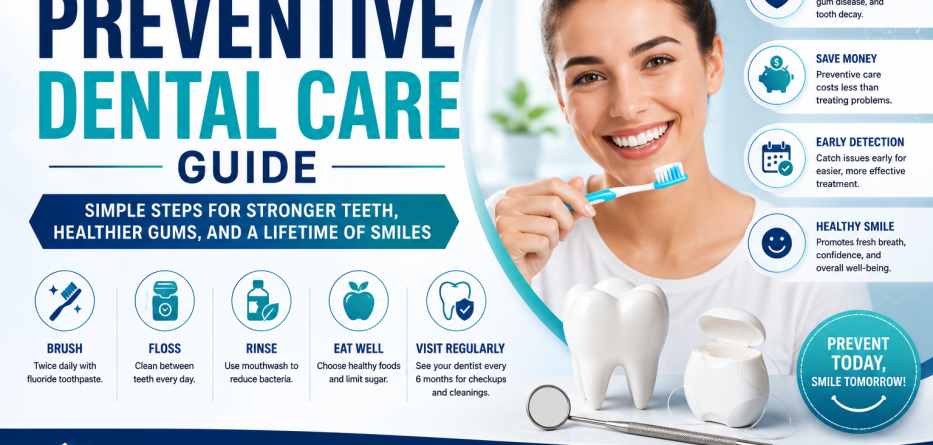
Your smile is one of your most valuable assets, and maintaining it requires more than just brushing your teeth occasionally. Preventive dental care is the foundation of good oral health, helping you avoid cavities, gum disease, tooth loss, and costly dental treatments in the future.
Many dental problems develop silently and may not cause noticeable symptoms until significant damage has occurred. Fortunately, preventive dental care focuses on identifying and addressing potential issues before they become serious. By adopting healthy habits and scheduling regular dental visits, you can protect your teeth and gums for years to come.
In this comprehensive preventive dental care guide, you’ll learn why preventive dentistry is important, the best oral hygiene practices, common preventive treatments, and practical tips for maintaining a healthy smile.
What Is Preventive Dental Care?
Preventive dental care refers to the practices, treatments, and habits designed to maintain oral health and prevent dental problems before they occur.
The primary goals of preventive dentistry are:
- Prevent tooth decay
- Reduce the risk of gum disease
- Preserve natural teeth
- Detect oral health issues early
- Improve overall health
Preventive care is often less expensive, less invasive, and more effective than treating advanced dental problems.
Quick Definition
Preventive dental care is a proactive approach to maintaining healthy teeth and gums through regular hygiene practices, professional dental checkups, and early intervention.
Why Is Preventive Dental Care Important?
Good oral health affects more than just your teeth.
Studies have shown links between oral health and systemic conditions such as:
- Heart disease
- Diabetes
- Respiratory infections
- Pregnancy complications
Preventive dental care helps:
- Minimize treatment costs
- Reduce dental emergencies
- Maintain fresh breath
- Preserve natural teeth
- Improve confidence and quality of life
The earlier dental issues are detected, the easier and less expensive they are to treat.
Daily Preventive Dental Care Habits
1. Brush Your Teeth Twice Daily
Brushing removes plaque, food particles, and bacteria that can cause tooth decay.
Best practices include:
- Brush for two minutes
- Use fluoride toothpaste
- Use a soft-bristled toothbrush
- Replace your toothbrush every 3–4 months
Proper brushing is the first line of defense against cavities.
2. Floss Every Day
Flossing cleans areas that a toothbrush cannot reach.
Benefits include:
- Removing plaque between teeth
- Preventing gum disease
- Reducing bad breath
- Lowering cavity risk
Daily flossing is essential for complete oral hygiene.
3. Use Mouthwash
An antimicrobial or fluoride mouthwash can provide additional protection.
Benefits include:
- Reducing bacteria
- Freshening breath
- Strengthening enamel
- Lowering plaque buildup
Ask your dentist which mouthwash is best for your needs.
4. Stay Hydrated
Water helps:
- Wash away food particles
- Neutralize acids
- Promote saliva production
Saliva plays an important role in protecting teeth from decay.
The Role of Regular Dental Checkups
Professional dental examinations are one of the most important aspects of preventive care.
Most dentists recommend visits every six months.
During a routine checkup, your dentist may:
- Examine teeth and gums
- Screen for oral cancer
- Check existing restorations
- Identify cavities
- Evaluate bite alignment
Early detection often prevents more extensive treatment later.
Professional Dental Cleanings
Even with excellent brushing and flossing, plaque can harden into tartar.
Tartar can only be removed by a dental professional.
Benefits of Professional Cleanings
- Remove plaque and tartar
- Prevent gum disease
- Improve breath freshness
- Reduce cavity risk
- Maintain healthy gums
Professional cleanings help keep your mouth healthy between visits.
Common Preventive Dental Treatments
Fluoride Treatments
Fluoride strengthens tooth enamel and helps prevent cavities.
Benefits include:
- Increased enamel resistance
- Reduced tooth decay risk
- Protection for children and adults
Dental Sealants
Dental sealants are protective coatings applied to chewing surfaces.
Sealants help:
- Block food and bacteria
- Protect molars
- Reduce cavity formation
Children and teenagers benefit significantly from sealants, though adults may also qualify.
Oral Cancer Screenings
Routine dental visits often include oral cancer screenings.
Dentists examine:
- Tongue
- Gums
- Lips
- Cheeks
- Throat
Early detection significantly improves treatment outcomes.
Nutrition and Preventive Dental Care
Your diet plays a major role in oral health.
Foods That Support Healthy Teeth
- Dairy products
- Leafy greens
- Nuts
- Lean proteins
- Crunchy vegetables
- Fresh fruits
Foods to Limit
- Sugary snacks
- Soft drinks
- Sticky candies
- Acidic beverages
Healthy nutrition strengthens teeth and supports gum health.
Preventing Gum Disease
Gum disease is one of the leading causes of tooth loss in adults.
Early Warning Signs
- Bleeding gums
- Swelling
- Redness
- Persistent bad breath
- Gum recession
Preventive measures include:
- Daily brushing and flossing
- Professional cleanings
- Avoiding tobacco products
- Maintaining a healthy diet
Early treatment can stop gum disease before permanent damage occurs.
Preventive Dental Care for Children
Establishing good habits early is critical.
Parents should:
- Schedule the first dental visit by age one
- Supervise brushing
- Limit sugary snacks
- Encourage healthy eating
- Consider fluoride treatments and sealants
Healthy childhood habits often continue into adulthood.
Preventive Dental Care for Adults
Adults face unique challenges, including:
- Gum disease
- Tooth wear
- Dry mouth
- Dental restorations
Adults should:
- Attend regular checkups
- Maintain oral hygiene
- Monitor changes in oral health
- Address issues promptly
Preventive care becomes increasingly important with age.
The Cost Benefits of Preventive Dentistry
Preventive care often saves money over time.
Example Comparison
| Treatment | Approximate Cost Impact |
|---|---|
| Routine Cleaning | Low |
| Filling | Moderate |
| Root Canal | High |
| Dental Implant | Very High |
Small investments in prevention can help avoid major dental expenses.
Signs You Should Schedule a Dental Visit
Contact your dentist if you experience:
- Tooth pain
- Bleeding gums
- Persistent bad breath
- Loose teeth
- Sensitivity
- Swelling
Prompt evaluation can prevent more serious problems.
Preventive Dental Care Checklist
Follow this simple checklist:
✓ Brush twice daily
✓ Floss every day
✓ Use fluoride toothpaste
✓ Drink plenty of water
✓ Limit sugary foods
✓ Visit the dentist every six months
✓ Get professional cleanings
✓ Avoid smoking
✓ Wear a mouthguard during sports
✓ Replace your toothbrush regularly
Frequently Asked Questions
How often should I visit the dentist?
Most people should visit every six months, although some may require more frequent visits.
Is preventive dental care really necessary?
Yes. Preventive care helps avoid cavities, gum disease, and expensive dental procedures.
What is the most important preventive dental habit?
Brushing twice daily and flossing every day are essential.
Are professional cleanings necessary if I brush regularly?
Yes. Professional cleanings remove tartar that cannot be removed by brushing alone.
Can preventive dentistry save money?
Absolutely. Preventing problems is typically far less expensive than treating advanced dental issues.
Conclusion
Preventive dental care is the key to maintaining a healthy smile and avoiding many common oral health problems. Through regular brushing, flossing, professional cleanings, healthy eating, and routine dental checkups, you can protect your teeth and gums for years to come.
By making preventive dentistry a priority, you’ll not only improve your oral health but also reduce treatment costs, preserve your natural teeth, and enjoy greater confidence in your smile. Investing in prevention today can lead to a lifetime of healthier teeth and better overall well-being.
