
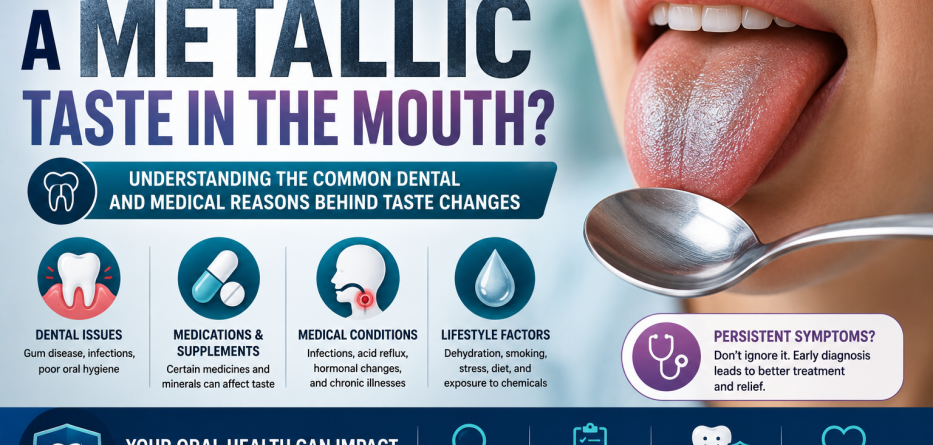
Have you ever noticed a strange metallic taste in your mouth that seems to appear out of nowhere? While occasional changes in taste may not be cause for concern, a persistent metallic taste can be frustrating and may indicate an underlying dental, medical, or lifestyle-related issue.
A metallic taste in the mouth, medically known as dysgeusia, can affect how food and drinks taste and sometimes interfere with daily life. Fortunately, most causes are temporary and treatable once identified.
In this article, we’ll explore the common causes of a metallic taste in the mouth, when to see a dentist or doctor, and what you can do to restore your normal sense of taste.
What Is a Metallic Taste in the Mouth?
A metallic taste is an abnormal taste sensation that causes foods, beverages, or even saliva to taste like metal.
People often describe it as
- Bitter
- Metallic
- Copper-like
- Chemical-like
- Unpleasant
The sensation may be temporary or persistent, depending on the underlying cause.
Common Causes of a Metallic Taste in the Mouth
1. Poor Oral Hygiene
One of the most common causes of a metallic taste is poor oral hygiene.
When bacteria accumulate in the mouth, they can contribute to:
- Gum disease
- Tooth decay
- Plaque buildup
- Oral infections
These conditions can alter taste perception and create unpleasant tastes.
Signs to Watch For
- Bad breath
- Bleeding gums
- Swollen gums
- Tooth sensitivity
Regular brushing, flossing, and professional cleanings can often resolve the issue.
2. Gum Disease
Gingivitis and periodontal disease can cause inflammation and bleeding in the gums.
Blood contains iron, which may create a metallic taste when it mixes with saliva.
Symptoms
- Red gums
- Swelling
- Bleeding during brushing
- Persistent bad breath
Prompt dental treatment can help restore oral health and eliminate symptoms.
3. Certain Medications
Many prescription and over-the-counter medications can affect taste perception.
Common culprits include the following:
- Antibiotics
- Antidepressants
- Blood pressure medications
- Antihistamines
- Diabetes medications
- Chemotherapy drugs
The metallic taste usually improves once the medication is discontinued or adjusted under medical supervision.
4. Vitamin and Mineral Supplements
Supplements containing:
- Iron
- Zinc
- Copper
- Calcium
may temporarily leave a metallic taste in the mouth.
This side effect is generally harmless and often occurs shortly after taking the supplement.
5. Dry Mouth (Xerostomia)
Saliva plays an important role in taste perception.
When saliva production decreases, taste disturbances can occur.
Causes of Dry Mouth
- Dehydration
- Certain medications
- Autoimmune conditions
- Aging
- Radiation therapy
Drinking more water and addressing the underlying cause may help improve symptoms.
6. Dental Infections
Oral infections can alter the balance of bacteria in the mouth and affect taste.
Potential causes include the following:
- Tooth abscesses
- Infected gums
- Impacted teeth
- Post-surgical infections
These conditions often require prompt dental treatment.
7. Respiratory Infections
Many upper respiratory illnesses can temporarily affect taste and smell.
Examples include:
- Common cold
- Sinus infections
- Influenza
- Allergies
As the infection resolves, normal taste perception typically returns.
8. COVID-19 and Viral Illnesses
One of the most recognized symptoms of COVID-19 is altered taste and smell.
Some people report:
- Metallic taste
- Bitter taste
- Complete loss of taste
Taste disturbances may persist for weeks or months after recovery in some cases.
9. Pregnancy
Hormonal changes during pregnancy can affect taste perception.
Many pregnant women experience the following:
- Metallic taste
- Heightened sense of smell
- Food aversions
This symptom is especially common during the first trimester and usually resolves naturally.
10. Acid Reflux (GERD)
Gastroesophageal reflux disease (GERD) can allow stomach acid to travel into the throat and mouth.
This may cause:
- Metallic taste
- Sour taste
- Bad breath
- Heartburn
Managing acid reflux often improves symptoms.
11. Neurological Conditions
Taste perception depends on healthy nerve function.
Certain neurological conditions can interfere with taste signals.
Examples include:
- Parkinson’s disease
- Multiple sclerosis
- Bell’s palsy
- Head injuries
Medical evaluation is recommended when neurological symptoms accompany taste changes.
12. Exposure to Chemicals or Metals
Exposure to certain substances may trigger a metallic taste.
Possible sources include:
- Mercury
- Lead
- Industrial chemicals
- Pesticides
If exposure is suspected, immediate medical evaluation is recommended.
When Should You See a Dentist?
Schedule a dental appointment if the metallic taste is accompanied by:
- Bleeding gums
- Tooth pain
- Bad breath
- Swelling
- Loose teeth
- Signs of infection
A dentist can identify oral causes and recommend appropriate treatment.
When Should You See a Doctor?
Consult a physician if:
- Symptoms persist for several weeks
- Taste changes occur suddenly
- Neurological symptoms are present
- Medication side effects are suspected
- You have signs of systemic illness
A comprehensive evaluation may be necessary to determine the underlying cause.
How Is a Metallic Taste Diagnosed?
Diagnosis may involve:
Dental Examination
To evaluate:
- Gum health
- Tooth decay
- Oral infections
Medical Review
Your healthcare provider may assess the following:
- Medications
- Medical history
- Recent illnesses
- Nutritional deficiencies
Laboratory Testing
Blood tests may identify:
- Vitamin deficiencies
- Hormonal imbalances
- Infections
- Metabolic disorders
How to Get Rid of a Metallic Taste
The most effective treatment depends on the underlying cause.
Helpful Strategies
- Maintain excellent oral hygiene.
- Brush your tongue regularly.
- Stay hydrated.
- Use alcohol-free mouthwash.
- Chew sugar-free gum.
- Avoid smoking.
- Manage acid reflux.
- Follow medical treatment recommendations.
Many cases improve once the underlying issue is addressed.
Prevention Tips
Reduce your risk by:
- Brushing twice daily
- Flossing every day
- Visiting your dentist regularly
- Staying hydrated
- Managing chronic health conditions
- Following medication instructions carefully
Good oral and overall health can help prevent taste disturbances.
Frequently Asked Questions
Is a metallic taste in the mouth serious?
Not always. Many cases result from temporary conditions such as medications, infections, or poor oral hygiene. Persistent symptoms should be evaluated.
Can dehydration cause a metallic taste?
Yes. Dry mouth associated with dehydration can affect taste perception.
Can dental problems cause a metallic taste?
Absolutely. Gum disease, infections, and poor oral hygiene are common dental causes.
How long does a metallic taste usually last?
Duration depends on the cause. Some cases resolve within days, while others may require medical or dental treatment.
Can stress cause a metallic taste?
Stress and anxiety may contribute indirectly through dry mouth, medication use, or changes in body chemistry.
Conclusion
A metallic taste in the mouth can have many different causes, ranging from simple oral hygiene issues to underlying medical conditions. Common causes include gum disease, medications, dry mouth, infections, pregnancy, acid reflux, and nutritional supplements.
While many cases are temporary and harmless, persistent symptoms should not be ignored. Identifying and treating the underlying cause is the key to restoring normal taste and maintaining overall oral and general health.
If you’re experiencing an ongoing metallic taste, a visit to your dentist or healthcare provider can help determine the cause and provide appropriate treatment.
