
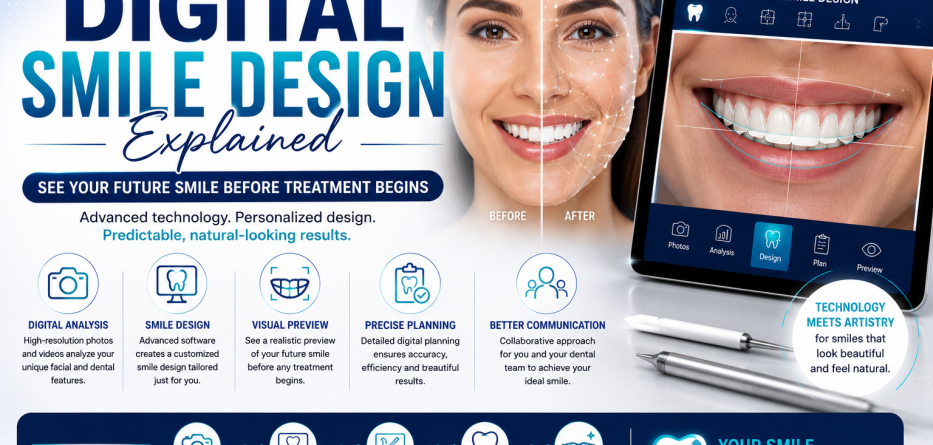
Modern dentistry is no longer limited to traditional impressions and guesswork. Thanks to advanced digital technology, patients can now preview their future smile before treatment even begins. This revolutionary approach is known as Digital Smile Design (DSD).
Digital Smile Design combines photography, video analysis, facial measurements, and advanced dental software to create highly personalized smile makeover plans. By allowing patients and dentists to visualize treatment outcomes in advance, DSD improves communication, treatment accuracy, and overall patient satisfaction.
If you’re considering veneers, dental implants, crowns, orthodontics, or a complete smile makeover, understanding digital smile design can help you make informed decisions about your treatment journey.
What Is Digital Smile Design?
Digital Smile Design (DSD) is a digital treatment planning process that uses advanced imaging and software to design a patient’s ideal smile based on facial features, dental proportions, and aesthetic goals.
Instead of relying solely on traditional dental models, dentists use digital technology to analyze:
- Facial symmetry
- Lip position
- Tooth shape
- Gum contours
- Smile line
- Facial expressions
This information helps create a customized treatment plan tailored to the individual patient.
Quick Definition
Digital Smile Design is a technology-driven dental planning system that allows dentists and patients to visualize and customize smile transformations before treatment begins.
How Does Digital Smile Design Work?
The Digital Smile Design process typically follows several steps.
Step 1: Digital Photography and Video Analysis
The dentist captures the following:
- Facial photographs
- Smile photographs
- Close-up dental images
- Short videos of facial expressions
These images help evaluate how the teeth interact with the patient’s face and smile.
Step 2: Digital Smile Analysis
Specialized software analyzes:
- Facial proportions
- Tooth dimensions
- Midline alignment
- Smile symmetry
- Gum aesthetics
This allows dentists to identify areas that may benefit from cosmetic improvements.
Step 3: Smile Simulation
Using digital software, the dentist creates a virtual preview of the proposed smile.
Patients can often see:
- New tooth shapes
- Improved alignment
- Color enhancements
- Gum contour changes
This visualization helps ensure treatment goals are aligned.
Step 4: Treatment Planning
Once the smile design is approved, the dentist develops a personalized treatment plan.
Procedures may include:
- Porcelain veneers
- Dental crowns
- Teeth whitening
- Orthodontics
- Dental implants
- Gum contouring
Step 5: Smile Transformation
The approved digital design serves as a blueprint for treatment, helping ensure predictable and precise results.
Why Is Digital Smile Design Important?
Digital Smile Design offers benefits for both patients and dental professionals.
Improved Treatment Accuracy
Digital planning reduces guesswork and improves precision.
Benefits include:
- Better treatment predictability
- Improved aesthetics
- Enhanced patient satisfaction
- Reduced treatment revisions
Better Communication
Patients often struggle to visualize treatment outcomes.
DSD improves communication by allowing patients to see their potential results before committing to treatment.
This helps:
- Build confidence
- Set realistic expectations
- Increase treatment acceptance
Personalized Smile Design
Every smile is unique.
Digital Smile Design considers the following:
- Facial structure
- Age
- Gender
- Personality
- Smile characteristics
The result is a smile that complements the patient’s natural appearance.
Benefits of Digital Smile Design
1. Visualize Results Before Treatment
One of the biggest advantages of DSD is the ability to preview the expected outcome.
Patients can actively participate in the design process and provide feedback.
2. Enhanced Precision
Digital tools allow for highly accurate measurements and planning.
This can improve:
- Tooth positioning
- Restoration fit
- Smile symmetry
- Overall aesthetics
3. Improved Patient Confidence
Knowing what to expect helps reduce uncertainty and anxiety.
Patients often feel more comfortable proceeding with treatment after seeing a digital preview.
4. Better Team Collaboration
Digital files can be shared among the following:
- Cosmetic dentists
- Orthodontists
- Implant specialists
- Dental laboratories
This collaborative approach often leads to better outcomes.
5. More Predictable Results
Because treatment is based on detailed digital planning, final results are often more predictable and consistent.
Procedures That Use Digital Smile Design
DSD can be incorporated into various cosmetic and restorative treatments.
Common Applications
- Smile makeovers
- Porcelain veneers
- Dental implants
- Crowns and bridges
- Orthodontic treatment
- Full-mouth rehabilitation
- Gum reshaping
It is particularly useful for complex cases involving multiple procedures.
Digital Smile Design vs Traditional Smile Planning
| Feature | Digital Smile Design | Traditional Planning |
|---|---|---|
| Smile Preview | Yes | Limited |
| Patient Involvement | High | Moderate |
| Precision | Excellent | Good |
| Digital Measurements | Yes | Limited |
| Treatment Predictability | High | Moderate |
| Collaboration | Enhanced | Traditional |
Digital Smile Design offers a more interactive and patient-centered approach.
Is Digital Smile Design Accurate?
Yes.
Modern DSD software utilizes precise measurements, high-resolution imaging, and advanced planning tools.
While no treatment outcome can be guaranteed exactly as shown in simulations, Digital Smile Design significantly improves treatment predictability.
The accuracy of results also depends on:
- Dentist expertise
- Treatment complexity
- Patient compliance
- Laboratory quality
Who Is a Good Candidate for Digital Smile Design?
Digital Smile Design may be beneficial for patients seeking:
- Cosmetic smile improvements
- Veneers
- Dental implants
- Orthodontic treatment
- Full smile makeovers
It is especially valuable for individuals who want to visualize results before beginning treatment.
The Future of Digital Smile Design
Technology continues to enhance the DSD process.
Emerging innovations include:
- Artificial intelligence smile analysis
- 3D facial scanning
- Augmented reality smile previews
- Digital workflow integration
- Advanced CAD/CAM dentistry
These advancements are making smile transformations faster, more precise, and increasingly personalized.
Frequently Asked Questions
What is Digital Smile Design?
Digital Smile Design is a digital treatment planning process that allows dentists to create and preview customized smile transformations.
Is Digital Smile Design worth it?
Many patients find DSD valuable because it improves communication, confidence, and treatment predictability.
Can I see my new smile before treatment?
Yes. One of the primary benefits of DSD is the ability to preview potential results before treatment begins.
Is Digital Smile Design only for cosmetic dentistry?
No. It can also be used in restorative treatments such as dental implants, crowns, and full-mouth rehabilitation.
Does Digital Smile Design guarantee results?
While it improves planning and predictability, actual results may vary depending on individual circumstances.
Conclusion
Digital Smile Design has revolutionized modern cosmetic dentistry by combining advanced technology with personalized treatment planning. By allowing patients to visualize their future smile before treatment begins, DSD improves communication, precision, confidence, and overall satisfaction.
Whether you’re considering veneers, dental implants, orthodontics, or a complete smile makeover, Digital Smile Design provides a powerful tool for achieving predictable and natural-looking results. As digital dentistry continues to evolve, DSD is becoming an essential part of creating beautiful, customized smiles.
