
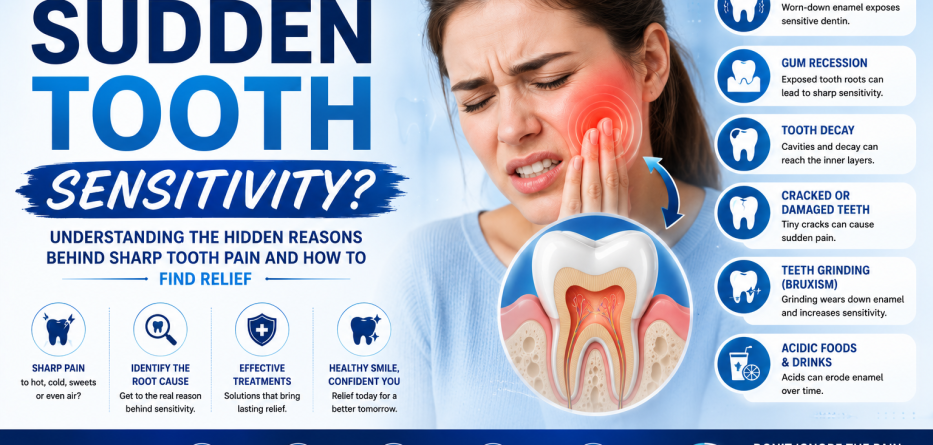
Have you ever taken a sip of ice-cold water or enjoyed a hot cup of coffee only to experience a sudden sharp pain in your teeth? If so, you’re not alone. Tooth sensitivity is one of the most common dental complaints, affecting millions of people worldwide. While occasional sensitivity may not be a cause for concern, sudden tooth sensitivity can indicate an underlying dental problem that requires attention.
Understanding what causes sudden tooth sensitivity can help you identify potential issues early and seek appropriate treatment before the condition worsens. In this guide, we’ll explore the most common causes of tooth sensitivity, available treatment options, and ways to prevent future discomfort.
What Is Tooth Sensitivity?
Tooth sensitivity, also known as dentin hypersensitivity, occurs when the protective layers of a tooth become compromised, exposing the underlying dentin.
Dentin contains microscopic tubules that connect directly to the tooth’s nerve center. When exposed to hot, cold, sweet, acidic, or even cold air, these tubules transmit sensations that can trigger pain.
Common Sensitivity Triggers
- Hot beverages
- Cold drinks
- Ice cream
- Sweet foods
- Acidic foods
- Cold air
- Brushing teeth
The discomfort may range from mild irritation to severe, sharp pain.
Why Does Tooth Sensitivity Occur Suddenly?
Sudden tooth sensitivity often develops when something changes in the condition of your teeth or gums.
Potential causes include the following:
- Enamel erosion
- Gum recession
- Tooth decay
- Cracked teeth
- Dental procedures
- Teeth grinding
- Gum disease
Identifying the source is essential for effective treatment.
1. Enamel Erosion
Tooth enamel is the hard outer layer that protects teeth from daily wear and tear.
When enamel wears away, the sensitive dentin beneath becomes exposed.
Common Causes of Enamel Erosion
- Acidic foods and beverages
- Soft drinks
- Citrus fruits
- Acid reflux
- Aggressive brushing
Symptoms
- Increased sensitivity to temperature changes
- Discomfort when eating acidic foods
- Visible tooth wear
2. Gum Recession
Healthy gums cover and protect tooth roots.
When gums recede, the root surfaces become exposed and highly sensitive.
Causes of Gum Recession
- Periodontal disease
- Aggressive brushing
- Aging
- Tobacco use
- Genetics
Signs
- Teeth appearing longer
- Increased sensitivity
- Tender gums
Gum recession is one of the leading causes of sudden tooth sensitivity in adults.
3. Tooth Decay (Cavities)
Cavities can create openings in the enamel that expose deeper layers of the tooth.
Symptoms
- Sensitivity to sweets
- Pain while chewing
- Visible holes or dark spots
- Persistent discomfort
Early treatment can prevent more extensive dental damage.
4. Cracked or Fractured Teeth
A small crack may expose the tooth’s inner structures and cause sudden sensitivity.
Common Causes
- Biting hard foods
- Teeth grinding
- Sports injuries
- Accidents
Warning Signs
- Sharp pain when chewing
- Sensitivity to temperature changes
- Intermittent discomfort
Prompt dental evaluation is important to prevent worsening damage.
5. Recent Dental Procedures
Some dental treatments can temporarily increase sensitivity.
Common Procedures
- Teeth whitening
- Fillings
- Crowns
- Root planing
- Professional cleanings
In most cases, sensitivity resolves within a few days or weeks.
6. Teeth Grinding (Bruxism)
Grinding or clenching teeth places excessive pressure on enamel.
Over time, this can wear down protective surfaces and expose dentin.
Signs of Bruxism
- Morning jaw pain
- Headaches
- Tooth wear
- Tooth sensitivity
A custom nightguard may help protect teeth from further damage.
7. Gum Disease
Gum disease can damage supporting tissues and expose sensitive root surfaces.
Symptoms
- Bleeding gums
- Bad breath
- Swollen gums
- Gum recession
- Tooth sensitivity
Treating gum disease often reduces sensitivity and improves oral health.
8. Teeth Whitening Products
Whitening treatments can temporarily affect tooth sensitivity.
Why It Happens
Whitening agents penetrate enamel and temporarily irritate nerve endings.
Good News
Sensitivity typically improves within a few days after treatment.
Using products designed for sensitive teeth may help minimize discomfort.
9. Acid Reflux and GERD
Stomach acid can erode tooth enamel when it frequently enters the mouth.
Symptoms
- Tooth sensitivity
- Enamel wear
- Bitter taste
- Heartburn
Managing acid reflux may help prevent ongoing enamel erosion.
10. Damaged Fillings or Dental Restorations
Old fillings, crowns, or restorations may become loose or worn over time.
This can expose sensitive areas of the tooth.
Signs
- Sensitivity when biting
- Food trapping
- Sharp pain
- Visible restoration damage
A dental examination can determine whether repairs are necessary.
How Dentists Diagnose Tooth Sensitivity
Your dentist may evaluate the following:
- Medical history
- Oral hygiene habits
- Dietary factors
- Gum health
- Tooth structure
- Existing restorations
Diagnostic tools may include:
- Dental X-rays
- Visual examination
- Sensitivity testing
Proper diagnosis ensures effective treatment.
Treatment Options for Tooth Sensitivity
Treatment depends on the underlying cause.
Desensitizing Toothpaste
Specialized toothpaste can help block pain signals from exposed dentin.
Fluoride Treatments
Professional fluoride applications strengthen enamel and reduce sensitivity.
Dental Bonding
Bonding materials can cover exposed root surfaces.
Gum Grafting
Used to treat severe gum recession.
Root Canal Therapy
In rare cases, severe or persistent sensitivity may require root canal treatment.
How to Prevent Tooth Sensitivity
Maintain Good Oral Hygiene
- Brush twice daily
- Floss regularly
- Use a soft-bristled toothbrush
Avoid Excessive Acid Exposure
Limit:
- Soda
- Citrus juices
- Energy drinks
Wear a nightguard.
Protect teeth from grinding-related damage.
Visit Your Dentist Regularly
Routine exams help detect issues before they cause significant sensitivity.
Frequently Asked Questions
Why did my teeth suddenly become sensitive?
Sudden sensitivity may result from enamel erosion, gum recession, cavities, cracked teeth, or dental procedures.
Can tooth sensitivity go away on its own?
Temporary sensitivity may resolve naturally, but persistent sensitivity should be evaluated by a dentist.
Is sudden tooth sensitivity a dental emergency?
Not always, but severe pain or sensitivity accompanied by swelling or infection requires prompt attention.
Does a sensitive tooth mean I need a root canal?
Not necessarily. Many cases can be treated with less invasive options.
What toothpaste is best for sensitive teeth?
Desensitizing toothpaste containing potassium nitrate or stannous fluoride is often recommended.
Conclusion
Sudden tooth sensitivity can be uncomfortable and sometimes alarming, but understanding its causes can help you take the right steps toward relief. From enamel erosion and gum recession to cavities and cracked teeth, several factors can trigger sensitivity.
The good news is that most cases can be successfully treated when identified early. If you’re experiencing persistent or worsening tooth sensitivity, schedule a dental evaluation to determine the underlying cause and protect your long-term oral health. With proper care and professional guidance, you can enjoy a healthier, more comfortable smile.
