

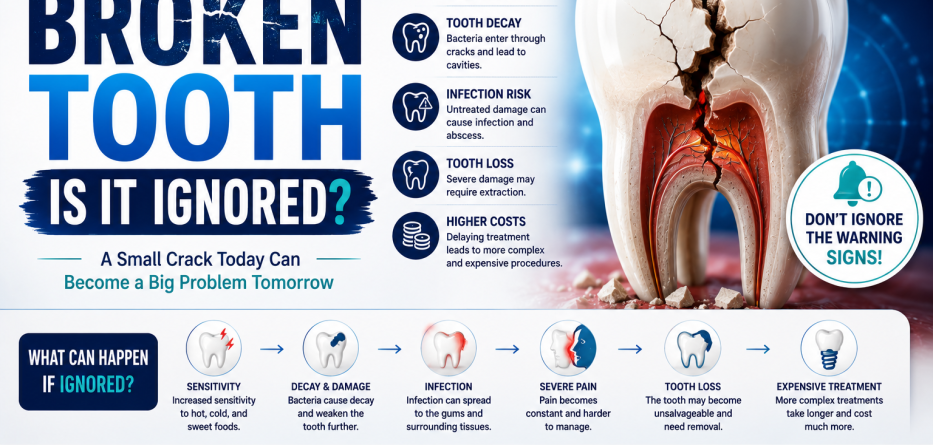
A broken tooth may seem like a minor dental issue, especially if it doesn’t cause immediate pain. However, even a small crack or chip can lead to serious oral health complications when left untreated. What starts as a cosmetic concern can quickly develop into tooth decay, infection, severe pain, and even tooth loss.
Many people postpone dental treatment because they are busy, afraid of dental procedures, or believe the damage is not severe. Unfortunately, ignoring a broken tooth often allows the problem to worsen over time, leading to more complex and costly treatments.
In this article, we’ll explore what happens if a broken tooth is ignored, the risks involved, warning signs to watch for, and why early treatment is essential.
What Is a Broken Tooth?
A broken tooth can occur in several ways, including:
- Chipped tooth
- Cracked tooth
- Fractured cusp
- Split tooth
- Severe tooth breakage
Common causes include:
- Biting hard foods
- Sports injuries
- Falls and accidents
- Teeth grinding (bruxism)
- Large dental fillings
- Untreated tooth decay
Not all broken teeth cause immediate symptoms, but all require professional evaluation.
Why You Should Never Ignore a Broken Tooth
A healthy tooth acts as a protective barrier for the sensitive inner layers beneath the enamel.
When a tooth breaks, it exposes these vulnerable structures to:
- Bacteria
- Food particles
- Temperature changes
- Chewing pressure
Without treatment, the damage often becomes progressively worse.
1. Increased Tooth Sensitivity
One of the earliest signs of a broken tooth is sensitivity.
You may experience discomfort when consuming:
- Hot drinks
- Cold beverages
- Sweet foods
- Acidic foods
This occurs because the protective enamel layer has been compromised, exposing the dentin beneath.
What Happens Over Time?
As the crack deepens, sensitivity often becomes more frequent and more painful.
2. Tooth Decay Can Develop
A broken tooth creates small openings where bacteria can easily accumulate.
These areas are often difficult to clean properly, increasing the risk of:
- Plaque buildup
- Cavities
- Tooth decay
Why This Is Dangerous
Decay can spread beneath the surface, weakening the tooth structure and increasing the likelihood of infection.
3. The Crack Can Become Larger
Teeth experience significant pressure every day while chewing.
A small crack that seems harmless today can gradually expand over time.
Potential Consequences
- Larger fractures
- Loss of tooth structure
- Increased pain
- More extensive dental treatment
Early intervention often prevents these complications.
4. Severe Tooth Pain May Develop
Initially, some broken teeth cause little or no discomfort.
However, as the damage progresses, pain may occur when:
- Biting down
- Releasing pressure after chewing
- Eating certain foods
- Drinking hot or cold beverages
Pain usually indicates that deeper layers of the tooth have been affected.
5. Infection Can Reach the Dental Pulp
Inside every tooth is a soft tissue center called the pulp.
The pulp contains:
- Nerves
- Blood vessels
- Connective tissue
When bacteria enter through a crack, they can infect the pulp.
Symptoms of Pulp Infection
- Persistent toothache
- Sensitivity that lingers
- Swelling around the tooth
- Bad taste in the mouth
At this stage, root canal treatment may be necessary.
6. A Dental Abscess May Form
An untreated infection can spread beyond the tooth root and create a dental abscess.
Signs of an Abscess
- Severe throbbing pain
- Facial swelling
- Swollen gums
- Fever
- Pus discharge
- Difficulty chewing
A dental abscess is a serious condition requiring immediate professional treatment.
7. Increased Risk of Tooth Loss
One of the most significant consequences of ignoring a broken tooth is complete tooth loss.
When damage becomes severe, the tooth may no longer be restorable.
Possible outcomes include the following:
- Tooth extraction
- Bone loss
- Need for dental implants
- Need for bridges or dentures
Saving a tooth is usually easier and less expensive than replacing it.
8. Damage to Surrounding Teeth
A broken tooth can affect neighboring teeth in several ways.
Sharp edges may:
- Damage nearby teeth
- Irritate the tongue
- Cut the inside of the cheeks
Changes in your bite may also place extra pressure on adjacent teeth.
9. Gum Disease and Bone Loss
Infections associated with broken teeth can spread to surrounding tissues.
Potential complications include the following:
- Gum inflammation
- Periodontal disease
- Bone deterioration
- Implant complications in the future
Healthy gums and bone are essential for long-term oral health.
10. Higher Treatment Costs
Delaying treatment often leads to more complex procedures.
Early treatment may require the following:
- Dental bonding
- Tooth-colored filling
- Dental crown
Delayed treatment may require the following:
- Root canal therapy
- Tooth extraction
- Bone grafting
- Dental implants
Prompt treatment is typically more affordable and less invasive.
Warning Signs You Shouldn’t Ignore
Contact a dentist immediately if you experience:
- Persistent tooth pain
- Sensitivity to temperature
- Swelling around the tooth
- Visible crack or fracture
- Difficulty chewing
- Bleeding gums near the damaged tooth
These symptoms may indicate worsening damage.
How Dentists Treat Broken Teeth
Treatment depends on the severity of the damage.
Minor Chips
- Dental bonding
- Cosmetic contouring
Moderate Fractures
- Dental crowns
- Veneers
Deep Cracks
- Root canal treatment
- Crown placement
Severe Damage
- Tooth extraction
- Dental implant replacement
Early diagnosis often allows for more conservative treatment options.
How to Prevent Broken Teeth
Protecting your teeth can reduce the risk of fractures.
Prevention Tips
- Wear a sports mouthguard.
- Avoid chewing ice.
- Do not use teeth as tools.
- Treat teeth grinding with a nightguard.
- Maintain regular dental checkups.
- Address cavities promptly.
Preventive care is always easier than restorative treatment.
Frequently Asked Questions
Can a broken tooth heal on its own?
No. Unlike bones, teeth cannot regenerate or repair themselves once damaged.
Is a small chipped tooth an emergency?
Not always, but it should still be evaluated by a dentist to prevent further damage.
How long can you leave a broken tooth untreated?
There is no safe waiting period. Even minor fractures can worsen unexpectedly.
Can a cracked tooth become infected?
Yes. Cracks allow bacteria to enter the tooth, increasing the risk of infection and abscess formation.
What is the worst outcome of ignoring a broken tooth?
The most serious consequences include severe infection, abscess formation, bone loss, and complete tooth loss.
Conclusion
Ignoring a broken tooth may seem harmless at first, but it can lead to significant oral health problems over time. From increased sensitivity and tooth decay to infection, abscesses, and eventual tooth loss, the risks far outweigh the inconvenience of seeking treatment.
The good news is that most broken teeth can be successfully treated when addressed early. If you notice a crack, chip, or fracture, schedule a dental evaluation as soon as possible. Prompt treatment can save your tooth, protect your oral health, and prevent costly complications in the future.

