

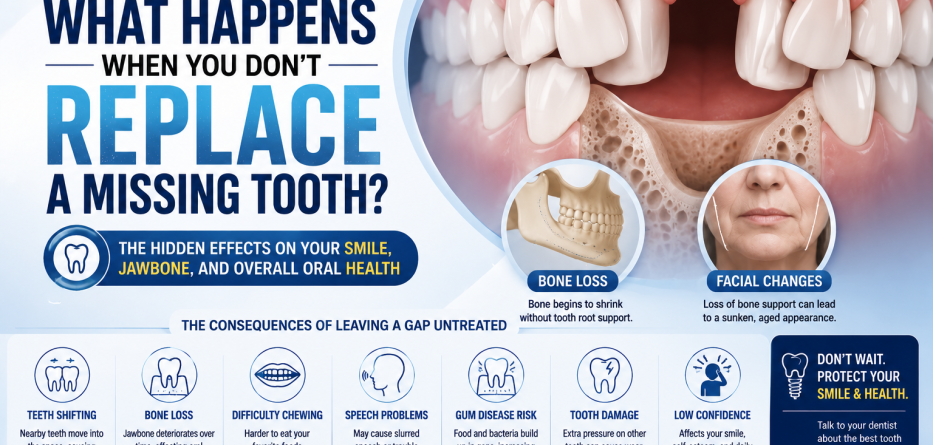
Losing a tooth may seem like a minor issue, especially if the missing tooth is not visible when you smile. Many people delay treatment because they don’t experience immediate discomfort or believe they can live without replacing the tooth. However, even a single missing tooth can have significant consequences for your oral health, appearance, and overall well-being.
A missing tooth creates a chain reaction inside the mouth that can affect neighboring teeth, jawbone health, bite alignment, and even facial structure. Understanding these risks can help you make informed decisions about tooth replacement options and protect your long-term oral health.
In this article, we’ll explore what happens when you don’t replace a missing tooth and why timely treatment is often recommended by dental professionals.
Why Replacing a Missing Tooth Matters
Your teeth work together as a complete system. Each tooth helps support chewing, speaking, and maintaining proper alignment.
When a tooth is lost, the balance of this system is disrupted.
The consequences may not appear immediately, but they often develop gradually over months or years.
1. Neighboring Teeth Begin to Shift
One of the most common effects of a missing tooth is tooth movement.
Teeth naturally rely on adjacent teeth for support. When a gap is left untreated, neighboring teeth may begin drifting into the empty space.
Potential Problems
- Crooked teeth
- Gaps between teeth
- Bite misalignment
- Increased difficulty cleaning teeth
Over time, these changes can affect both appearance and oral health.
2. Jawbone Loss Begins
Many people are surprised to learn that tooth roots play an important role in maintaining jawbone health.
When a tooth is lost, the jawbone no longer receives stimulation from chewing forces in that area.
As a result, the bone begins to shrink through a process called bone resorption.
Consequences of Bone Loss
- Reduced bone density
- Changes in facial appearance
- Difficulty placing future dental implants
- Increased risk of additional tooth loss
Bone loss can begin within the first few months after tooth extraction.
3. Changes in Facial Structure
Your teeth and jawbone help support the shape of your face.
When missing teeth remain untreated, progressive bone loss may cause the following:
- Sunken cheeks
- Facial sagging
- Premature aging appearance
- Loss of lip support
These changes are often more noticeable when multiple teeth are missing.
4. Difficulty Chewing Food
Every tooth contributes to efficient chewing.
A missing tooth can make it harder to eat certain foods, particularly the following:
- Meat
- Nuts
- Raw vegetables
- Crunchy foods
As chewing becomes less effective, some people begin avoiding nutritious foods, which may impact overall health.
5. Increased Wear on Remaining Teeth
When one tooth is missing, the remaining teeth must compensate.
This extra workload can lead to:
- Excessive wear
- Cracks and fractures
- Tooth sensitivity
- Higher risk of dental problems
The longer a missing tooth remains untreated, the greater the stress placed on surrounding teeth.
6. Bite Problems and Jaw Issues
A missing tooth can alter the way your upper and lower teeth come together.
This can result in:
- Uneven bite pressure
- Jaw discomfort
- Temporomandibular joint (TMJ) issues
- Headaches
- Muscle tension
Proper tooth replacement helps maintain balanced bite function.
7. Speech Difficulties
Certain teeth play a crucial role in forming sounds and pronouncing words clearly.
Depending on the location of the missing tooth, you may experience the following:
- Slurred speech
- Whistling sounds
- Difficulty pronouncing certain words
Front tooth loss often has the greatest impact on speech.
8. Increased Risk of Gum Disease
Gaps left by missing teeth can become areas where food particles and bacteria accumulate.
This may increase the risk of:
- Gum inflammation
- Gingivitis
- Periodontal disease
- Bone loss around neighboring teeth
Maintaining proper oral hygiene becomes more challenging when teeth shift out of alignment.
9. Higher Risk of Additional Tooth Loss
The effects of a missing tooth often extend beyond the initial gap.
Bone loss, gum disease, and shifting teeth can create conditions that threaten nearby teeth.
Without intervention, one missing tooth can eventually contribute to the loss of additional teeth.
10. Reduced Confidence and Self-Esteem
A missing tooth can affect more than physical health.
Many individuals experience:
- Embarrassment when smiling
- Reduced confidence in social situations
- Anxiety during conversations
- Reluctance to take photographs
Restoring a complete smile often improves both appearance and self-confidence.
Timeline: What Happens After Tooth Loss?
| Time After Tooth Loss | Possible Changes |
|---|---|
| First Few Weeks | Healing of extraction site |
| 3–6 Months | Initial bone loss begins |
| 6–12 Months | Neighboring teeth may shift |
| 1–3 Years | Noticeable bone resorption |
| Several Years | Bite problems and facial changes may develop |
The earlier a missing tooth is replaced, the easier it is to prevent these complications.
Tooth Replacement Options
Modern dentistry offers several solutions for replacing missing teeth.
Dental Implants
Benefits include:
- Jawbone preservation
- Natural appearance
- Long-term durability
- Excellent chewing function
Dental Bridges
Benefits include:
- Fixed restoration
- Faster treatment timeline
- Effective for single tooth replacement
Partial Dentures
Benefits include:
- Affordable option
- Replace multiple teeth
- Non-surgical solution
Your dentist can recommend the most appropriate treatment based on your oral health and individual needs.
Why Dental Implants Are Often Recommended
Among available tooth replacement options, dental implants provide unique advantages because they replace the tooth root as well as the visible crown.
Benefits include:
- Prevention of bone loss
- Excellent stability
- Natural appearance
- Long-term success rates
- Preservation of neighboring teeth
For many patients, implants are considered the gold standard for tooth replacement.
Frequently Asked Questions
Is it okay to leave a missing tooth untreated?
While it may seem harmless initially, untreated tooth loss can lead to bone loss, shifting teeth, bite problems, and additional oral health complications.
How quickly does bone loss occur after losing a tooth?
Bone loss can begin within the first few months following tooth loss and may continue over time.
Can a missing tooth affect other teeth?
Yes. Neighboring teeth may shift into the empty space, causing alignment and bite issues.
Does a missing tooth change your face?
Yes. Long-term bone loss can affect facial structure, leading to a sunken or aged appearance.
What is the best way to replace a missing tooth?
Dental implants are often considered the most effective long-term solution because they replace both the tooth root and crown.
Conclusion
A missing tooth is more than a cosmetic concern. If left untreated, it can lead to shifting teeth, bone loss, bite problems, chewing difficulties, speech changes, and a higher risk of future dental complications.
Replacing a missing tooth promptly helps maintain oral health, preserve jawbone structure, and restore confidence in your smile. Whether through dental implants, bridges, or dentures, seeking professional treatment can prevent long-term problems and protect your overall quality of life.

