
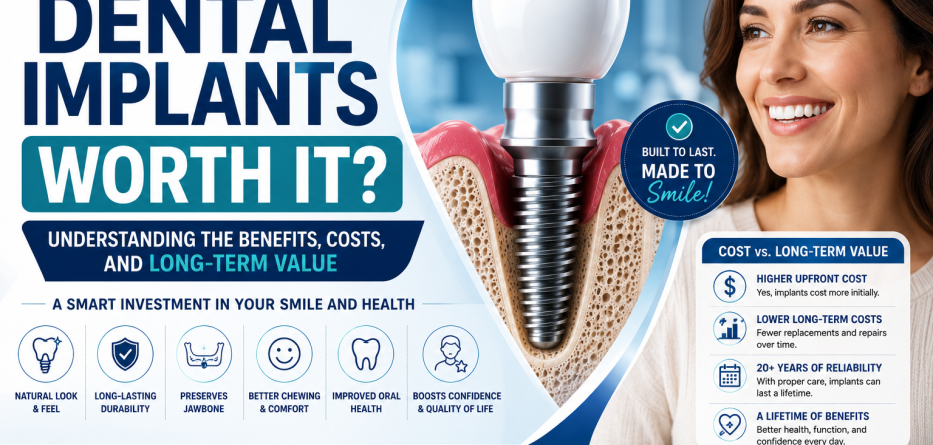
If you’re missing one or more teeth, you’ve likely come across dental implants as a potential solution. While they are often considered the gold standard in tooth replacement, many patients wonder: Are dental implants worth it?
The answer depends on several factors, including your oral health goals, budget, lifestyle, and long-term expectations. Although dental implants typically involve a higher upfront investment than dentures or bridges, they offer exceptional durability, functionality, and health benefits that can make them a worthwhile investment for many people.
In this guide, we’ll explore the benefits, costs, potential drawbacks, and long-term value of dental implants to help you make an informed decision.
What Are Dental Implants?
Dental implants are artificial tooth roots made of biocompatible titanium that are surgically placed into the jawbone. Once the implant integrates with the bone through a process called osseointegration, a custom-made crown is attached to restore the appearance and function of the missing tooth.
A dental implant consists of:
- Titanium implant post
- Abutment
- Dental crown
Together, these components create a replacement tooth that closely resembles a natural tooth in both appearance and performance.
Why Are Dental Implants So Popular?
Dental implants have become increasingly popular because they offer advantages that other tooth replacement options cannot match.
Key Reasons Patients Choose Dental Implants
- Natural appearance
- Exceptional stability
- Improved chewing ability
- Long-lasting results
- Jawbone preservation
- Enhanced confidence
- Better overall oral health
Many patients report that their implants feel almost identical to their natural teeth.
Benefits of Dental Implants
1. Natural Look and Feel
Dental implants are designed to blend seamlessly with surrounding teeth. Unlike removable dentures, implants remain fixed in place and provide a natural appearance.
Benefits include:
- Realistic aesthetics
- Comfortable fit
- Natural chewing function
- Improved speech
2. Long-Term Durability
One of the biggest advantages of dental implants is their longevity.
| Restoration Type | Average Lifespan |
|---|---|
| Dental Implants | 20+ Years |
| Dental Bridges | 5–15 Years |
| Dentures | 5–10 Years |
With proper care, many implants can last a lifetime.
3. Preservation of Jawbone Health
When a tooth is lost, the underlying jawbone begins to shrink due to a lack of stimulation.
Dental implants help:
- Preserve bone density
- Maintain facial structure
- Reduce bone loss
- Support neighboring teeth
This benefit alone often makes implants worth considering.
4. Improved Chewing and Eating
Implants restore nearly full chewing power.
Patients can comfortably enjoy:
- Steak
- Apples
- Nuts
- Fresh vegetables
- Crunchy foods
Unlike dentures, implants won’t slip or move while eating.
5. Better Oral Health
Unlike traditional bridges, implants do not require modification of adjacent healthy teeth.
Benefits include:
- Preservation of natural teeth
- Easier oral hygiene
- Reduced risk of future dental complications
6. Increased Confidence and Quality of Life
Tooth loss can negatively impact self-esteem.
Dental implants help patients:
- Smile confidently
- Speak clearly
- Feel comfortable in social situations
- Improve overall well-being
Many patients describe implants as life-changing.
What Do Dental Implants Cost?
The cost of dental implants varies based on several factors.
Factors Affecting Cost
- Number of implants needed
- Geographic location
- Dentist experience
- Implant brand and materials
- Bone grafting requirements
- Additional procedures
Typical Cost Components
| Procedure | Typical Cost Range |
| Implant Placement | $1,500–$3,000 |
| Abutment | $300–$500 |
| Crown | $1,000–$2,000 |
| Bone Grafting (if needed) | Additional Cost |
The total investment for a single implant often ranges between $3,000 and $6,000.
Why Do Dental Implants Cost More Than Other Options?
Dental implants involve:
- Advanced technology
- Surgical placement
- Customized restorations
- High-quality materials
- Extensive treatment planning
While the upfront cost is higher, implants often require fewer replacements and repairs over time.
Dental Implants vs Dentures
| Feature | Dental Implants | Dentures |
| Stability | Excellent | Moderate |
| Bone Preservation | Yes | No |
| Appearance | Very Natural | Natural |
| Lifespan | 20+ Years | 5–10 Years |
| Comfort | Excellent | Moderate |
| Maintenance | Easy | Requires Removal |
Many patients choose implants because they offer greater comfort and functionality.
Dental Implants vs Bridges
| Feature | Dental Implants | Bridges |
| Bone Preservation | Yes | No |
| Adjacent Teeth Altered | No | Yes |
| Longevity | 20+ Years | 5–15 Years |
| Maintenance | Low | Moderate |
Implants help preserve healthy surrounding teeth while providing superior long-term stability.
Are Dental Implants Worth the Money?
For many patients, the answer is yes.
Reasons They Offer Long-Term Value
Fewer Replacements
Bridges and dentures often require replacement multiple times throughout a patient’s life.
Reduced Maintenance Costs
Properly maintained implants generally require fewer repairs.
Better Oral Health
Implants help prevent bone loss and preserve neighboring teeth.
Improved Quality of Life
The ability to eat, smile, and speak comfortably provides lasting benefits that many patients consider priceless.
Potential Drawbacks to Consider
While dental implants offer many advantages, they may not be ideal for everyone.
Possible Limitations
- Higher upfront cost
- Surgical procedure required
- Longer treatment timeline
- Healing period of several months
- Potential need for bone grafting
Discussing these factors with an implant dentist can help determine whether implants are right for you.
Who Is a Good Candidate for Dental Implants?
Ideal candidates typically have:
- Healthy gums
- Adequate jawbone support
- Good oral hygiene habits
- Controlled medical conditions
- Non-smoking lifestyle
Even patients with bone loss may qualify after preparatory procedures.
How Long Does It Take to Complete Treatment?
The dental implant process generally includes:
- Consultation and planning
- Implant placement surgery
- Healing and osseointegration
- Crown placement
Most cases take between 3 and 9 months, depending on healing requirements.
Frequently Asked Questions
Are dental implants worth it for one missing tooth?
Yes. A single implant replaces the missing tooth without affecting neighboring healthy teeth.
How long do dental implants last?
Many implants last 20 years or more and may last a lifetime with proper care.
Are implants painful?
Most patients experience only mild discomfort during recovery, which is manageable with medication.
Do dental implants look natural?
Yes. Modern implant crowns are designed to match the color, shape, and size of surrounding teeth.
What is the biggest benefit of dental implants?
Many experts consider jawbone preservation and long-term durability to be the greatest advantages.
Conclusion
So, are dental implants worth it?
For many patients, the answer is a resounding yes. Although they require a higher initial investment, dental implants provide unmatched stability, durability, aesthetics, and long-term oral health benefits. They help preserve jawbone structure, restore full chewing function, and improve confidence in ways that dentures and bridges often cannot.
When viewed as a long-term investment in your oral health and quality of life, dental implants remain one of the most valuable and effective tooth replacement solutions available today.
