
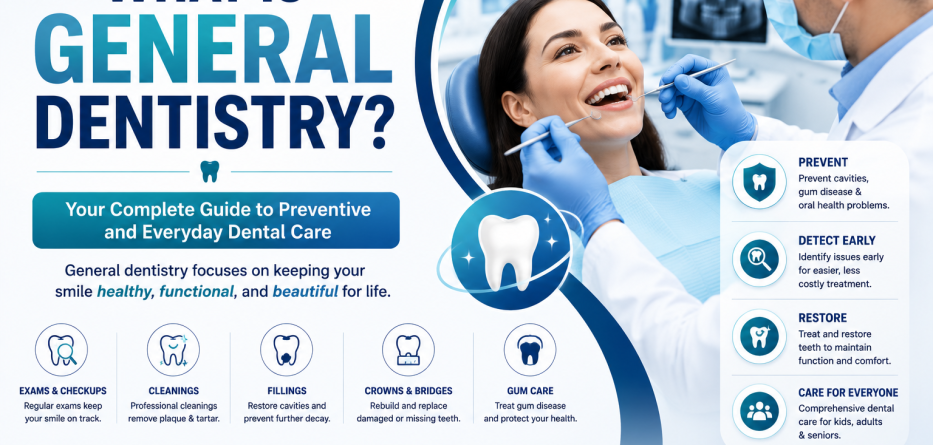
Good oral health is essential for a healthy smile and overall well-being. While many people visit a dentist only when they experience pain or discomfort, regular dental care plays a crucial role in preventing oral health problems before they become serious. This is where general dentistry comes into focus.
General dentistry is the branch of dentistry that focuses on the prevention, diagnosis, and treatment of common oral health issues. A general dentist serves as your primary dental care provider, helping maintain healthy teeth, gums, and oral tissues throughout your life.
In this article, you’ll learn what general dentistry is, the services it includes, why it’s important, and how regular dental visits can protect your long-term oral health.
What Is General Dentistry?
General dentistry is a field of dental care dedicated to maintaining and improving oral health through preventive, restorative, and diagnostic treatments.
General dentists are trained to provide a wide range of services that help patients:
- Prevent dental diseases
- Detect oral health problems early
- Restore damaged teeth
- Maintain healthy gums
- Improve overall oral hygiene
They often act as the first point of contact for patients seeking dental care.
Quick Definition
General dentistry focuses on the prevention, diagnosis, treatment, and management of common dental and oral health conditions for patients of all ages.
What Does a General Dentist Do?
A general dentist provides comprehensive oral healthcare services designed to keep your mouth healthy.
Their responsibilities include:
- Performing dental examinations
- Diagnosing oral health conditions
- Providing preventive treatments
- Restoring damaged teeth
- Educating patients on oral hygiene
- Monitoring long-term oral health
General dentists help identify issues before they develop into more complex problems requiring specialized treatment.
Services Offered in General Dentistry
1. Routine Dental Checkups
Regular dental examinations help identify potential issues early.
During a checkup, your dentist may:
- Examine teeth and gums
- Screen for oral cancer
- Check bite alignment
- Assess overall oral health
Most patients are advised to schedule checkups every six months.
2. Professional Teeth Cleaning
Professional dental cleanings remove plaque and tartar buildup that cannot be eliminated through brushing alone.
Benefits include:
- Reduced risk of cavities
- Prevention of gum disease
- Fresher breath
- Improved oral hygiene
Regular cleanings are one of the most effective preventive measures.
3. Dental Fillings
When tooth decay causes cavities, general dentists often restore the tooth using fillings.
Common filling materials include:
- Composite resin
- Porcelain
- Glass ionomer
Fillings help restore strength and function while preventing further decay.
4. Tooth Extractions
In some cases, a tooth may be too damaged to save.
General dentists perform extractions for:
- Severely decayed teeth
- Impacted teeth
- Overcrowding
- Advanced gum disease
Modern extraction techniques help minimize discomfort and promote faster healing.
5. Root Canal Treatment
Root canal therapy treats infection inside the tooth pulp.
Benefits include:
- Eliminating pain
- Saving natural teeth
- Preventing infection spread
- Restoring oral function
Root canals are a common restorative procedure in general dentistry.
6. Gum Disease Treatment
General dentists diagnose and treat periodontal conditions.
Common treatments include:
- Deep cleaning (scaling and root planing)
- Gum health monitoring
- Oral hygiene education
Early intervention helps prevent tooth loss and serious complications.
7. Dental Crowns and Bridges
General dentists often provide restorative treatments such as the following:
Dental Crowns
Used to:
- Protect weakened teeth
- Restore damaged teeth
- Improve appearance
Dental Bridges
Used to replace one or more missing teeth and restore chewing function.
8. Preventive Care
Preventive dentistry is a major component of general dentistry.
Examples include:
- Fluoride treatments
- Dental sealants
- Oral hygiene counseling
- Nutritional guidance
Prevention helps reduce the need for extensive dental treatment later.
Why Is General Dentistry Important?
General dentistry plays a critical role in maintaining overall health.
Prevents Oral Diseases
Regular visits help prevent the following:
- Tooth decay
- Gum disease
- Oral infections
Detects Problems Early
Early diagnosis often results in:
- Less invasive treatment
- Lower treatment costs
- Better outcomes
Supports Overall Health
Research has linked oral health to systemic conditions such as the following:
- Heart disease
- Diabetes
- Respiratory infections
Maintaining oral health contributes to overall wellness.
How Often Should You Visit a General Dentist?
Most dental professionals recommend:
Every Six Months
Routine visits typically include:
- Comprehensive examination
- Professional cleaning
- X-rays when necessary
Some patients with higher risk factors may require more frequent appointments.
General Dentistry vs Specialized Dentistry
Many patients wonder how general dentistry differs from dental specialties.
| General Dentistry | Specialized Dentistry |
|---|---|
| Routine Checkups | Orthodontics |
| Teeth Cleaning | Periodontics |
| Fillings | Endodontics |
| Crowns | Oral Surgery |
| Preventive Care | Prosthodontics |
| Basic Restorations | Pediatric Dentistry |
General dentists can refer patients to specialists when advanced treatment is required.
Signs You Should Schedule a Dental Visit
Don’t wait until you experience severe pain.
Common warning signs include:
- Tooth sensitivity
- Bleeding gums
- Persistent bad breath
- Toothache
- Loose teeth
- Swollen gums
- Jaw pain
Prompt treatment can prevent complications.
Tips for Maintaining Good Oral Health
Follow These Daily Habits
- Brush twice daily with fluoride toothpaste.
- Floss every day.
- Limit sugary foods and drinks.
- Stay hydrated.
- Avoid tobacco products.
- Visit your dentist regularly.
- Replace your toothbrush every three months.
Consistent oral hygiene habits support lifelong dental health.
Benefits of Regular General Dentistry Care
Patients who maintain routine dental visits often enjoy the following:
- Healthier teeth and gums
- Lower risk of cavities
- Early disease detection
- Better breath
- Improved smile appearance
- Reduced treatment costs
- Greater confidence
Preventive care is almost always more affordable than treating advanced dental problems.
Frequently Asked Questions
What is the purpose of general dentistry?
General dentistry focuses on preventing, diagnosing, and treating common oral health problems while maintaining overall dental wellness.
How often should I see a general dentist?
Most patients should visit every six months for checkups and professional cleanings.
Can a general dentist perform root canals?
Yes. Many general dentists are trained to perform root canal treatment.
Is general dentistry only for adults?
No. General dentists provide care for children, teenagers, adults, and seniors.
What is included in a routine dental exam?
A routine exam typically includes an oral health evaluation, gum assessment, oral cancer screening, and recommendations for treatment if necessary.
Conclusion
General dentistry is the foundation of lifelong oral health. By focusing on prevention, early diagnosis, and effective treatment, general dentists help patients maintain healthy teeth, gums, and smiles. Regular dental visits not only prevent common oral health problems but also contribute to overall well-being.
Whether you need a routine cleaning, cavity treatment, gum care, or preventive advice, a general dentist plays a vital role in keeping your smile healthy and strong for years to come.
