
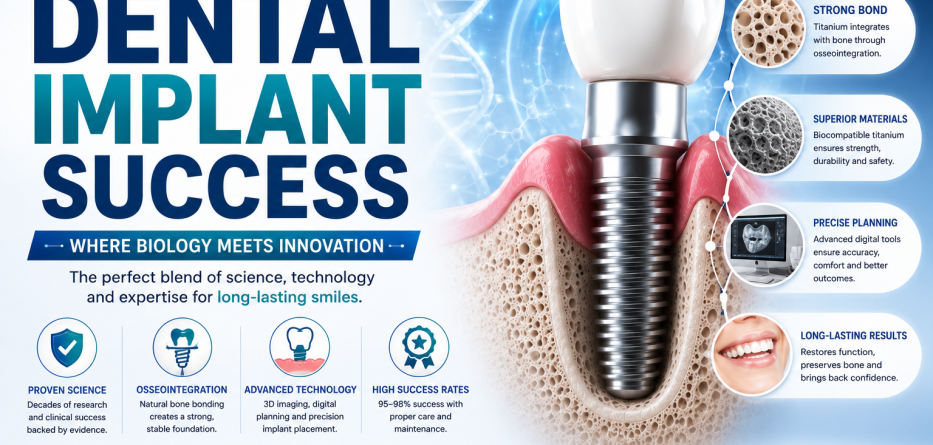
Dental implants have transformed modern dentistry by providing a reliable, natural-looking, and long-lasting solution for missing teeth. With success rates often exceeding 95%, dental implants are considered the gold standard in tooth replacement. But what makes them so successful?
The answer lies in a combination of advanced materials, biological processes, precise treatment planning, and modern dental technology. Understanding the science behind dental implant success can help patients make informed decisions and appreciate why implants continue to be one of the most trusted dental treatments available today.
In this article, we’ll explore the scientific principles that contribute to dental implant success and what patients can do to maximize their long-term outcomes.
What Are Dental Implants?
Dental implants are artificial tooth roots, typically made from titanium, that are surgically placed into the jawbone. Once integrated with the bone, they support crowns, bridges, or implant-supported dentures.
A dental implant system consists of:
- Implant post
- Abutment
- Dental restoration (crown, bridge, or denture)
Unlike traditional tooth replacement options, implants replace both the root and visible portion of a missing tooth.
Why Are Dental Implants So Successful?
Several scientific factors contribute to the long-term success of dental implants.
Key Reasons for Success
- Biocompatible materials
- Osseointegration
- Advanced implant design
- Precise surgical planning
- Healthy bone support
- Proper oral hygiene
- Modern digital dentistry
Together, these elements create a strong foundation for long-term implant function.
The Role of Osseointegration
What Is Osseointegration?
Osseointegration is the biological process in which the jawbone bonds directly with the implant surface.
When a titanium implant is placed into the bone, specialized bone cells begin growing around it, creating a stable and permanent connection.
Why It Matters
Osseointegration provides:
- Exceptional implant stability
- Long-term durability
- Natural chewing function
- Bone preservation
Without successful osseointegration, the implant cannot properly support a restoration.
Why Titanium Is the Material of Choice
One of the most important scientific breakthroughs in implant dentistry was the discovery that titanium can integrate with human bone.
Benefits of Titanium Implants
- Highly biocompatible
- Corrosion-resistant
- Lightweight yet strong
- Long-lasting
- Excellent bone compatibility
Because titanium is accepted by the body, it creates a secure bond that can last for decades.
The Importance of Jawbone Health
Strong jawbone support is critical for implant success.
After tooth loss, the jawbone begins to shrink due to lack of stimulation. Dental implants help reverse this process by mimicking natural tooth roots.
Benefits of Healthy Bone Support
- Improved implant stability
- Better chewing performance
- Reduced risk of failure
- Preservation of facial structure
Patients with insufficient bone volume may benefit from bone grafting before implant placement.
Advanced Implant Surface Technology
Modern implants feature specially treated surfaces that improve bone attachment.
These microscopic surface modifications:
- Increase bone contact
- Accelerate healing
- Enhance osseointegration
- Improve long-term stability
Advanced surface engineering has significantly increased implant success rates over the past few decades.
Precision Treatment Planning
Dental implant success begins long before surgery.
Modern dentists use advanced diagnostic tools to evaluate the following:
- Bone density
- Bone volume
- Nerve location
- Sinus position
- Bite alignment
Technologies Used
- Digital X-rays
- Cone Beam CT (CBCT) scans
- Intraoral scanners
- Computer-guided surgery
These technologies help ensure optimal implant placement and reduce complications.
The Role of Implant Design
Today’s implants are engineered using sophisticated designs that improve performance.
Design Features
- Threaded surfaces
- Optimized implant shape
- Improved force distribution
- Enhanced primary stability
Proper design allows implants to withstand daily chewing forces while minimizing stress on surrounding bone.
The Impact of Oral Hygiene
Even the most advanced implant can fail without proper care.
Bacteria can accumulate around implants, leading to inflammation and bone loss.
Good Oral Hygiene Includes
- Brushing twice daily
- Flossing regularly
- Professional cleanings
- Routine dental examinations
Healthy gums are essential for long-term implant success.
How the Immune System Supports Healing
Following implant placement, the body initiates a healing response.
This process involves:
- Blood clot formation
- Tissue regeneration
- Bone remodeling
- Implant integration
A healthy immune system helps ensure efficient healing and successful osseointegration.
The Importance of Bite Force Distribution
Implants must withstand significant chewing pressure.
Proper bite alignment helps distribute forces evenly across:
- Natural teeth
- Implant restorations
- Jawbone structures
Poor force distribution can increase the risk of the following:
- Crown damage
- Implant overload
- Bone loss
Dentists carefully adjust the bite to protect implant longevity.
Factors That Can Affect Implant Success
Although dental implants are highly successful, several factors can influence outcomes.
Smoking
Smoking can:
- Reduce blood flow
- Delay healing
- Increase infection risk
- Lower success rates
Medical Conditions
Conditions that may affect healing include:
- Uncontrolled diabetes
- Autoimmune disorders
- Osteoporosis
Poor Oral Hygiene
Neglecting oral care can lead to peri-implant disease and implant failure.
Long-Term Clinical Success Rates
Modern dental implants consistently demonstrate excellent outcomes.
Average Success Rates
| Implant Type | Success Rate |
|---|---|
| Single Tooth Implants | 95–98% |
| Multiple Implants | 95%+ |
| Full Arch Implants | 90–98% |
Many implants remain functional for 20 years or longer when properly maintained.
The Future of Dental Implant Science
Research continues to improve implant dentistry.
Emerging innovations include:
- Bioactive implant surfaces
- Artificial intelligence treatment planning
- 3D-printed implants
- Regenerative bone technologies
- Improved digital workflows
These advancements are expected to further enhance implant success and patient outcomes.
Frequently Asked Questions
Why are dental implants so successful?
Dental implants succeed because titanium integrates with the jawbone through osseointegration, creating a stable and durable foundation.
What is the most important factor in implant success?
Successful osseointegration and healthy bone support are among the most important factors.
How long do successful dental implants last?
Many dental implants last 20 years or more, and some can last a lifetime.
Does age affect implant success?
Age alone is rarely a limiting factor. Bone health and overall health are more important considerations.
Can dental implants fail?
Yes, although failure rates are low. Smoking, poor oral hygiene, and certain medical conditions can increase risk.
Conclusion
The science behind dental implant success is built on decades of research, advanced materials, and a deep understanding of human biology. From osseointegration and titanium biocompatibility to modern imaging and precision treatment planning, every aspect of implant dentistry is designed to promote long-term success.
With proper care, healthy habits, and professional guidance, dental implants can provide a strong, stable, and natural-looking solution for missing teeth for many years to come. Their remarkable success rates are a testament to the powerful combination of science, technology, and modern dental expertise.
