
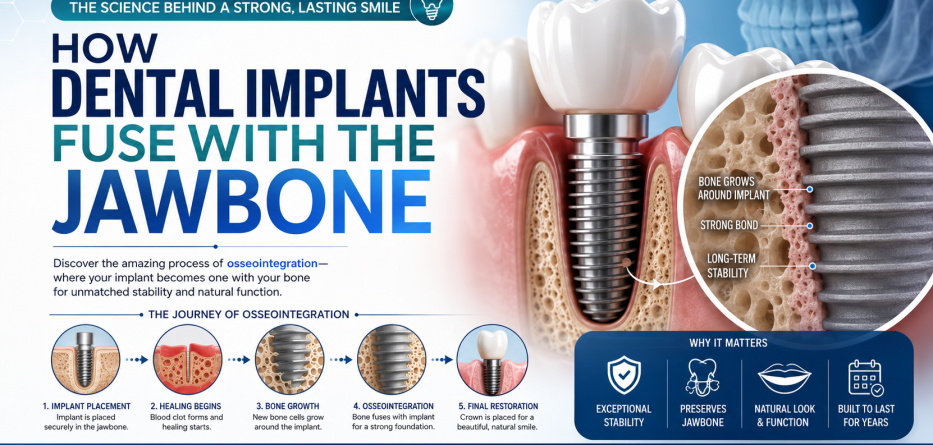
Dental implants are widely regarded as the gold standard for replacing missing teeth. One of the key reasons for their long-term success is their ability to fuse directly with the jawbone, creating a stable foundation that functions much like a natural tooth root.
But how exactly does this process work? Why are dental implants so strong and durable compared to other tooth replacement options?
In this article, we’ll explore the fascinating science behind how dental implants fuse with the jawbone, the healing process involved, and why this biological connection is critical for long-term oral health.
What You’ll Learn
- What dental implant fusion means
- The process of osseointegration
- How the jawbone responds to dental implants
- Factors that affect implant success
- Healing timelines and recovery expectations
- Benefits of a fully integrated implant
What Does It Mean for a Dental Implant to Fuse with the Jawbone?
When a dental implant is placed into the jawbone, it doesn’t simply sit in the bone like a screw in wood. Instead, the surrounding bone tissue gradually grows around and bonds directly to the implant surface.
This biological process is known as osseointegration.
Quick Definition
Osseointegration is the natural process by which living bone tissue grows around and bonds with a dental implant, creating a stable and permanent foundation for a replacement tooth.
This bond is what makes dental implants feel and function like natural teeth.
The Science of Osseointegration
The success of modern dental implants largely depends on osseointegration.
Most dental implants are made from medical-grade titanium, a material that is highly biocompatible with human bone.
Once the implant is placed:
- The body begins healing around the implant.
- Bone cells migrate to the implant surface.
- New bone tissue forms around the implant threads.
- The bone and implant become securely connected.
Over time, this connection becomes strong enough to withstand normal chewing forces.
Why Titanium Is Used for Dental Implants
Titanium has become the preferred material for dental implants because it offers several advantages:
Benefits of Titanium
- Highly biocompatible
- Resistant to corrosion
- Lightweight yet extremely strong
- Encourages bone growth
- Long clinical success history
The unique properties of titanium help the body accept the implant and support successful osseointegration.
What Happens After Implant Placement?
Stage 1: Initial Healing
During the first few days after surgery:
- Mild swelling may occur
- The gum tissue begins healing
- Blood vessels form around the implant site
Stage 2: Bone Formation
Over the next several weeks:
- New bone cells develop
- Bone tissue begins attaching to the implant surface
- Implant stability gradually increases
Stage 3: Full Osseointegration
Typically within 3 to 6 months:
- The implant becomes firmly anchored
- Bone density increases around the implant
- The foundation is ready for the final crown
Timeline: How Long Does Implant Fusion Take?
| Healing Stage | Typical Time |
|---|---|
| Initial Healing | 1–2 Weeks |
| Early Bone Growth | 4–8 Weeks |
| Osseointegration | 3–6 Months |
| Final Restoration | After Integration |
Healing times vary based on individual health factors and the location of the implant.
Factors That Affect Implant Fusion
Several factors influence how successfully an implant integrates with the jawbone.
1. Bone Density
Strong, healthy bone provides better support for implant stability.
2. Oral Hygiene
Good oral hygiene reduces infection risk and promotes healthy healing.
3. Smoking
Smoking can reduce blood flow and significantly slow healing.
4. Medical Conditions
Certain conditions may affect bone healing, including:
- Uncontrolled diabetes
- Osteoporosis
- Autoimmune disorders
5. Implant Placement Technique
Experienced implant dentists use advanced planning and imaging to maximize implant success.
Why Jawbone Fusion Is So Important
Unlike dentures or bridges, dental implants replace the root of a missing tooth.
This provides several benefits:
Bone Preservation
The implant stimulates the jawbone during chewing, helping prevent bone loss.
Superior Stability
A fused implant remains firmly in place during eating and speaking.
Natural Function
Patients can bite and chew with confidence.
Long-Term Durability
Successfully integrated implants can last decades with proper care.
What Happens If Osseointegration Fails?
Although rare, implant failure can occur if the implant does not properly integrate with the bone.
Possible causes include:
- Infection
- Poor bone quality
- Excessive implant movement
- Smoking
- Uncontrolled medical conditions
Signs of failure may include:
- Persistent pain
- Implant mobility
- Swelling
- Difficulty chewing
Early intervention often improves treatment outcomes.
How Dentists Improve Implant Success Rates
Modern implant dentistry uses advanced technology to improve osseointegration.
Common Techniques
- 3D CBCT imaging
- Digital treatment planning
- Guided implant surgery
- Surface-treated implants
- Bone grafting when necessary
These innovations have helped modern dental implants achieve success rates exceeding 95%.
Tips for a Successful Implant Healing Process
To support proper fusion between the implant and jawbone:
Follow These Guidelines
- Attend all follow-up appointments
- Maintain excellent oral hygiene
- Avoid smoking
- Eat a soft-food diet during early healing
- Follow your dentist’s instructions carefully
These simple steps can significantly improve healing and long-term success.
Conclusion
The remarkable ability of dental implants to fuse with the jawbone is what makes them one of the most successful and reliable tooth replacement options available today.
Through a natural process called osseointegration, the jawbone bonds directly with the titanium implant, creating a strong, stable foundation that can support a replacement tooth for decades.
Understanding how dental implants fuse with the jawbone helps patients appreciate why implants offer such exceptional durability, functionality, and long-term oral health benefits compared to other tooth replacement solutions.
For many individuals with missing teeth, this biological connection is the key to restoring a confident, healthy smile.
