
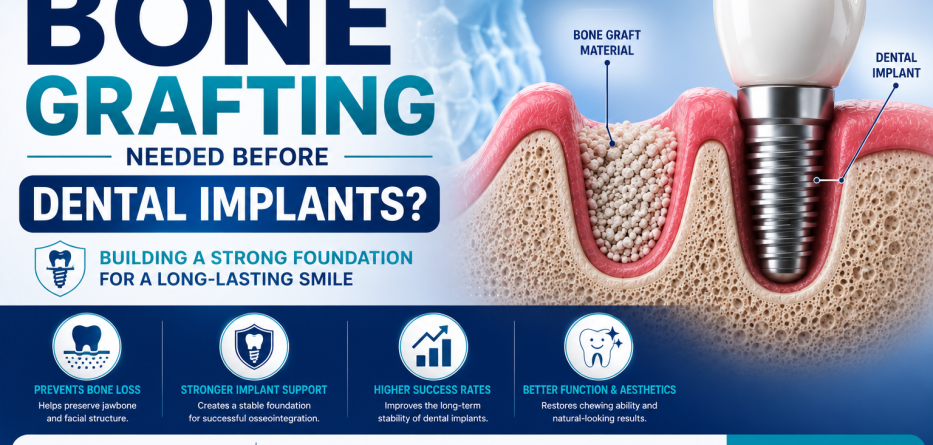
Dental implants are one of the most effective and long-lasting solutions for replacing missing teeth. However, not every patient has enough healthy jawbone to support an implant immediately. In many cases, dentists recommend a procedure called bone grafting before implant placement.
Bone grafting helps rebuild and strengthen areas of the jaw that have lost bone volume over time. Without sufficient bone support, dental implants may not achieve the stability needed for long-term success. While the idea of an additional procedure may seem intimidating, bone grafting has become a routine and highly successful treatment in modern implant dentistry.
In this article, we’ll explain why bone grafting is sometimes necessary, how the procedure works, its benefits, recovery process, and how it improves dental implant outcomes.
What Is Bone Grafting?
Bone grafting is a dental procedure used to restore lost bone in the jaw.
During the procedure, bone material is placed in areas where bone volume or density is insufficient. Over time, the graft integrates with the natural bone, creating a stronger foundation for future dental implants.
Quick Definition
Bone grafting is a procedure that rebuilds or strengthens the jawbone to support dental implants and improve long-term oral health.
Why Is Bone Important for Dental Implants?
Dental implants function as artificial tooth roots.
To remain stable, they must be securely anchored within the jawbone through a process called osseointegration, where the implant fuses directly with the surrounding bone.
Without adequate bone support, implants may:
- Become unstable
- Fail to integrate properly
- Experience long-term complications
- Have a higher risk of failure
Healthy bone is the foundation of successful implant treatment.
Why Do People Lose Jawbone?
Many patients are surprised to learn that jawbone loss can occur after losing a tooth.
Common Causes of Bone Loss
Tooth Loss
When a tooth is missing, the bone underneath no longer receives stimulation from chewing forces and begins to shrink.
Gum Disease
Advanced periodontal disease can destroy the bone that supports teeth.
Trauma or Injury
Accidents can damage both teeth and surrounding bone structures.
Denture Use
Long-term denture wear may accelerate bone resorption because dentures do not stimulate the jawbone.
Infection
Dental infections can contribute to bone deterioration.
Over time, significant bone loss can make implant placement difficult without additional support.
Signs You May Need Bone Grafting Before Dental Implants
Your dentist will evaluate your jawbone using digital imaging and examinations.
You may require bone grafting if:
- You have been missing teeth for several months or years.
- Significant bone loss appears on X-rays.
- Your jawbone is too thin or too soft.
- Previous infections have damaged bone.
- You have experienced advanced gum disease.
A detailed assessment helps determine whether grafting is necessary.
How Bone Grafting Supports Dental Implant Success
Bone grafting creates the conditions needed for successful implant placement.
Benefits Include:
- Increased bone volume
- Improved implant stability
- Enhanced osseointegration
- Better long-term success rates
- Improved aesthetics
- Preservation of facial structure
The stronger the bone foundation, the more predictable the implant outcome.
Types of Bone Grafts Used in Dentistry
Several types of graft materials may be used.
Autograft
Bone is taken from another area of the patient’s body.
Benefits:
- Excellent compatibility
- High success rates
Consideration:
- Requires an additional surgical site
Allograft
Bone material obtained from a human donor and processed for safety.
Benefits:
- No second surgical site
- Widely used
Xenograft
Bone material derived from animal sources, commonly bovine bone.
Benefits:
- Excellent structural support
- Proven effectiveness
Synthetic Bone Graft
Laboratory-created materials designed to stimulate natural bone growth.
Benefits:
- No donor tissue required
- Consistent quality
Your dentist will recommend the most appropriate option based on your specific needs.
The Bone Grafting Procedure
The procedure is typically performed under local anesthesia.
Step 1: Evaluation and Planning
The dentist assesses the following:
- Bone volume
- Bone density
- Implant location
- Overall oral health
Step 2: Placement of Graft Material
Bone graft material is carefully placed in the deficient area.
Step 3: Protection and Healing
The site is protected while new bone develops.
Step 4: Bone Regeneration
Over several months, the graft integrates with existing bone.
Step 5: Implant Placement
Once adequate bone has formed, the dental implant can be placed.
How Long Does Bone Grafting Take to Heal?
Healing times vary depending on:
- Type of graft
- Amount of bone required
- Overall health
- Individual healing capacity
Typical Healing Timeline
| Procedure Stage | Estimated Time |
|---|---|
| Initial Recovery | 1–2 Weeks |
| Bone Integration | 3–6 Months |
| Implant Placement | After Healing |
Some minor grafts may heal faster, while larger grafts may require additional time.
Is Bone Grafting Painful?
Most patients experience only mild to moderate discomfort.
Common post-procedure symptoms include:
- Swelling
- Mild soreness
- Bruising
- Temporary tenderness
Pain is usually manageable with prescribed or over-the-counter medications.
Many patients report that recovery is easier than expected.
What Happens If You Skip Bone Grafting?
Patients sometimes wonder whether they can avoid bone grafting and proceed directly with implants.
Potential consequences include the following:
- Implant instability
- Poor osseointegration
- Increased risk of failure
- Compromised aesthetics
- Long-term complications
In cases of significant bone loss, skipping grafting may reduce the chances of successful treatment.
Success Rates of Bone Grafting
Bone grafting procedures have a high success rate when performed by experienced professionals.
Benefits include:
- Predictable outcomes
- Improved implant success
- Enhanced bone regeneration
- Long-term implant support
Advances in grafting materials and techniques continue to improve outcomes for patients.
Benefits Beyond Implant Placement
Bone grafting provides advantages beyond supporting dental implants.
Additional Benefits
- Maintains facial structure
- Prevents further bone loss
- Improves oral function
- Enhances aesthetics
- Supports surrounding teeth
These benefits contribute to better long-term oral health.
Frequently Asked Questions
Why do I need a bone graft before a dental implant?
A bone graft rebuilds lost jawbone and creates a stable foundation for implant placement.
Is bone grafting always necessary?
No. Patients with sufficient healthy bone may not require grafting.
How successful is bone grafting?
Bone grafting has a high success rate and is routinely used to prepare patients for implants.
How long after bone grafting can I get an implant?
Most patients wait approximately 3–6 months for the graft to integrate before implant placement.
Can bone loss occur after tooth extraction?
Yes. Significant bone loss often begins shortly after a tooth is lost if no replacement is provided.
Conclusion
Bone grafting plays a vital role in modern dental implant treatment. By rebuilding lost bone and creating a strong foundation, it helps ensure the stability, function, and long-term success of dental implants.
While not every patient requires bone grafting, those with insufficient jawbone can benefit greatly from this proven procedure. With advances in dental technology and grafting materials, bone grafting has become a safe, predictable, and highly effective way to restore oral health and prepare for a confident, lasting smile.
