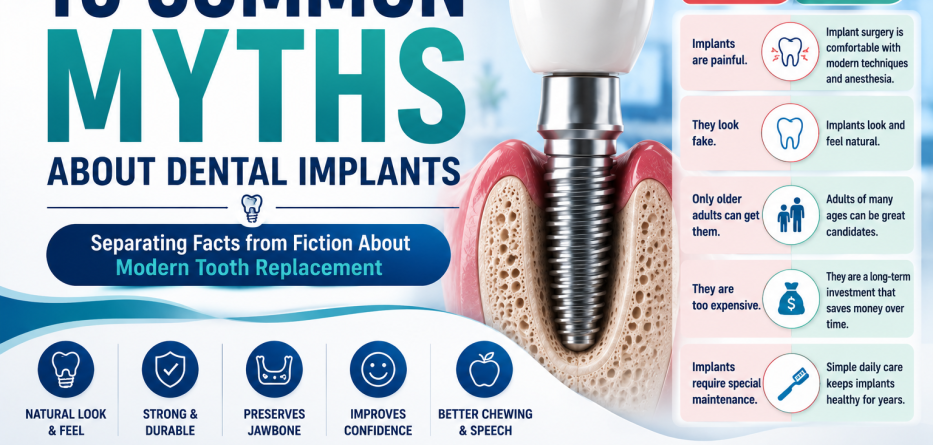
Dental implants have become one of the most popular and effective solutions for replacing missing teeth. Despite their high success rates and decades of proven results, many misconceptions still prevent people from considering this life-changing treatment.
From concerns about pain and cost to misunderstandings about eligibility and maintenance, dental implant myths can create unnecessary fear and confusion. The truth is that modern implant dentistry has advanced significantly, making dental implants safer, more comfortable, and more accessible than ever before.
In this article, we’ll separate fact from fiction by debunking 10 common myths about dental implants and helping you make an informed decision about your oral health.
What Are Dental Implants?
Dental implants are artificial tooth roots made from biocompatible titanium or zirconia. They are surgically placed into the jawbone and support replacement teeth such as crowns, bridges, or dentures.
Unlike traditional tooth replacement options, dental implants integrate with the jawbone, providing exceptional stability and long-term functionality.
Myth #1: Dental Implant Surgery Is Extremely Painful
The Truth
One of the biggest misconceptions is that dental implant surgery is painful.
Modern implant procedures are typically performed under local anesthesia, ensuring patients remain comfortable throughout treatment.
Most patients report that implant surgery involves less discomfort than a tooth extraction.
What to Expect
- Mild swelling
- Minor soreness
- Temporary discomfort
- Recovery within a few days
Pain can usually be managed with over-the-counter medications.
Myth #2: Dental Implants Look Fake
The Truth
Modern dental implants are designed to look, feel, and function like natural teeth.
Custom-made crowns are carefully matched to the color, shape, and size of surrounding teeth.
Benefits include:
- Natural appearance
- Improved smile aesthetics
- Seamless integration
- Enhanced confidence
In many cases, it is nearly impossible to distinguish an implant from a natural tooth.
Myth #3: Dental Implants Are Only for Older Adults
The Truth
Dental implants are suitable for adults of various ages.
Candidates are evaluated based on:
- Bone health
- Gum health
- Overall health
- Jaw development
Many younger adults receive dental implants after accidents, injuries, or tooth loss caused by decay.
Myth #4: Dental Implants Are Too Expensive
The Truth
While implants often have a higher upfront cost than dentures or bridges, they can provide better long-term value.
Long-Term Cost Comparison
| Treatment | Typical Lifespan |
|---|---|
| Dental Implants | 20+ Years |
| Bridges | 5–15 Years |
| Dentures | 5–10 Years |
Because implants can last decades, many patients spend less on replacements and repairs over time.
Myth #5: Dental Implants Require Special Maintenance
The Truth
Dental implants require care similar to natural teeth.
Good oral hygiene includes the following:
- Brushing twice daily
- Daily flossing
- Professional cleanings
- Routine dental visits
No special adhesives or soaking solutions are necessary.
Myth #6: Dental Implants Frequently Fail
The Truth
Dental implants have one of the highest success rates in dentistry.
Studies consistently report success rates above 95% when proper planning and maintenance are followed.
Success depends on factors such as the following:
- Oral hygiene
- Bone quality
- Smoking habits
- Professional care
Implant failures are relatively rare.
Myth #7: You’re Too Old for Dental Implants
The Truth
Age alone is not a limiting factor.
Many patients in their 60s, 70s, and even 80s successfully receive dental implants.
More important considerations include the following:
- General health
- Bone density
- Gum condition
- Medical history
Healthy seniors often make excellent implant candidates.
Myth #8: Dental Implants Cause Health Problems
The Truth
Dental implants have been extensively researched and used successfully for decades.
Titanium implants are highly biocompatible and well-tolerated by the body.
Modern implants are designed to:
- Integrate safely with bone
- Support oral health
- Improve chewing ability
- Enhance quality of life
Serious complications are uncommon when treatment is performed by experienced professionals.
Myth #9: Smokers Cannot Get Dental Implants
The Truth
Smoking increases the risk of implant complications, but it does not automatically disqualify patients from treatment.
Many smokers successfully receive dental implants.
However, smoking may:
- Slow healing
- Increase infection risk
- Reduce implant success rates
Dentists often encourage patients to quit or reduce smoking before treatment.
Myth #10: Dental Implants Are Only for Single Missing Teeth
The Truth
Dental implants can replace:
- One missing tooth
- Multiple missing teeth
- Entire arches of teeth
- Full-mouth restorations
Treatment options include:
- Single implants
- Implant-supported bridges
- Implant-supported dentures
- Full-mouth implant systems
Modern implant dentistry offers solutions for nearly every level of tooth loss.
Why Dental Implant Myths Persist
Many misconceptions originate from:
- Outdated information
- Stories from older implant procedures
- Internet misinformation
- Fear of dental treatment
Advancements in technology, materials, and surgical techniques have dramatically improved implant success and patient comfort over the past few decades.
Benefits of Dental Implants
Dental implants provide numerous advantages, including:
Improved Appearance
- Natural-looking smile
- Preservation of facial structure
Better Function
- Strong chewing ability
- Clear speech
Bone Preservation
- Prevents jawbone loss
- Supports long-term oral health
Durability
- Long-lasting solution
- High success rates
Enhanced Confidence
- Stable and secure fit
- Improved self-esteem
These benefits explain why dental implants are considered the gold standard for tooth replacement.
How to Determine If You’re a Candidate
A dental implant consultation typically includes:
- Comprehensive oral examination
- Digital X-rays or 3D scans
- Review of medical history
- Bone density assessment
- Personalized treatment planning
Even patients with bone loss may qualify through bone grafting procedures.
Frequently Asked Questions
Are dental implants safe?
Yes. Dental implants are considered one of the safest and most predictable dental procedures available today.
How long do dental implants last?
With proper care, dental implants can last 20 years or longer, and many last a lifetime.
Can implants get cavities?
No. The implant itself cannot decay, but healthy gums and surrounding bone must still be maintained.
How long is the recovery process?
Most patients recover from surgery within a few days, while complete osseointegration typically takes three to six months.
Can dental implants replace all teeth?
Yes. Full-mouth implant solutions can replace an entire arch of missing teeth.
Conclusion
Dental implants are surrounded by myths that often discourage people from exploring one of the most effective tooth replacement options available. The reality is that modern dental implants are safe, durable, natural-looking, and highly successful.
By understanding the truth behind these 10 common myths about dental implants, patients can make more informed decisions about restoring their smiles and improving their oral health. If you’re considering dental implants, a consultation with an experienced implant dentist can help determine whether this long-term solution is right for you.