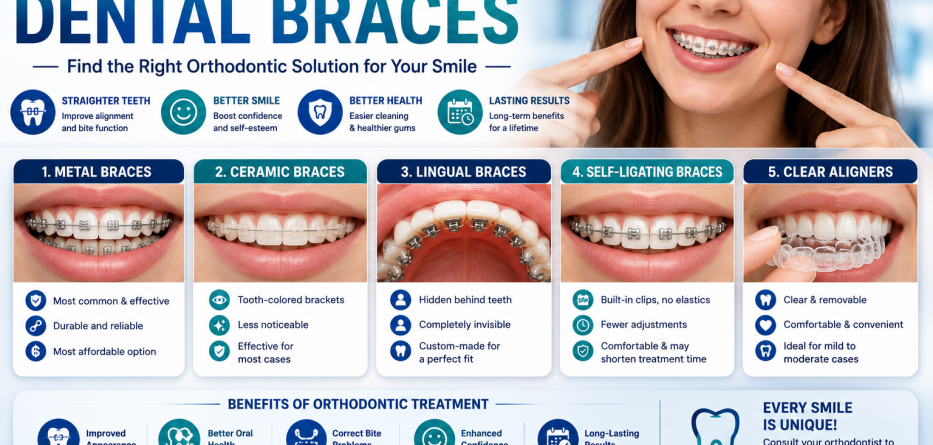
Dental braces have helped millions of people achieve healthier, straighter smiles. Whether you’re dealing with crowded teeth, gaps, bite problems, or jaw alignment issues, modern orthodontic treatments offer more options than ever before.
Today, patients can choose from several types of braces, ranging from traditional metal braces to nearly invisible clear aligners. Each option has unique benefits, costs, treatment times, and suitability depending on individual dental needs.
In this guide, we’ll explore the different types of dental braces, how they work, their advantages and disadvantages, and how to determine which option is right for you.
What Are Dental Braces?
Dental braces are orthodontic devices used to gradually move teeth into proper alignment.
Braces can correct:
- Crooked teeth
- Crowded teeth
- Gaps between teeth
- Overbites
- Underbites
- Crossbites
- Open bites
- Jaw alignment issues
By applying continuous pressure over time, braces help reposition teeth and improve both appearance and oral health.
Why Are Braces Important?
Straight teeth provide more than cosmetic benefits.
Benefits of orthodontic treatment include:
- Improved smile appearance
- Better oral hygiene
- Easier brushing and flossing
- Reduced tooth wear
- Improved chewing function
- Better speech in some cases
- Lower risk of gum disease
Orthodontic treatment can positively impact both dental health and self-confidence.
Types of Dental Braces
1. Traditional Metal Braces
Traditional metal braces remain the most common and effective orthodontic treatment.
How They Work
Metal brackets are attached to the teeth and connected with an archwire. The orthodontist periodically adjusts the wire to guide tooth movement.
Advantages
- Highly effective
- Suitable for complex cases
- Durable and strong
- Usually the most affordable option
Disadvantages
- Most visible type
- May cause temporary discomfort
- Food restrictions required
Best For
- Teenagers
- Severe alignment issues
- Complex bite corrections
2. Ceramic Braces
Ceramic braces function similarly to metal braces but use tooth-colored or clear brackets.
Advantages
- Less noticeable than metal braces
- Effective for many orthodontic problems
- Blend with natural teeth
Disadvantages
- More expensive than metal braces
- Brackets can stain without proper care
- Slightly more fragile
Best For
- Adults
- Older teenagers
- Patients concerned about appearance
3. Lingual Braces
Lingual braces are attached to the back (tongue side) of the teeth instead of the front.
Advantages
- Completely hidden from view
- Effective for many cases
- Customized for each patient
Disadvantages
- Higher cost
- Longer adjustment period
- More difficult cleaning
- May affect speech initially
Best For
- Professionals
- Adults seeking discreet treatment
- Patients wanting invisible braces
4. Self-Ligating Braces
Self-ligating braces use specialized brackets with built-in clips rather than elastic bands.
Advantages
- Less friction
- Easier cleaning
- Fewer adjustment appointments
- Potentially shorter treatment times
Disadvantages
- Higher cost than traditional braces
- Not suitable for every case
Best For
- Patients seeking efficient treatment
- Individuals wanting fewer office visits
5. Clear Aligners
Clear aligners have become one of the most popular orthodontic treatments worldwide.
Examples include:
- Invisalign
- ClearCorrect
- Spark Aligners
How They Work
Patients wear a series of custom-made clear trays that gradually move teeth into position.
Advantages
- Nearly invisible
- Removable
- Comfortable
- No dietary restrictions
- Easier oral hygiene
Disadvantages
- Requires discipline
- Not ideal for severe cases
- Must be worn 20–22 hours daily
Best For
- Adults
- Professionals
- Mild to moderate alignment issues
Comparison of Different Types of Braces
| Type | Visibility | Cost | Effectiveness | Removable |
|---|---|---|---|---|
| Metal Braces | High | Low | Excellent | No |
| Ceramic Braces | Moderate | Medium | Excellent | No |
| Lingual Braces | Invisible | High | Excellent | No |
| Self-Ligating Braces | Moderate | Medium-High | Excellent | No |
| Clear Aligners | Very Low | Medium-High | Good-Excellent | Yes |
Which Type of Braces Is Best?
The best braces depend on:
Severity of Alignment Issues
Complex cases often benefit from:
- Metal braces
- Ceramic braces
- Lingual braces
Aesthetic Preferences
For a discreet appearance:
- Clear aligners
- Lingual braces
- Ceramic braces
Budget
Most affordable options:
- Metal braces
- Ceramic braces
- Clear aligners
- Lingual braces
Lifestyle
Busy professionals often prefer clear aligners because they are removable and less noticeable.
How Long Do Braces Take?
Treatment duration varies depending on complexity.
Average Treatment Times
| Treatment Type | Typical Duration |
|---|---|
| Metal Braces | 18–36 Months |
| Ceramic Braces | 18–36 Months |
| Lingual Braces | 18–36 Months |
| Self-Ligating Braces | 12–30 Months |
| Clear Aligners | 6–24 Months |
Your orthodontist will provide a personalized estimate.
Caring for Your Braces
To ensure successful treatment:
With Traditional Braces
- Brush after meals
- Floss daily
- Avoid sticky foods
- Attend adjustment appointments
With Clear Aligners
- Wear aligners consistently
- Clean trays regularly
- Remove before eating
- Store properly when not in use
Proper care helps prevent delays and complications.
Signs You May Need Braces
You may benefit from orthodontic treatment if you have:
- Crooked teeth
- Crowding
- Large gaps
- Bite problems
- Difficulty chewing
- Jaw discomfort
- Frequent biting of cheeks
An orthodontic evaluation can determine the most appropriate treatment.
Frequently Asked Questions
What is the most effective type of braces?
Traditional metal braces are often considered the most effective for complex orthodontic problems.
Which braces are least noticeable?
Lingual braces and clear aligners are the least visible options.
Are clear aligners as effective as braces?
For mild to moderate cases, clear aligners can be highly effective. Severe cases may require traditional braces.
What age is best for braces?
Orthodontic treatment can be successful for children, teenagers, and adults.
Do braces hurt?
Patients may experience mild discomfort after adjustments, but this is usually temporary.
How much do braces cost?
Costs vary depending on the type of braces, treatment complexity, and geographic location.
Conclusion
Modern orthodontics offers several effective options for achieving a straighter, healthier smile. Whether you choose traditional metal braces, ceramic braces, lingual braces, self-ligating braces, or clear aligners, each treatment has unique benefits and considerations.
The best type of dental braces depends on your dental needs, cosmetic preferences, budget, and lifestyle. Consulting with an experienced orthodontist can help you determine the most suitable option and create a personalized treatment plan for lasting results.