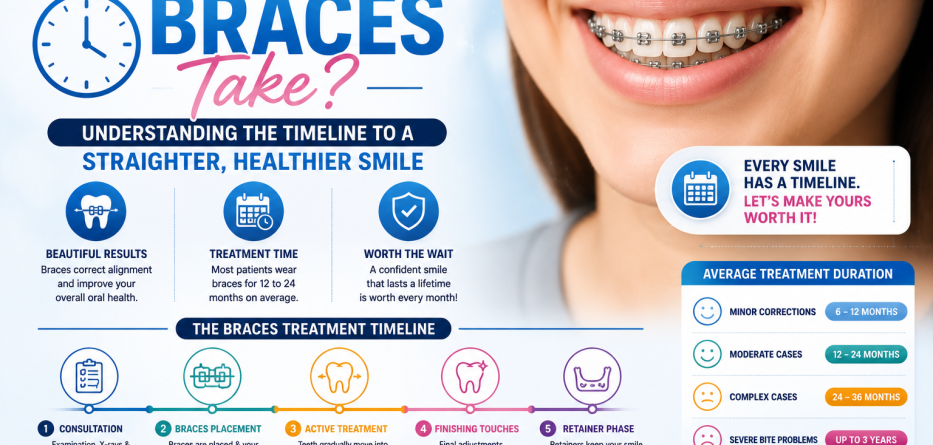
One of the most common questions people ask before starting orthodontic treatment is, “How long do braces take?” Whether you’re considering braces for yourself or your child, understanding the treatment timeline can help set realistic expectations and prepare you for the journey ahead.
The truth is that there is no one-size-fits-all answer. The length of time you need to wear braces depends on several factors, including the severity of your dental issues, the type of braces you choose, your age, and how well you follow your orthodontist’s instructions.
In this guide, we’ll explain the average braces timeline, factors that affect treatment duration, and tips to help you achieve your dream smile as efficiently as possible.
Quick Answer: How Long Do Braces Take?
Most patients wear braces for:
| Treatment Complexity | Average Duration |
|---|---|
| Minor Corrections | 6–12 Months |
| Moderate Cases | 12–24 Months |
| Complex Cases | 24–36 Months |
| Severe Bite Problems | Up to 3 Years |
On average, braces treatment takes 18 to 24 months for most patients.
What Are Braces?
Braces are orthodontic devices used to straighten teeth, correct bite issues, and improve overall dental alignment.
Braces work by applying gentle, continuous pressure that gradually moves teeth into their ideal positions.
They can correct:
- Crowded teeth
- Crooked teeth
- Gaps between teeth
- Overbite
- Underbite
- Crossbite
- Open bite
Factors That Affect How Long Braces Take
1. Severity of the Orthodontic Problem
The complexity of your case is the biggest factor affecting treatment time.
Minor Issues
Examples:
- Small gaps
- Mild crowding
- Slight tooth rotation
Average treatment:
6–12 months
Moderate Issues
Examples:
- Moderate crowding
- Noticeable spacing
- Mild bite issues
Average treatment:
12–24 months
Severe Issues
Examples:
- Significant crowding
- Major bite problems
- Jaw alignment concerns
Average treatment:
24–36 months or longer
2. Age of the Patient
Children and Teenagers
Younger patients often experience faster tooth movement because their jaws are still developing.
Benefits include:
- Faster response to treatment
- Better bone remodeling
- More predictable outcomes
Adults
Adults can achieve excellent results with braces, but treatment may take slightly longer because the jawbone is fully developed.
3. Type of Braces Chosen
Different orthodontic systems can influence treatment time.
Traditional Metal Braces
Most common option.
Average duration:
18–24 months
Ceramic Braces
Function similarly to metal braces but are less noticeable.
Average duration:
18–30 months
Lingual Braces
Placed behind the teeth.
Average duration:
18–36 months
Clear Aligners
Depending on complexity.
Average duration:
6–24 months
4. Patient Compliance
Your commitment to treatment can significantly impact results.
Patients who follow instructions carefully often finish treatment faster.
Important habits include:
- Attending appointments
- Wearing elastics as directed
- Maintaining oral hygiene
- Avoiding foods that damage braces
Failure to follow instructions can extend treatment by months.
5. Tooth Movement Speed
Every patient responds differently to orthodontic treatment.
Factors influencing tooth movement include:
- Bone density
- Genetics
- Overall health
- Age
Some patients naturally experience faster tooth movement than others.
The Typical Braces Treatment Timeline
Phase 1: Initial Consultation
Duration:
1 appointment
During this visit:
- Dental examination
- X-rays
- Photos
- Treatment planning
Phase 2: Braces Placement
Duration:
1–2 hours
Brackets and wires are attached to the teeth.
Patients may experience mild discomfort for a few days.
Phase 3: Active Tooth Movement
Duration:
6–30 months
Regular adjustments occur every 4–8 weeks.
This phase involves:
- Aligning teeth
- Correcting spacing
- Improving bite function
Phase 4: Final Refinements
Duration:
1–6 months
The orthodontist makes minor adjustments to perfect the smile.
Phase 5: Retention
Duration:
Long-term
After braces are removed, retainers help maintain the results.
Without retainers, teeth may gradually shift back.
Signs Your Braces Are Working
Many patients begin noticing changes within a few months.
Common signs include:
- Straighter front teeth
- Reduced crowding
- Improved bite alignment
- Easier cleaning between teeth
Visible improvements often occur within the first 3–6 months.
Can Braces Work Faster?
In some cases, treatment can be accelerated.
Options may include:
Orthodontic Accelerators
Devices designed to stimulate bone remodeling.
Excellent Compliance
Patients who wear elastics correctly and attend appointments often finish sooner.
Early Treatment
Addressing orthodontic issues at a younger age can sometimes reduce overall treatment time.
What Can Delay Braces Treatment?
Several factors can prolong treatment.
Poor Oral Hygiene
Gum disease and inflammation can slow tooth movement.
Missed Appointments
Delays adjustments and treatment progress.
Broken Brackets or Wires
Damage may require additional visits and extend treatment.
Not Wearing Elastics
Failure to wear rubber bands as instructed can significantly delay results.
Braces vs Clear Aligners: Treatment Time Comparison
| Treatment Option | Average Duration |
|---|---|
| Metal Braces | 18–24 Months |
| Ceramic Braces | 18–30 Months |
| Lingual Braces | 18–36 Months |
| Clear Aligners | 6–24 Months |
The best option depends on the complexity of the case and patient preferences.
Tips to Finish Braces Treatment on Time
Follow these recommendations:
- Keep all orthodontic appointments.
- Wear elastics exactly as instructed.
- Practice excellent oral hygiene.
- Avoid hard and sticky foods.
- Protect braces during sports.
- Report broken brackets immediately.
- Wear retainers after treatment.
These habits can help prevent unnecessary delays.
Frequently Asked Questions
How long do braces take for adults?
Most adults wear braces for 18–24 months, although treatment can vary depending on complexity.
Can braces take less than a year?
Yes. Minor alignment issues may be corrected in 6–12 months.
What is the longest braces treatment can take?
Complex orthodontic cases may require 3 years or more.
Do braces hurt?
Patients may experience temporary soreness after adjustments, but discomfort is generally mild.
Can I speed up my braces treatment?
Following your orthodontist’s instructions and maintaining excellent oral hygiene can help keep treatment on schedule.
What happens after braces are removed?
You’ll typically wear a retainer to maintain your new smile and prevent teeth from shifting.
Conclusion
So, how long do braces take?
For most patients, braces treatment lasts between 18 and 24 months, although treatment time can range from several months to a few years depending on the complexity of the case. Factors such as age, orthodontic issues, brace type, and patient compliance all play important roles in determining the timeline.
The good news is that the investment of time is well worth it. A properly aligned smile can improve oral health, confidence, and overall quality of life. By following your orthodontist’s recommendations and staying committed to your treatment plan, you can achieve the best possible results in the shortest time possible.