
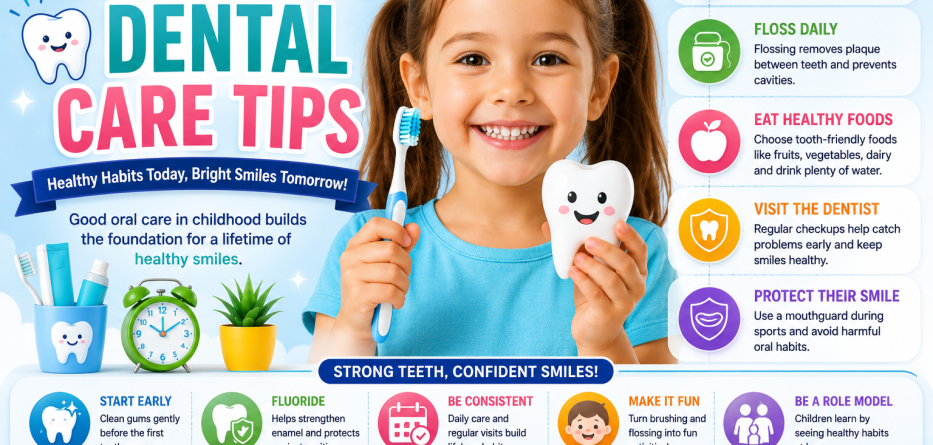
Good oral health begins in childhood. Developing healthy dental habits early can help children avoid cavities, gum problems, and other oral health issues later in life. Parents play a crucial role in teaching proper dental care and ensuring their children maintain healthy teeth and gums as they grow.
Unfortunately, tooth decay remains one of the most common chronic childhood conditions worldwide. The good news is that most dental problems are preventable with proper oral hygiene, a balanced diet, and regular dental visits.
In this guide, we’ll share essential children’s dental care tips to help parents protect their child’s smile and build lifelong healthy habits.
Why Children’s Dental Care Is Important
Many parents assume baby teeth aren’t important because they eventually fall out. However, primary teeth play a critical role in a child’s development.
Baby teeth help with:
- Proper chewing
- Speech development
- Jaw growth
- Maintaining space for permanent teeth
- Building self-confidence
Poor oral health during childhood can affect both overall health and future dental development.
Start Dental Care Early
Dental care should begin even before the first tooth appears.
For Infants
Parents can:
- Gently wipe gums with a clean, damp cloth
- Clean the mouth after feedings
- Avoid putting babies to bed with milk bottles
This helps reduce harmful bacteria and promotes oral health from the start.
Brush Twice Daily
Once the first tooth erupts, regular brushing becomes essential.
Brushing Guidelines by Age
Under Age 3
- Use a soft-bristled toothbrush
- Apply a smear of fluoride toothpaste
- Brush twice daily
Ages 3–6
- Use a pea-sized amount of fluoride toothpaste
- Supervise brushing
- Teach proper brushing techniques
Age 7 and Older
- Encourage independent brushing
- Continue monitoring oral hygiene habits
Brushing should last at least two minutes each time.
Teach Proper Brushing Technique
Children often miss important areas while brushing.
Simple Brushing Steps
- Hold the toothbrush at a 45-degree angle.
- Use gentle circular motions.
- Brush outer tooth surfaces.
- Brush inner tooth surfaces.
- Brush chewing surfaces.
- Brush the tongue.
Making brushing fun can help improve consistency.
Don’t Forget Flossing
Flossing removes plaque and food particles from areas a toothbrush cannot reach.
Children should begin flossing when:
- Two teeth touch each other
- The dentist recommends it
Parents may need to assist younger children until they develop proper coordination.
Limit Sugary Foods and Drinks
Sugar is one of the leading causes of tooth decay.
Bacteria in the mouth feed on sugar and produce acids that attack tooth enamel.
Foods and Drinks to Limit
- Candy
- Cookies
- Soda
- Sports drinks
- Sweetened juices
- Sticky snacks
Reducing sugar intake can significantly lower cavity risk.
Encourage Tooth-Friendly Foods
A healthy diet supports strong teeth and gums.
Best Foods for Dental Health
- Milk
- Cheese
- Yogurt
- Apples
- Carrots
- Leafy greens
- Eggs
- Nuts (age-appropriate)
These foods provide important nutrients such as calcium, phosphorus, and vitamin D.
Make Water the Drink of Choice
Water helps:
- Wash away food particles
- Reduce acid buildup
- Keep the mouth hydrated
- Strengthen enamel when fluoridated
Encourage children to drink water throughout the day instead of sugary beverages.
Schedule Regular Dental Checkups
Children should visit the dentist by their first birthday or within six months of the first tooth erupting.
Regular dental visits allow dentists to:
- Detect cavities early
- Monitor development
- Provide preventive treatments
- Educate parents and children
Most children benefit from checkups every six months.
Consider dental sealants.
Dental sealants are thin protective coatings applied to the chewing surfaces of molars.
Benefits include:
- Reduced cavity risk
- Easy application
- Long-lasting protection
Sealants are particularly effective for school-aged children.
Fluoride Helps Strengthen Teeth
Fluoride strengthens enamel and helps prevent cavities.
Sources of fluoride include:
- Fluoride toothpaste
- Fluoridated drinking water
- Professional fluoride treatments
Parents should ensure children use the correct amount of fluoride toothpaste based on age.
Protect Teeth During Sports
Children who participate in sports face a higher risk of dental injuries.
A custom or sports mouthguard can help protect against:
- Chipped teeth
- Broken teeth
- Tooth loss
- Soft tissue injuries
Protective gear is especially important for contact sports.
Avoid Harmful Oral Habits
Certain habits can affect dental development.
Examples include:
Thumb Sucking
Prolonged thumb-sucking may contribute to the following:
- Bite problems
- Misaligned teeth
Nail-Biting
Can lead to:
- Tooth wear
- Small fractures
Using Teeth as Tools
Children should avoid opening packages or biting hard objects with their teeth.
Recognize Early Signs of Dental Problems
Parents should watch for:
- Tooth sensitivity
- Tooth discoloration
- White spots on teeth
- Bad breath
- Swollen gums
- Tooth pain
Early treatment can prevent more serious issues later.
Make Dental Care Fun
Children are more likely to develop healthy habits when oral care is enjoyable.
Fun Ideas
- Use colorful toothbrushes
- Play brushing songs
- Create reward charts
- Let children choose their toothpaste flavor
- Use educational dental apps
Positive experiences encourage lifelong oral health habits.
Common Dental Problems in Children
Cavities
The most common childhood dental problem.
Gum Inflammation
Often caused by inadequate brushing.
Tooth Sensitivity
May result from enamel wear or cavities.
Early Tooth Loss
Can affect alignment of permanent teeth.
Regular dental care helps prevent these issues.
Frequently Asked Questions
When should my child first visit the dentist?
Children should visit the dentist by age one or within six months of the first tooth appearing.
How often should children brush their teeth?
Twice daily using fluoride toothpaste.
When should children start flossing?
When two teeth touch, floss can clean between them effectively.
Are baby teeth important?
Yes. Baby teeth support speech, chewing, jaw development, and future permanent teeth alignment.
How can I prevent cavities in my child?
Regular brushing, flossing, healthy eating, fluoride use, and routine dental visits help prevent cavities.
Is fluoride safe for children?
Yes. When used appropriately, fluoride is safe and highly effective at preventing tooth decay.
Conclusion
Teaching children proper dental care habits is one of the most valuable investments parents can make in their long-term health. By encouraging regular brushing, flossing, healthy eating, and routine dental visits, parents can help prevent cavities and promote strong, healthy smiles.
Following these children’s dental care tips can establish lifelong habits that support excellent oral health well into adulthood. A healthy smile today lays the foundation for a healthier future.
