
A straight, healthy smile can improve confidence, oral health, and overall quality of life. Braces are one of the most effective orthodontic treatments for correcting crooked teeth, bite issues, and jaw alignment problems. However, one of the most common questions parents and patients ask is, “What is the best age for braces?”
The truth is that there is no single age that works for everyone. The ideal time for braces depends on factors such as dental development, jaw growth, and the severity of orthodontic issues. While many children begin treatment during their early teenage years, braces can be effective for adults as well.
In this guide, we’ll explore the best age for braces, the benefits of early orthodontic evaluation, and what patients can expect at different stages of life.
What Is the Best Age for Braces?
Quick Answer
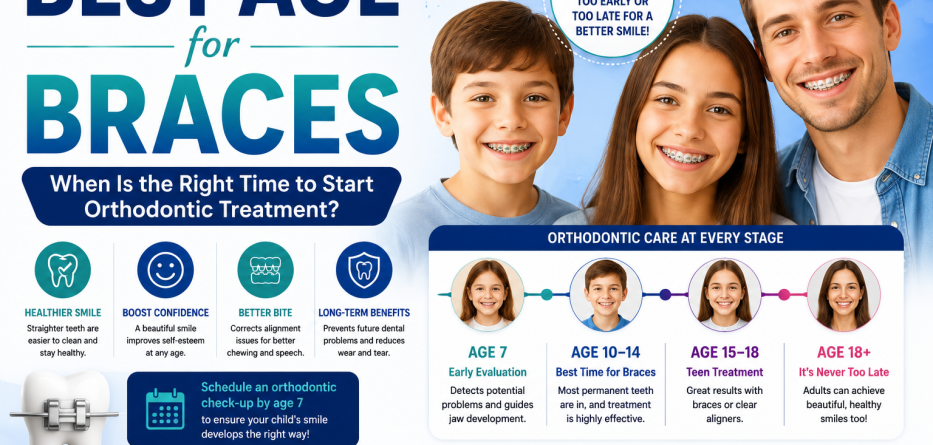
For most children, the best age for braces is between 10 and 14 years old.
During this stage:
- Most permanent teeth have erupted.
- Jawbones are still growing.
- Teeth are easier to move.
- Orthodontic treatment is often more effective.
This age range allows orthodontists to correct alignment issues while taking advantage of natural growth and development.
Why Ages 10 to 14 Are Ideal for Braces
Orthodontists often recommend braces during the pre-teen and early teenage years because the mouth is still developing.
Key Benefits
- Easier tooth movement
- Faster treatment times
- Better jaw correction opportunities
- Improved long-term results
At this age, patients are also generally mature enough to follow orthodontic care instructions.
Why Early Orthodontic Evaluations Matter
The American Association of Orthodontists recommends that children have their first orthodontic evaluation by age 7.
Why Age 7?
By this age, orthodontists can identify the following:
- Crowding
- Bite problems
- Jaw growth issues
- Missing teeth
- Extra teeth
Early detection allows orthodontists to monitor development and intervene when necessary.
What Is Phase 1 Orthodontic Treatment?
Some children may benefit from early treatment before traditional braces.
Phase 1 Treatment May Include
- Expanders
- Space maintainers
- Partial braces
- Habit correction appliances
The goal is to guide jaw growth and create room for permanent teeth.
Not every child requires Phase 1 treatment.
Braces for Teenagers
Teenagers are the most common orthodontic patients.
Benefits of Teen Braces
- Most permanent teeth are present.
- Jaw growth is still occurring.
- Social acceptance is higher.
- Treatment outcomes are often excellent.
Common issues corrected include:
- Crooked teeth
- Overbite
- Underbite
- Crossbite
- Crowding
- Gaps between teeth
Can Adults Get Braces?
Absolutely.
Orthodontic treatment is effective at nearly any age.
Many adults seek braces to
- Improve smile aesthetics
- Correct bite problems
- Prepare for restorative dentistry
- Enhance oral health
Modern orthodontic options make treatment more discreet than ever.
Benefits of Adult Braces
Improved Oral Health
Straighter teeth are easier to clean and maintain.
Better Bite Function
Proper alignment reduces uneven tooth wear and jaw strain.
Enhanced Confidence
Many adults experience increased self-esteem after treatment.
Advanced Treatment Options
Adults may choose:
- Traditional braces
- Ceramic braces
- Lingual braces
- Clear aligners
Signs Your Child May Need Braces
Parents should watch for signs such as:
- Crooked teeth
- Crowding
- Early or late loss of baby teeth
- Difficulty chewing
- Mouth breathing
- Jaw clicking
- Thumb-sucking habits
- Teeth that do not meet properly
An orthodontic evaluation can determine whether treatment is necessary.
Factors That Influence the Best Age for Braces
Severity of Orthodontic Issues
Some problems require earlier intervention.
Jaw Development
Growth patterns may affect treatment timing.
Dental Development
Orthodontists evaluate how many permanent teeth have erupted.
Patient Cooperation
Successful treatment requires good oral hygiene and appliance care.
Different Types of Braces by Age Group
| Age Group | Recommended Options |
|---|---|
| Children | Traditional Braces, Expanders |
| Teenagers | Metal Braces, Ceramic Braces, Clear Aligners |
| Adults | Ceramic Braces, Lingual Braces, Clear Aligners |
The best option depends on the patient’s needs and lifestyle.
How Long Do Braces Take?
Treatment length varies depending on the complexity of the case.
Average Treatment Times
| Treatment Type | Average Duration |
|---|---|
| Minor Corrections | 6–12 Months |
| Moderate Cases | 12–24 Months |
| Complex Cases | 24–36 Months |
Following orthodontic instructions can help shorten treatment time.
Benefits of Getting Braces at the Right Age
Starting treatment at the appropriate time can provide the following:
- Better alignment results
- Improved jaw development
- Reduced treatment complexity
- Lower risk of future dental problems
- Enhanced confidence
Early planning often leads to more predictable outcomes.
Common Myths About Braces and Age
Myth 1: Braces Are Only for Kids
Fact: Adults of all ages can successfully undergo orthodontic treatment.
Myth 2: Earlier Is Always Better
Fact: Some orthodontic issues benefit from waiting until more permanent teeth emerge.
Myth 3: Braces Take Longer for Adults
Fact: Treatment times can be similar depending on the complexity of the case.
Myth 4: It’s Too Late to Straighten Teeth
Fact: Healthy teeth can often be moved at any age.
Frequently Asked Questions
What is the ideal age for braces?
For most patients, braces are most effective between ages 10 and 14.
Can a 7-year-old get braces?
Some children may benefit from early orthodontic treatment, but not all require braces at this age.
Is 15 too late for braces?
No. Many teenagers begin orthodontic treatment at 15 and achieve excellent results.
Can adults get braces?
Yes. Adults of all ages can benefit from orthodontic treatment.
Are braces more painful for adults?
Not necessarily. Adults may experience similar levels of discomfort as younger patients.
How do I know if my child needs braces?
An orthodontic evaluation can identify alignment, bite, and jaw development issues.
Conclusion
When it comes to the best age for braces, most orthodontists agree that the ideal time is between 10 and 14 years old. During this stage, permanent teeth are present, jaw growth is ongoing, and treatment can be highly effective.
However, orthodontic care is not limited to children and teenagers. Adults can also achieve beautiful, healthy smiles through modern orthodontic treatments. The key is early evaluation, personalized treatment planning, and working with an experienced orthodontist to determine the right timing for your unique needs.
Whether you’re considering braces for your child or yourself, the best time to start is when an orthodontic professional recommends treatment based on your individual dental development and goals.
