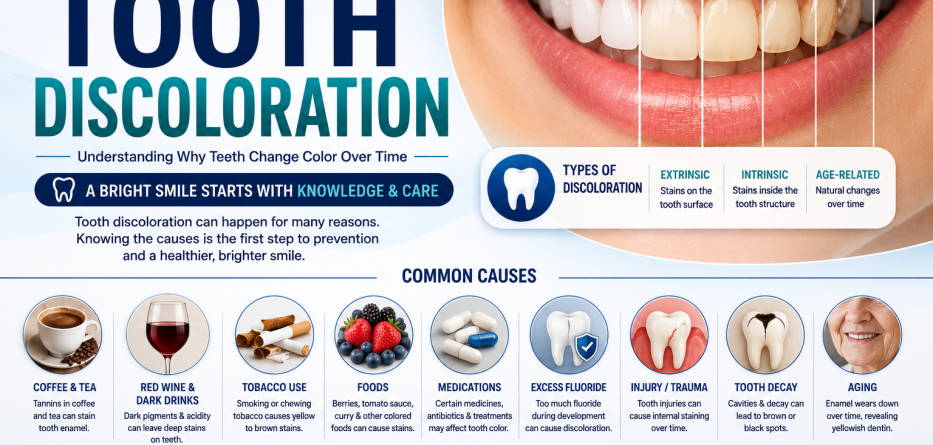
A bright, white smile is often associated with good oral health and confidence. However, many people notice that their teeth gradually become yellow, brown, gray, or stained over time. Tooth discoloration is a common dental concern that affects people of all ages and can occur for various reasons.
Understanding the causes of tooth discoloration is the first step toward preventing stains and maintaining a healthy-looking smile. While some types of discoloration result from lifestyle habits, others may be linked to aging, medications, trauma, or underlying dental conditions.
In this article, we’ll explore the most common causes of tooth discoloration, the different types of stains, and effective ways to keep your teeth looking their best.
What Is Tooth Discoloration?
Tooth discoloration refers to any change in the natural color of the teeth. Healthy teeth are not perfectly white; they typically have a slightly off-white appearance. When teeth become noticeably darker, yellow, brown, gray, or stained, it is considered discoloration.
Quick Definition
Tooth discoloration is the alteration of a tooth’s natural color caused by external stains, internal changes, aging, or dental conditions.
Types of Tooth Discoloration
Understanding the type of discoloration can help determine the most effective treatment.
Extrinsic Discoloration
Occurs on the outer surface of the tooth enamel.
Common causes include:
- Coffee
- Tea
- Red wine
- Tobacco
- Colored foods
Intrinsic Discoloration
Occurs inside the tooth structure beneath the enamel.
Common causes include:
- Trauma
- Medications
- Excess fluoride
- Aging
Age-Related Discoloration
A combination of both extrinsic and intrinsic factors that naturally occur over time.
1. Poor Oral Hygiene
One of the most common causes of tooth discoloration is inadequate oral hygiene.
When plaque and tartar accumulate on teeth, they can cause:
- Yellow staining
- Brown deposits
- Dull appearance
Prevention Tips
- Brush twice daily
- Floss every day
- Use fluoride toothpaste
- Schedule regular dental cleanings
Proper oral care helps prevent many forms of surface staining.
2. Coffee and Tea
Coffee and tea are among the leading causes of stained teeth.
These beverages contain tannins, which can attach to enamel and create discoloration over time.
Why They Cause Stains
- Dark pigments penetrate enamel
- Frequent consumption increases staining
- Acidic properties may weaken enamel
Using a straw and rinsing with water afterward can help reduce staining.
3. Tobacco Use
Smoking and chewing tobacco are major contributors to tooth discoloration.
Nicotine and tar create stubborn stains that can range from yellow to dark brown.
Effects of Tobacco
- Surface staining
- Increased plaque buildup
- Higher risk of gum disease
- Persistent discoloration
Quitting tobacco benefits both oral and overall health.
4. Red Wine and Dark-Colored Beverages
Certain drinks are notorious for staining teeth.
Examples include:
- Red wine
- Cola
- Sports drinks
- Energy drinks
- Dark fruit juices
The combination of pigments and acidity makes these beverages particularly harmful to tooth color.
5. Aging
As people age, natural changes occur within the teeth.
What Happens?
The enamel gradually wears down, revealing the yellowish dentin underneath.
This process can make teeth appear
- More yellow
- Less bright
- Duller over time
Age-related discoloration is a normal part of the aging process.
6. Certain Foods
Many foods contain pigments that can stain teeth.
Common culprits include the following:
- Berries
- Tomato sauce
- Curry
- Soy sauce
- Beets
- Dark chocolate
Foods with strong colors can leave deposits on enamel after repeated exposure.
7. Medications
Some medications can affect tooth color.
Common Examples
Antibiotics
Tetracycline and doxycycline may cause intrinsic staining when taken during tooth development.
Antihistamines
Certain allergy medications may contribute to discoloration.
Blood Pressure Medications
Some medications can alter tooth appearance over time.
Chemotherapy Treatments
Cancer treatments may affect tooth color and enamel quality.
Always discuss medication-related concerns with your healthcare provider.
8. Excessive Fluoride Exposure
Fluoride is beneficial in appropriate amounts, but excessive exposure during childhood can lead to dental fluorosis.
Signs of Fluorosis
- White spots
- Brown spots
- Mottled enamel appearance
Fluorosis develops while teeth are forming beneath the gums.
9. Tooth Trauma or Injury
An injury can affect the internal structure of a tooth.
After trauma, a tooth may appear:
- Gray
- Brown
- Black
This occurs because damage to the tooth’s nerve and blood supply can alter its color.
Dentists can evaluate and treat discoloration caused by trauma.
10. Tooth Decay
Cavities and tooth decay can create dark spots on teeth.
Signs include:
- Brown areas
- Black spots
- Visible holes
- Sensitivity
Prompt treatment can prevent further damage and discoloration.
11. Dental Restorations
Older dental restorations may affect the appearance of teeth.
Examples include:
- Silver amalgam fillings
- Metal crowns
- Aging dental work
Over time, these materials may create a grayish appearance around the treated tooth.
12. Genetics
Some individuals naturally have:
- Thicker enamel
- Thinner enamel
- Darker dentin
- Different tooth shades
Genetics can influence both the color and brightness of teeth.
Common Signs of Tooth Discoloration
You may notice:
- Yellow teeth
- Brown stains
- White spots
- Gray discoloration
- Uneven coloring
- Dark lines near the gums
Professional evaluation can help identify the underlying cause.
How to Prevent Tooth Discoloration
Daily Oral Care
- Brush twice daily
- Floss every day
- Use fluoride toothpaste
Limit Staining Foods and Drinks
Reduce consumption of:
- Coffee
- Tea
- Red wine
- Soda
Visit Your Dentist Regularly
Professional cleanings help remove plaque and surface stains.
Quit Smoking
Avoid tobacco products whenever possible.
Drink Water Frequently
Water helps rinse away pigments and acids.
Treatment Options for Tooth Discoloration
The best treatment depends on the cause of staining.
Professional Teeth Whitening
Ideal for many extrinsic stains.
Dental Bonding
Can improve localized discoloration.
Porcelain Veneers
Provide long-lasting cosmetic improvement for severe staining.
Crowns
Useful when discoloration is associated with structural damage.
Professional Cleaning
Removes plaque, tartar, and superficial stains.
Frequently Asked Questions
What is the most common cause of tooth discoloration?
Poor oral hygiene, coffee, tea, tobacco, and aging are among the most common causes.
Can yellow teeth become white again?
Yes. Professional whitening treatments can significantly improve tooth color.
Why are my teeth turning gray?
Gray discoloration may result from trauma, certain medications, or aging.
Does coffee permanently stain teeth?
Coffee can cause long-term staining, but many stains can be removed through professional treatment.
Can genetics affect tooth color?
Yes. Natural tooth shade and enamel thickness are influenced by genetics.
How can I prevent tooth stains?
Maintain excellent oral hygiene, avoid tobacco, and limit staining foods and beverages.
Conclusion
Tooth discoloration can result from a variety of factors, including aging, poor oral hygiene, dietary habits, tobacco use, medications, trauma, and genetics. Understanding the causes of tooth discoloration allows patients to take proactive steps to protect their smiles and seek appropriate treatment when needed.
Whether the discoloration is mild or severe, modern cosmetic dentistry offers numerous solutions to restore a brighter, healthier-looking smile. With proper care and professional guidance, you can maintain whiter teeth and greater confidence for years to come.