

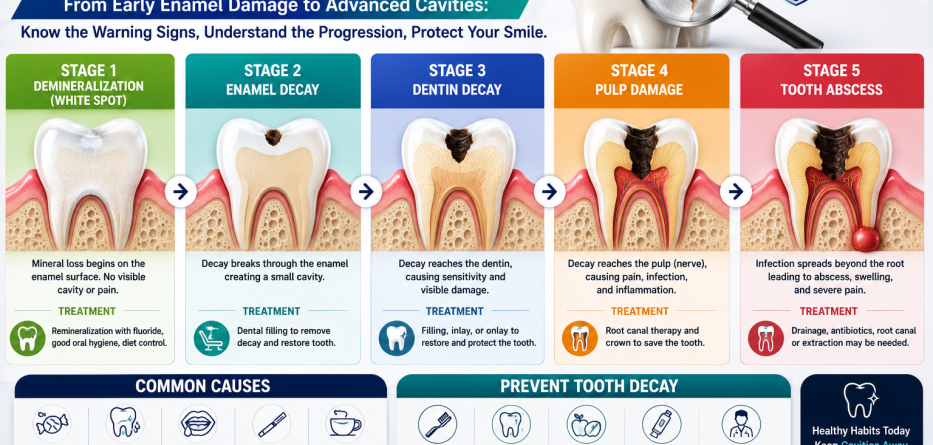
Tooth decay is one of the most common oral health problems affecting people of all ages. It begins silently and often goes unnoticed until symptoms such as pain, sensitivity, or visible cavities appear. However, tooth decay doesn’t happen overnight. It develops gradually through several stages, each causing increasing damage to the tooth structure.
Understanding the stages of tooth decay can help you recognize early warning signs, seek treatment promptly, and prevent serious dental complications. The earlier tooth decay is detected, the easier and less expensive it is to treat.
In this guide, we’ll explore the different stages of tooth decay, their symptoms, treatment options, and ways to prevent cavities from progressing.
What Is Tooth Decay?
Tooth decay, also known as dental caries or cavities, occurs when bacteria in the mouth produce acids that gradually erode tooth enamel.
The process typically begins when:
- Plaque accumulates on teeth
- Sugary foods feed harmful bacteria
- Acid attacks weaken enamel
- Mineral loss occurs
- Cavities eventually form
Without treatment, decay can spread deeper into the tooth and cause significant damage.
How Does Tooth Decay Develop?
Every day, your teeth undergo a cycle of demineralization and remineralization.
Demineralization
Acids produced by oral bacteria remove minerals from the enamel.
Remineralization
Saliva and fluoride help restore lost minerals.
When acid attacks occur more frequently than remineralization, tooth decay begins to develop.
The 5 Stages of Tooth Decay
Stage 1: Demineralization (White Spot Lesions)
This is the earliest stage of tooth decay.
At this point, minerals such as calcium and phosphate begin leaving the enamel surface.
Signs and Symptoms
- White chalky spots on teeth
- No pain
- No visible cavity
Treatment
The good news is that this stage is often reversible.
Recommended treatments include:
- Fluoride treatments
- Improved oral hygiene
- Reduced sugar intake
- Remineralizing toothpaste
Prevention Tip
Regular dental checkups can detect these early changes before permanent damage occurs.
Stage 2: Enamel Decay
If demineralization continues, the enamel begins to break down.
A small cavity may start forming in the tooth’s outer layer.
Signs and Symptoms
- Small visible holes
- Increased sensitivity to sweets
- Mild discomfort
Treatment
Common treatments include:
- Dental fillings
- Fluoride applications (in very early cases)
- Improved oral hygiene
At this stage, professional treatment is usually necessary.
Stage 3: Dentin Decay
Beneath the enamel lies dentin, a softer layer that decays more rapidly.
Once decay reaches the dentin, the cavity expands significantly.
Signs and Symptoms
- Tooth sensitivity
- Pain when eating hot or cold foods
- Visible cavity
- Food trapping
Treatment
Treatment may include:
- Composite fillings
- Inlays or onlays
- Larger restorations
Prompt treatment is essential because dentin decay progresses quickly.
Stage 4: Pulp Damage
The pulp is the innermost part of the tooth containing nerves and blood vessels.
When decay reaches the pulp, inflammation and infection often occur.
Signs and Symptoms
- Severe toothache
- Persistent pain
- Swelling
- Sensitivity to temperature
- Pain when chewing
Treatment
Treatment options typically include:
- Root canal therapy
- Crown placement
- Infection management
Without treatment, infection can spread beyond the tooth.
Stage 5: Tooth Abscess
This is the most advanced stage of tooth decay.
An abscess is a pocket of infection that develops around the tooth root.
Signs and Symptoms
- Severe throbbing pain
- Facial swelling
- Bad taste in the mouth
- Pus drainage
- Fever
- Swollen lymph nodes
Treatment
Emergency treatment may involve:
- Root canal treatment
- Drainage of infection
- Antibiotics
- Tooth extraction if necessary
A dental abscess should never be ignored because it can lead to serious health complications.
Tooth Decay Stages at a Glance
| Stage | Area Affected | Symptoms | Treatment |
|---|---|---|---|
| Stage 1 | Enamel Surface | White spots | Fluoride & remineralization |
| Stage 2 | Enamel | Mild sensitivity | Filling |
| Stage 3 | Dentin | Sensitivity & cavity | Filling or restoration |
| Stage 4 | Pulp | Severe pain | Root canal |
| Stage 5 | Root & Surrounding Tissue | Abscess & swelling | Root canal or extraction |
Common Causes of Tooth Decay
Several factors contribute to cavity formation.
Poor Oral Hygiene
Inadequate brushing and flossing allow plaque to accumulate.
Frequent Sugar Consumption
Sugary foods and beverages feed cavity-causing bacteria.
Dry Mouth
Reduced saliva limits natural protection against acid attacks.
Poor Diet
Lack of essential nutrients can weaken tooth structure.
Inadequate Fluoride Exposure
Fluoride helps strengthen enamel and prevent decay.
Risk Factors for Tooth Decay
People may be at increased risk if they:
- Consume sugary snacks frequently
- Drink sugary beverages
- Smoke or use tobacco products
- Have dry mouth conditions
- Wear orthodontic appliances
- Have a history of cavities
Regular dental visits can help identify individual risk factors.
How Dentists Diagnose Tooth Decay
Dental professionals use several methods to identify decay.
Visual Examination
Dentists inspect teeth for discoloration and cavities.
Dental X-Rays
X-rays reveal decay between teeth and beneath restorations.
Dental Probes
Special instruments help detect soft or damaged areas.
Early diagnosis allows for less invasive treatment.
How to Prevent Tooth Decay
The best treatment for tooth decay is prevention.
Daily Prevention Tips
- Brush twice daily with fluoride toothpaste.
- Floss every day.
- Limit sugary foods and drinks.
- Drink plenty of water.
- Visit your dentist regularly.
- Consider dental sealants if recommended.
- Use fluoride mouthwash when appropriate.
These simple habits significantly reduce cavity risk.
The Importance of Early Treatment
Treating tooth decay in its earliest stages offers several benefits:
- Lower treatment costs
- Less invasive procedures
- Reduced risk of tooth loss
- Better long-term oral health
Ignoring early signs often leads to more extensive and expensive treatment later.
Frequently Asked Questions
Can tooth decay be reversed?
Only the earliest stage (demineralization) can typically be reversed through remineralization and fluoride treatment.
How long does it take for tooth decay to progress?
The timeline varies depending on oral hygiene, diet, saliva production, and individual risk factors.
Does tooth decay always cause pain?
No. Early stages often develop without symptoms.
What happens if a cavity is left untreated?
Decay can progress to the dentin, pulp, and eventually cause an abscess or tooth loss.
Is tooth decay contagious?
The bacteria associated with cavities can be transmitted through saliva, but decay itself is not contagious.
Can adults get cavities?
Yes. Tooth decay affects people of all ages, including adults and seniors.
Conclusion
Understanding the stages of tooth decay is essential for protecting your oral health. What begins as a small area of demineralization can eventually progress into severe infection, tooth loss, and significant discomfort if left untreated.
Fortunately, early detection, good oral hygiene, fluoride use, and regular dental checkups can prevent most cavities from advancing. By recognizing the signs of each stage and seeking timely treatment, you can maintain a healthy smile and avoid more complex dental procedures in the future.

