

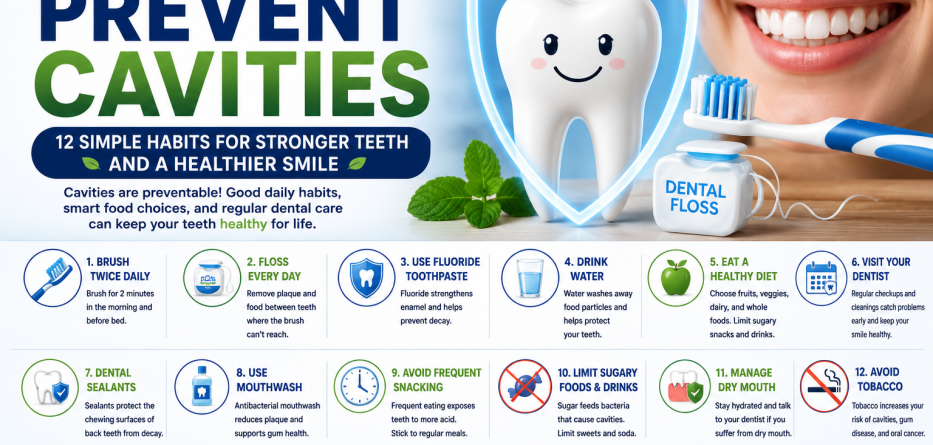
Cavities are one of the most common dental problems affecting people of all ages. Also known as dental caries or tooth decay, cavities occur when harmful bacteria in the mouth produce acids that gradually damage tooth enamel. If left untreated, cavities can lead to tooth pain, infections, and even tooth loss.
The good news is that cavities are largely preventable. By practicing good oral hygiene, making smart dietary choices, and visiting your dentist regularly, you can significantly reduce your risk of tooth decay.
In this guide, we’ll explain what causes cavities, how they develop, and the most effective ways to prevent them and maintain a healthy smile.
What Are Cavities?
A cavity is a permanently damaged area in the hard surface of a tooth that develops into a small hole or opening.
Cavities form when:
- Bacteria accumulate on teeth
- Sugars and starches are consumed
- Plaque produces acids
- Enamel begins to break down
Without treatment, decay can spread deeper into the tooth and affect the dentin and pulp.
Common Signs of Cavities
- Tooth sensitivity
- Toothache
- Pain when eating sweets
- Visible holes in teeth
- Brown, black, or white stains
- Bad breath
What Causes Cavities?
Understanding the causes of cavities is the first step toward prevention.
Plaque Buildup
Plaque is a sticky film of bacteria that forms on teeth.
When plaque combines with sugars from food and drinks, it produces acids that attack tooth enamel.
Sugary Foods and Drinks
Frequent consumption of:
- Candy
- Soda
- Cookies
- Cakes
- Sports drinks
can increase the risk of cavities.
Poor Oral Hygiene
Inadequate brushing and flossing allow plaque to remain on teeth longer.
Dry Mouth
Saliva helps wash away food particles and neutralize acids.
A lack of saliva can increase cavity risk.
How to Prevent Cavities
1. Brush Your Teeth Twice Daily
Brushing is the foundation of cavity prevention.
Use:
- Fluoride toothpaste
- A soft-bristled toothbrush
- Gentle circular motions
Brush for at least two minutes twice a day.
Why It Helps
Brushing removes plaque, bacteria, and food debris before they can damage enamel.
2. Use Fluoride Toothpaste
Fluoride strengthens tooth enamel and helps reverse early stages of decay.
Benefits of Fluoride
- Strengthens enamel
- Reduces cavity risk
- Supports remineralization
- Protects against acid attacks
Most dentists recommend fluoride toothpaste for both children and adults.
3. Floss Every Day
Brushing alone cannot clean between teeth effectively.
Daily flossing removes:
- Food particles
- Plaque buildup
- Bacteria from hard-to-reach areas
Why Flossing Matters
Many cavities develop between teeth where toothbrush bristles cannot reach.
4. Limit Sugary Foods and Drinks
Sugar is one of the primary contributors to tooth decay.
Foods to Limit
- Candy
- Chocolate
- Soft drinks
- Sweetened coffee drinks
- Sticky snacks
- Sugary cereals
Better Choices
- Fresh fruits
- Vegetables
- Cheese
- Nuts
- Plain yogurt
Reducing sugar intake can dramatically lower cavity risk.
5. Drink Plenty of Water
Water helps keep your mouth clean and hydrated.
Benefits include:
- Washing away food particles
- Diluting acids
- Supporting saliva production
- Reducing plaque accumulation
Fluoridated water provides additional cavity protection.
6. Visit Your Dentist Regularly
Routine dental visits are essential for early detection and prevention.
Most dentists recommend checkups every six months.
Professional visits include:
- Dental examinations
- Professional cleanings
- X-rays when needed
- Preventive recommendations
Early treatment can stop small problems before they become serious cavities.
7. Consider Dental Sealants
Dental sealants are thin protective coatings applied to the chewing surfaces of back teeth.
Benefits
- Protect deep grooves
- Block bacteria
- Reduce cavity risk
Sealants are especially beneficial for children and teenagers.
8. Use Antibacterial Mouthwash
Certain mouthwashes help reduce harmful bacteria in the mouth.
Benefits include:
- Fresh breath
- Reduced plaque buildup
- Lower cavity risk
- Improved gum health
Ask your dentist which mouthwash is best for your needs.
9. Eat a Tooth-Friendly Diet
A healthy diet supports strong teeth and healthy gums.
Foods That Help Prevent Cavities
Dairy Products
- Milk
- Cheese
- Yogurt
These provide calcium and phosphorus.
Crunchy Fruits and Vegetables
- Apples
- Carrots
- Celery
These stimulate saliva production.
Protein Sources
- Fish
- Eggs
- Lean meats
Help support oral tissue health.
10. Avoid Frequent Snacking
Every time you eat, bacteria produce acids that attack enamel.
Frequent snacking means the following:
- More acid attacks
- Less time for enamel recovery
Limiting snacks between meals helps protect teeth.
11. Manage Dry Mouth
Saliva is a natural defense against tooth decay.
Dry mouth may be caused by the following:
- Certain medications
- Medical conditions
- Dehydration
Tips to Increase Saliva
- Drink more water
- Chew sugar-free gum
- Use saliva substitutes if recommended
- Avoid tobacco products
12. Protect Children’s Teeth Early
Good habits should begin in childhood.
Parents should:
- Supervise brushing
- Limit sugary snacks
- Schedule dental visits
- Encourage fluoride use
Early prevention can reduce lifetime cavity risk.
Foods That Help Prevent Cavities
| Food | Benefit |
|---|---|
| Cheese | Strengthens enamel |
| Milk | Provides calcium |
| Yogurt | Supports healthy bacteria |
| Apples | Stimulates saliva |
| Carrots | Cleans tooth surfaces |
| Nuts | Low in sugar |
| Leafy Greens | Rich in minerals |
Habits That Increase Cavity Risk
Avoid these common habits:
- Frequent soda consumption
- Sleeping without brushing
- Skipping flossing
- Excessive sugary snacks
- Tobacco use
- Irregular dental visits
Reducing these behaviors can significantly improve oral health.
Frequently Asked Questions
Can cavities be prevented completely?
While no method guarantees complete prevention, proper oral care greatly reduces the risk of cavities.
How often should I brush my teeth?
Dentists recommend brushing twice daily for two minutes each time.
Does fluoride really help prevent cavities?
Yes. Fluoride strengthens enamel and helps repair early damage.
Are cavities contagious?
The bacteria that contribute to cavities can be transmitted through saliva.
What foods cause the most cavities?
Sugary and sticky foods, soft drinks, and frequent snacking are major contributors.
Do adults get cavities?
Yes. Cavities can develop at any age.
Conclusion
Cavity prevention starts with simple daily habits. Brushing twice a day, flossing regularly, limiting sugary foods, drinking plenty of water, and visiting your dentist routinely can significantly reduce your risk of tooth decay.
By understanding how cavities develop and taking proactive steps to protect your teeth, you can maintain a healthier smile and avoid costly dental treatments in the future. Consistent oral care today can help keep your teeth strong and cavity-free for years to come.

