

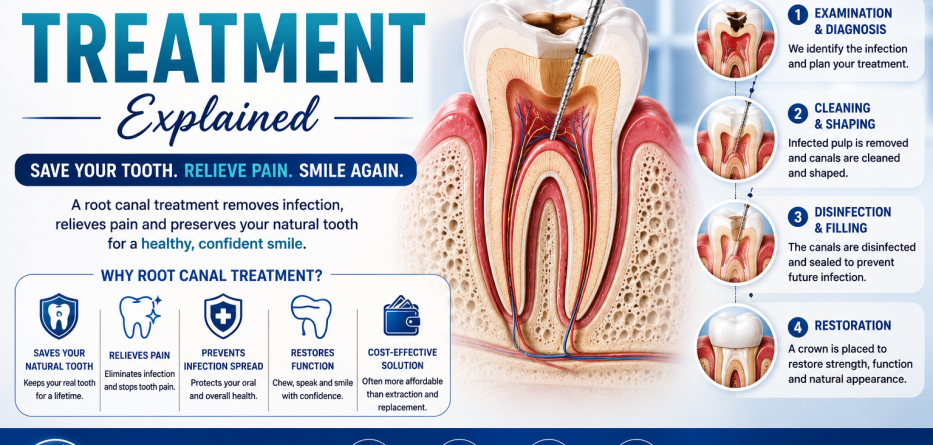
Few dental procedures are as misunderstood as a root canal treatment. Many people associate root canals with pain and discomfort, but modern dentistry has transformed the procedure into a safe, effective, and relatively comfortable treatment that can save a damaged tooth.
If you’ve been told you need a root canal, you may have questions about what the procedure involves, why it’s necessary, and what to expect during recovery. Understanding the facts can help ease anxiety and allow you to make informed decisions about your oral health.
In this guide, we’ll explain root canal treatment step-by-step, discuss its benefits, address common myths, and help you understand why it remains one of the most successful treatments for preserving natural teeth.
What Is Root Canal Treatment?
Root canal treatment, also known as endodontic therapy, is a dental procedure used to remove infected or damaged pulp from inside a tooth.
The pulp contains:
- Blood vessels
- Nerves
- Connective tissue
When the pulp becomes infected due to deep decay, trauma, or cracks, a root canal can remove the infection and save the tooth.
Quick Definition
A root canal treatment is a procedure that cleans, disinfects, and seals the inside of a damaged tooth to eliminate infection and preserve the natural tooth structure.
Why Is a Root Canal Needed?
Root canal therapy becomes necessary when the tooth pulp becomes inflamed or infected.
Common Causes
- Deep tooth decay
- Cracked or fractured teeth
- Repeated dental procedures
- Dental trauma
- Severe gum disease
Without treatment, the infection can spread and eventually lead to tooth loss.
Signs You May Need a Root Canal
Several symptoms may indicate pulp infection.
Common Warning Signs
- Persistent toothache
- Sensitivity to hot or cold temperatures
- Swollen gums
- Tooth discoloration
- Pain when chewing
- Facial swelling
- Gum abscess or pimple near the tooth
Some patients may experience no symptoms until the infection becomes severe.
How Does Root Canal Treatment Work?
The goal of root canal treatment is to remove infected tissue while preserving the outer tooth structure.
Step 1: Examination and Diagnosis
The dentist performs the following:
- Clinical examination
- Digital X-rays
- Pulp vitality testing
This helps determine the extent of infection.
Step 2: Local Anesthesia
The area is numbed to ensure patient comfort throughout the procedure.
Modern root canal treatment is often no more uncomfortable than receiving a filling.
Step 3: Access Opening
A small opening is created in the tooth to access the infected pulp.
Step 4: Cleaning and Shaping
Special instruments are used to:
- Remove infected pulp
- Clean root canals
- Shape the canals for filling
Step 5: Disinfection
The canals are thoroughly disinfected to eliminate bacteria.
Step 6: Filling the Canals
The cleaned canals are sealed using a biocompatible material called gutta-percha.
Step 7: Final Restoration
A dental crown is often placed to restore strength and function.
What Happens If You Delay Root Canal Treatment?
Ignoring an infected tooth can lead to serious complications.
Potential Consequences
- Severe pain
- Tooth abscess
- Bone loss
- Gum infection
- Tooth extraction
- Spread of infection
Early treatment improves outcomes and helps preserve the natural tooth.
Benefits of Root Canal Treatment
Saves Your Natural Tooth
One of the greatest advantages is preserving your original tooth.
Eliminates Pain
Contrary to popular belief, root canals relieve pain caused by infection.
Prevents Tooth Extraction
Keeping a natural tooth often provides better long-term oral health outcomes.
Restores Normal Function
Patients can chew, speak, and smile comfortably after treatment.
Maintains Jawbone Health
Saving a natural tooth helps preserve the surrounding bone structure.
Is Root Canal Treatment Painful?
This is one of the most common concerns among patients.
The Truth About Root Canal Pain
Modern root canal procedures are performed using:
- Local anesthesia
- Advanced instruments
- Digital imaging
- Improved techniques
Most patients report that the procedure feels similar to receiving a routine dental filling.
The pain people associate with root canals is usually caused by the infection—not the treatment itself.
Root Canal Treatment vs Tooth Extraction
Many patients wonder whether they should save the tooth or remove it.
| Feature | Root Canal | Tooth Extraction |
|---|---|---|
| Saves Natural Tooth | Yes | No |
| Preserves Jawbone | Yes | Limited |
| Restores Function | Yes | Requires Replacement |
| Long-Term Cost | Often Lower | May Require Implant or Bridge |
| Appearance | Natural | Restoration Needed |
Whenever possible, dentists generally recommend preserving natural teeth.
Recovery After a Root Canal
Most patients recover quickly.
What to Expect
- Mild tenderness for a few days
- Temporary sensitivity
- Normal activities within 24 hours
Recovery Tips
- Take prescribed medications
- Avoid chewing on the treated side initially
- Maintain good oral hygiene
- Attend follow-up appointments
Most discomfort resolves within a few days.
Success Rate of Root Canal Treatment
Root canal therapy is one of the most predictable procedures in dentistry.
Success Statistics
- Success rates often exceed 90–95%
- Treated teeth can last a lifetime
- Modern techniques continue to improve outcomes
The long-term success of the treatment often depends on proper restoration and oral hygiene.
Common Myths About Root Canal Treatment
Myth 1: Root Canals Are Extremely Painful
Fact: Modern root canal therapy is typically comfortable and relieves pain.
Myth 2: Tooth Extraction Is Better
Fact: Preserving a natural tooth is generally preferable whenever possible.
Myth 3: Root Canals Cause Illness
Fact: Scientific research has repeatedly disproven this myth.
Myth 4: Root Canals Require Multiple Appointments
Fact: Many root canal procedures can be completed in one or two visits.
How to Prevent Root Canal Treatment
Although not always preventable, good oral hygiene reduces the risk.
Prevention Tips
- Brush twice daily
- Floss every day
- Visit your dentist regularly
- Treat cavities early
- Wear a mouthguard during sports
- Avoid chewing hard objects
Preventive care remains the best defense against pulp infections.
Frequently Asked Questions
How long does a root canal take?
Most procedures take between 60 and 90 minutes, depending on the tooth and complexity.
Is root canal treatment safe?
Yes. Root canal therapy is a safe and highly effective dental procedure.
Will I need a crown after a root canal?
In many cases, especially for back teeth, a crown is recommended to protect the treated tooth.
How long does a root canal-treated tooth last?
With proper care, a treated tooth can last for many years and often a lifetime.
Can I return to work after a root canal?
Most patients can return to normal activities the same day or the following day.
What happens if a root canal fails?
Retreatment or endodontic surgery may be recommended in rare cases.
Conclusion
Root canal treatment is a safe, effective, and highly successful procedure designed to save infected or damaged teeth. By removing infection, relieving pain, and preserving natural tooth structure, root canals help patients maintain healthy smiles and avoid tooth loss.
Thanks to modern dental technology and advanced techniques, root canal treatment is more comfortable than ever before. If your dentist recommends a root canal, early treatment can protect your oral health and help you keep your natural tooth for years to come.

