
Dental implants are one of the most effective and long-lasting solutions for replacing missing teeth. While the procedure is generally safe and predictable, it’s normal for patients to experience some swelling after implant surgery.
One of the most common questions patients ask is, “How long does implant swelling last?”
The good news is that post-operative swelling is a normal part of the healing process and usually resolves within a few days. Understanding what to expect after dental implant surgery can help reduce anxiety and ensure a smoother recovery.
In this guide, we’ll explain how long implant swelling typically lasts, what causes it, how to reduce it, and when you should contact your dentist.
Is Swelling After Dental Implant Surgery Normal?
Yes, swelling is a natural response to any surgical procedure.
When a dental implant is placed into the jawbone, the body’s immune system responds by increasing blood flow to the area. This process helps begin healing and tissue repair.
As a result, mild to moderate swelling around the gums, cheeks, or jaw is completely normal.
Common Symptoms Include the Following:
- Puffy cheeks
- Swollen gums
- Mild bruising
- Tenderness around the implant site
- Slight jaw stiffness
These symptoms are usually temporary and improve as healing progresses.
How Long Does Implant Swelling Last?
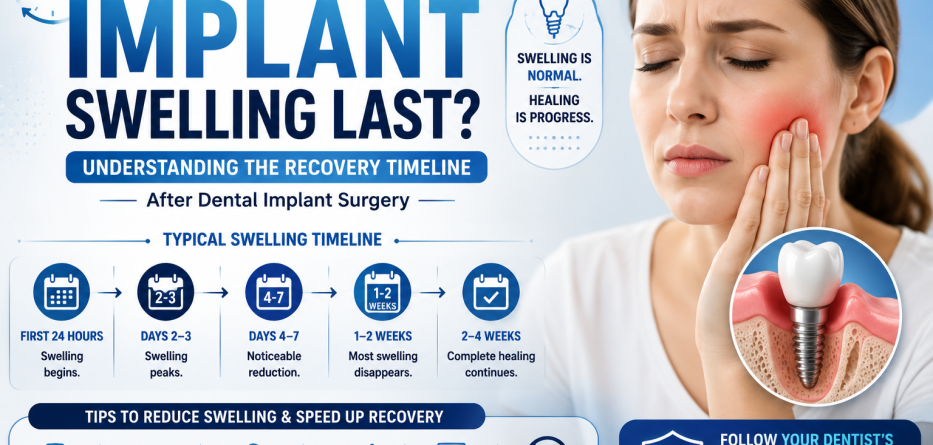
Typical Swelling Timeline
| Time After Surgery | What to Expect |
|---|---|
| First 24 Hours | Swelling begins |
| Days 2–3 | Swelling reaches its peak |
| Days 4–7 | Noticeable reduction |
| 1–2 Weeks | Most swelling disappears |
| 2–4 Weeks | Complete soft tissue healing continues |
For most patients, significant swelling lasts between 3 and 7 days, while minor residual swelling may persist for up to two weeks.
Why Does Swelling Occur After Dental Implant Surgery?
Swelling is part of the body’s natural healing response.
During implant placement:
- Gum tissue is opened
- Bone is prepared for the implant
- Surrounding tissues experience minor trauma
The body responds by sending healing cells and fluids to the area.
This process helps:
- Protect the surgical site
- Fight infection
- Promote tissue repair
- Support osseointegration
Although swelling can feel uncomfortable, it is often a sign that healing is underway.
Factors That Affect How Long Swelling Lasts
Not every patient experiences the same recovery timeline.
Several factors influence swelling duration.
Number of Implants Placed
Patients receiving multiple implants often experience more swelling than those receiving a single implant.
Bone Grafting Procedures
Additional treatments such as bone grafting or sinus lifts may increase swelling and recovery time.
Surgical Complexity
More complex implant surgeries may result in longer healing periods.
Individual Healing Response
Age, overall health, and immune function can affect how quickly the body recovers.
Smoking
Smoking slows healing and can prolong inflammation and swelling.
How to Reduce Swelling After Dental Implant Surgery
Following proper aftercare instructions can help minimize discomfort and speed recovery.
Apply Cold Compresses
For the first 24 to 48 hours:
- Apply an ice pack to the outside of the face.
- Use for 15–20 minutes at a time.
- Take breaks between applications.
Cold therapy helps reduce inflammation and swelling.
Keep Your Head Elevated
Sleeping with your head elevated can reduce fluid accumulation around the surgical site.
Use:
- Extra pillows
- Reclining chairs
- Adjustable beds
This simple step can significantly reduce morning swelling.
Take Prescribed Medications
Your dentist may recommend:
- Anti-inflammatory medications
- Pain relievers
- Antibiotics
Always follow dosage instructions carefully.
Follow a Soft Food Diet
Choose foods such as:
- Yogurt
- Mashed potatoes
- Smoothies
- Soup
- Scrambled eggs
Avoid chewing near the implant site during the early healing period.
Stay Hydrated
Drinking plenty of water supports healing and helps the body recover more efficiently.
What Foods Should You Avoid?
Certain foods can irritate the surgical site and worsen swelling.
Avoid:
- Crunchy foods
- Hard foods
- Sticky foods
- Spicy foods
- Extremely hot beverages
- Alcohol
These items may delay healing and increase discomfort.
When Should You Be Concerned About Swelling?
Although swelling is normal, certain symptoms may indicate complications.
Contact Your Dentist If You Experience:
- Swelling that worsens after day 4 or 5
- Severe pain not controlled by medication
- Fever
- Pus or drainage
- Difficulty breathing
- Difficulty swallowing
- Excessive bleeding
These signs may indicate infection or another issue requiring professional attention.
Swelling vs Infection: How to Tell the Difference
Normal Swelling
- Peaks around day 2–3
- Gradually improves
- Mild tenderness
- No fever
Possible Infection
- Increasing swelling after several days
- Severe pain
- Bad taste or odor
- Fever
- Pus discharge
If you suspect an infection, contact your dental provider immediately.
How Long Does Swelling Last After Bone Grafting?
Patients undergoing bone grafting along with implant placement often experience more swelling.
Typical Timeline
- Swelling peaks at 48–72 hours
- Improvement begins after day 4
- Most swelling resolves within 10–14 days
Recovery may vary depending on the size of the graft and individual healing capacity.
Tips for Faster Recovery
To encourage healing:
- Follow all post-operative instructions.
- Use ice packs as directed.
- Avoid smoking and tobacco products.
- Maintain good oral hygiene.
- Eat nutritious soft foods.
- Get adequate rest.
- Stay hydrated.
These habits can reduce swelling and improve overall recovery.
Frequently Asked Questions
Is swelling normal after dental implant surgery?
Yes. Mild to moderate swelling is a normal part of the healing process.
When does swelling peak after dental implants?
Swelling typically reaches its peak between 48 and 72 hours after surgery.
How long should my cheek stay swollen?
Most cheek swelling improves significantly within one week and continues to decrease afterward.
Can I use ice packs after implant surgery?
Yes. Ice packs are one of the most effective ways to reduce swelling during the first 48 hours.
When should I call my dentist?
Contact your dentist if swelling worsens, becomes severe, or is accompanied by fever, drainage, or difficulty breathing.
Conclusion
So, how long does implant swelling last?
For most patients, swelling begins within the first 24 hours, peaks around days 2 to 3, and gradually improves over the following week. Minor swelling may persist for up to two weeks, especially after complex procedures such as bone grafting.
Fortunately, implant-related swelling is usually a normal part of the healing process and can be managed with ice packs, proper aftercare, rest, and good oral hygiene. By following your dentist’s instructions and monitoring your recovery, you can support faster healing and enjoy a successful dental implant outcome.
