
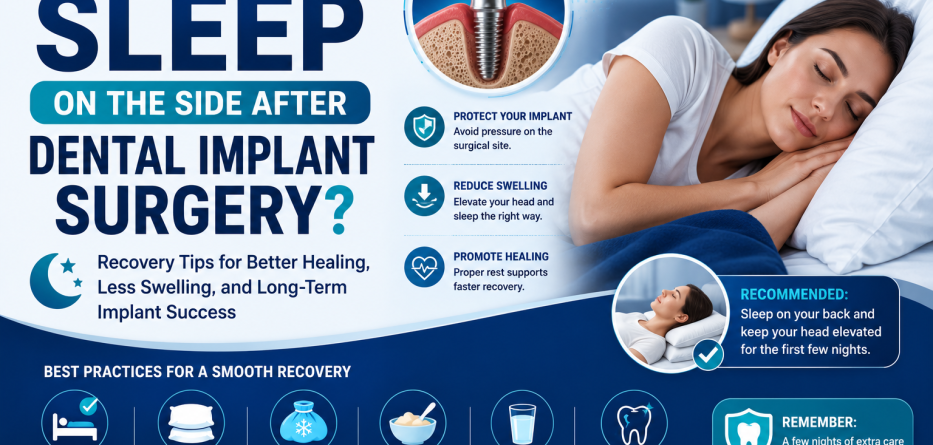
Dental implant surgery is a highly successful procedure that helps restore missing teeth and improve oral function. While most patients focus on the surgery itself, the recovery period is equally important for achieving successful healing and long-term implant stability.
One of the most common questions patients ask after implant placement is, “Can you sleep on the side after dental implant surgery?”
The short answer is that it depends on the stage of healing and which side received the implant. Sleeping incorrectly during the first few days after surgery may increase swelling, discomfort, and pressure on the surgical site. Understanding the best sleeping positions after dental implant surgery can help promote faster healing and reduce complications.
In this guide, we’ll explain when it’s safe to sleep on your side, recommended sleeping positions, and recovery tips to protect your new dental implant.
Why Sleeping Position Matters After Dental Implant Surgery
Following implant surgery, your body begins the healing process immediately.
During the first few days, the surgical site is vulnerable to:
- Swelling
- Bleeding
- Inflammation
- Pressure-related discomfort
The way you sleep can affect blood flow and healing around the implant area.
Choosing the right sleeping position helps:
- Minimize swelling
- Reduce pain
- Prevent unnecessary pressure
- Promote proper healing
Can You Sleep on Your Side After Dental Implant Surgery?
Quick Answer
It is generally recommended to avoid sleeping on the side of the implant for at least the first few days after surgery.
If possible, sleep on your back with your head elevated during the initial recovery period.
After swelling and tenderness begin to improve, many patients can gradually return to side sleeping, provided they avoid putting pressure directly on the surgical area.
Why You Should Avoid Sleeping on the Implant Side
Sleeping directly on the side where the implant was placed may cause:
Increased Swelling
Pressure can encourage fluid accumulation around the surgical site.
Discomfort
Direct contact with pillows may irritate sensitive tissues.
Minor Bleeding
Pressure may increase the risk of post-surgical oozing during the first 24–48 hours.
Delayed Healing
Constant irritation can interfere with the body’s natural recovery process.
For these reasons, dentists often recommend sleeping on your back initially.
Best Sleeping Position After Dental Implant Surgery
Sleep on Your Back
The ideal sleeping position after implant surgery is on your back.
Benefits include:
- Reduces pressure on the implant area
- Minimizes swelling
- Supports proper blood circulation
- Improves comfort during healing
Many dentists recommend maintaining this position for several nights after surgery.
Elevate Your Head While Sleeping
Keeping your head elevated can significantly reduce swelling.
How to Elevate Your Head
- Use two or three pillows
- Sleep in a recliner if comfortable
- Use a wedge pillow
Elevation helps prevent excess fluid from collecting around the surgical area.
How Long Should You Avoid Side Sleeping?
Recovery varies from person to person.
Typical Guidelines
| Time After Surgery | Recommended Sleeping Position |
|---|---|
| First 24 Hours | Back Sleeping Only |
| Days 2–3 | Back Sleeping Preferred |
| Days 4–7 | Opposite Side May Be Acceptable |
| After 1 Week | Usually Return to Normal Habits |
Always follow your dentist’s specific instructions.
More complex procedures such as multiple implants or bone grafting may require a longer recovery period.
What If You’re Naturally a Side Sleeper?
Many patients find sleeping on their back challenging.
If you’re a side sleeper:
Try Sleeping on the Opposite Side
Avoid putting pressure on the implant side.
Use pillow support.
Place pillows behind your back to prevent rolling during sleep.
Consider a travel pillow.
Neck-support pillows can help maintain a comfortable position.
Most patients adjust within a few nights.
Sleeping After Full Mouth Dental Implant Surgery
Patients receiving multiple implants or full-arch restorations often require extra care.
Additional recommendations include:
- Sleeping with the head elevated
- Avoiding side sleeping for a longer period
- Following all post-operative instructions carefully
- Monitoring swelling and discomfort
Your surgeon will provide personalized guidance based on the complexity of the procedure.
Signs You May Be Putting Too Much Pressure on the Implant Area
Contact your dentist if you notice:
- Increased swelling after sleeping
- Persistent bleeding
- Significant pain
- Implant site irritation
- Difficulty opening your mouth
These symptoms may indicate that the surgical area is being disturbed during recovery.
Additional Recovery Tips for Better Healing
Proper sleeping habits are only one part of successful implant recovery.
Follow These Tips
Apply ice packs.
Use cold compresses during the first 24 hours to reduce swelling.
Avoid Smoking
Smoking can interfere with healing and increase implant failure risk.
Eat Soft Foods
Recommended foods include:
- Yogurt
- Soup
- Mashed potatoes
- Smoothies
- Scrambled eggs
Maintain Oral Hygiene
Follow your dentist’s cleaning instructions carefully.
Take Prescribed Medications
Use medications exactly as directed.
Common Mistakes to Avoid After Dental Implant Surgery
Avoid the following during recovery:
- Sleeping directly on the implant side
- Vigorous rinsing
- Smoking
- Drinking through straws
- Heavy exercise during the first few days
- Touching the surgical site with fingers or tongue
These habits can disrupt healing and increase complications.
Frequently Asked Questions
Can I sleep on my side the first night after dental implant surgery?
It is generally recommended to avoid sleeping on the implant side during the first night. Back sleeping with your head elevated is usually preferred.
How long should I keep my head elevated?
Most dentists recommend keeping your head elevated for at least 2–3 nights after surgery.
What happens if I accidentally roll onto the implant side?
Occasional brief pressure is unlikely to cause serious harm, but repeated pressure should be avoided during the early healing period.
Can sleeping position affect implant success?
Proper sleeping positions can help reduce swelling and support healing, contributing to a smoother recovery.
Is swelling normal after dental implant surgery?
Yes. Mild to moderate swelling is common and usually peaks within 48–72 hours before gradually improving.
Conclusion
So, can you sleep on the side after dental implant surgery?
In most cases, it’s best to avoid sleeping on the implant side during the first few days after surgery. Sleeping on your back with your head elevated helps minimize swelling, reduce discomfort, and protect the surgical site while healing begins.
As recovery progresses and swelling subsides, most patients can gradually return to their normal sleeping habits. Following your dentist’s post-operative instructions and adopting proper sleeping positions can help ensure a smooth recovery and long-term dental implant success.
