
Dental implant surgery is a highly successful procedure that can restore your smile, improve chewing ability, and support long-term oral health. However, the healing period following implant placement is just as important as the surgery itself.
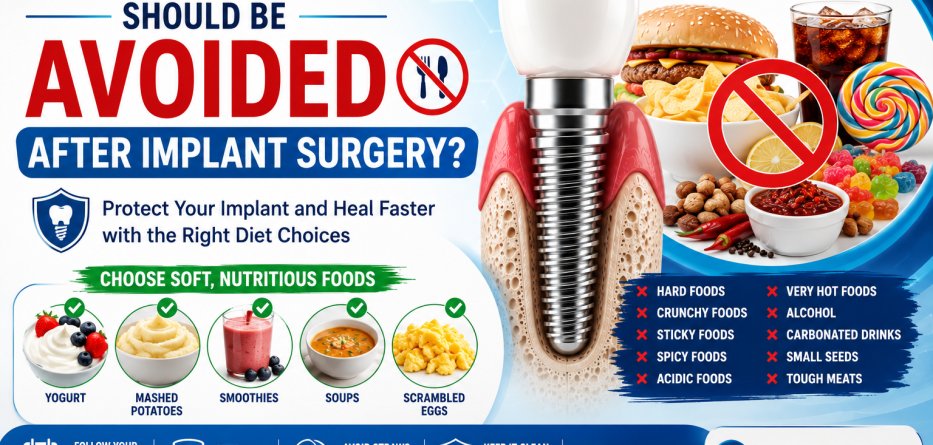
One of the most common questions patients ask is, “What foods should be avoided after implant surgery?” The answer is crucial because eating the wrong foods too soon can irritate the surgical site, delay healing, increase discomfort, and even compromise the success of the implant.
In this guide, we’ll discuss which foods to avoid after dental implant surgery, why they can be harmful, what foods are safe to eat, and how to support a smooth recovery.
Why Diet Matters After Dental Implant Surgery
After implant placement, the jawbone and surrounding tissues begin the healing process known as osseointegration. During this time, the implant gradually bonds with the bone to create a strong and stable foundation.
Choosing the right foods helps:
- Protect the surgical site
- Minimize irritation
- Reduce swelling
- Lower infection risk
- Promote faster healing
- Improve implant success
Eating hard or inappropriate foods too early can place unnecessary pressure on the implant area.
Foods to Avoid Immediately After Implant Surgery
1. Hard Foods
Hard foods can place excessive force on the healing implant site and may damage stitches or disrupt the implant.
Avoid:
- Nuts
- Hard candies
- Ice cubes
- Popcorn kernels
- Raw carrots
- Hard crackers
- Pretzels
Why?
These foods require significant chewing force and can irritate healing tissues.
2. Crunchy Foods
Crunchy foods often break into sharp pieces that can become lodged around the surgical area.
Avoid:
- Potato chips
- Tortilla chips
- Crispy bread
- Crackers
- Granola
Risk
Sharp fragments can cause discomfort and increase the risk of infection.
3. Sticky Foods
Sticky foods can cling to the implant area and be difficult to remove.
Avoid:
- Chewing gum
- Caramel
- Toffee
- Gummy candies
- Sticky desserts
Why?
These foods can pull on healing tissues and make oral hygiene more difficult.
4. Very Hot Foods and Beverages
Heat can increase blood flow to the surgical site and may worsen swelling or bleeding.
Avoid:
- Hot coffee
- Hot tea
- Hot soup
- Freshly cooked steaming foods
Recommendation
Allow foods and beverages to cool before consuming them.
5. Spicy Foods
Spicy ingredients can irritate sensitive tissues and increase discomfort.
Avoid:
- Hot peppers
- Spicy curries
- Chili sauces
- Spicy snacks
Why?
The surgical area may be particularly sensitive during the first few days of healing.
6. Acidic Foods
Acidic foods can cause irritation and discomfort around healing tissues.
Avoid:
- Citrus fruits
- Lemons
- Oranges
- Grapefruit
- Vinegar-heavy foods
Potential Issues
- Burning sensation
- Tissue irritation
- Increased sensitivity
7. Alcoholic Beverages
Alcohol should be avoided during the early healing period.
Why?
Alcohol can:
- Slow healing
- Increase bleeding risk
- Interfere with medications
- Cause dehydration
Most dentists recommend avoiding alcohol for at least several days following surgery.
8. Carbonated Drinks
Carbonation may irritate the surgical site and contribute to discomfort.
Avoid:
- Soda
- Sparkling water
- Energy drinks
These beverages may also contain sugar and acids that are not ideal during recovery.
9. Foods with Small Seeds
Tiny seeds can become trapped around the implant site.
Avoid:
- Strawberries
- Sesame seeds
- Chia seeds
- Poppy seeds
Removing trapped particles may be difficult during the healing phase.
10. Tough Meats
Chewy meats require significant biting force.
Avoid:
- Steak
- Beef jerky
- Pork chops
- Tough chicken cuts
These foods can place unnecessary stress on healing tissues.
What Foods Are Safe to Eat After Implant Surgery?
During the first few days, focus on soft, nutritious foods.
Recommended Foods
Soft Foods
- Mashed potatoes
- Yogurt
- Applesauce
- Oatmeal
- Cottage cheese
Protein-Rich Options
- Scrambled eggs
- Protein shakes
- Soft fish
- Tofu
Nutrient-Dense Choices
- Smoothies
- Blended soups
- Avocado
- Soft fruits like bananas
These foods provide nutrition while minimizing strain on the implant site.
Recovery Diet Timeline
First 24–48 Hours
Eat:
- Yogurt
- Smoothies
- Applesauce
- Broth
- Protein shakes
Avoid chewing near the surgical site.
Days 3–7
Add:
- Scrambled eggs
- Soft pasta
- Mashed vegetables
- Soft rice
Continue avoiding hard and crunchy foods.
Weeks 2–6
Gradually introduce:
- Soft chicken
- Cooked vegetables
- Tender fish
- Soft bread
Follow your dentist’s instructions regarding progress.
After Complete Healing
Most patients can return to their normal diet once healing is complete and approved by their dentist.
Additional Tips for Faster Healing
Stay Hydrated
Drink plenty of water throughout recovery.
Avoid Using Straws
Suction can disturb blood clot formation and delay healing.
Chew on the Opposite Side
This helps reduce pressure on the implant area.
Maintain Oral Hygiene
Follow your dentist’s cleaning instructions carefully.
Attend Follow-Up Visits
Regular monitoring helps ensure successful healing.
Signs You Should Contact Your Dentist
Call your dentist if you experience:
- Severe pain
- Excessive bleeding
- Persistent swelling
- Fever
- Pus around the implant
- Implant movement
Prompt treatment can prevent complications.
Frequently Asked Questions
How long should I avoid hard foods after implant surgery?
Most dentists recommend avoiding hard foods for several weeks or until healing progresses sufficiently.
Can I drink coffee after dental implant surgery?
It’s best to avoid very hot coffee for the first few days. Once cooled, moderate consumption may be acceptable if approved by your dentist.
Can I eat pizza after implant surgery?
Not immediately. The crust and toppings often require significant chewing and may irritate the surgical site.
Are smoothies safe after implant placement?
Yes. Smoothies are often recommended because they are easy to consume and provide essential nutrients.
When can I return to a normal diet?
This varies by patient, but many individuals gradually resume normal eating habits after several weeks of healing.
Conclusion
Knowing what foods should be avoided after implant surgery is essential for protecting your investment and promoting successful healing. Hard, crunchy, sticky, spicy, and acidic foods can interfere with recovery and should be avoided during the early stages of healing.
Instead, focus on soft, nutritious foods that support tissue repair and reduce irritation. Following your dentist’s dietary recommendations can help ensure successful osseointegration and long-term dental implant success.
With proper care, patience, and healthy eating habits, you’ll be well on your way to enjoying a strong, beautiful, and fully functional smile.
