
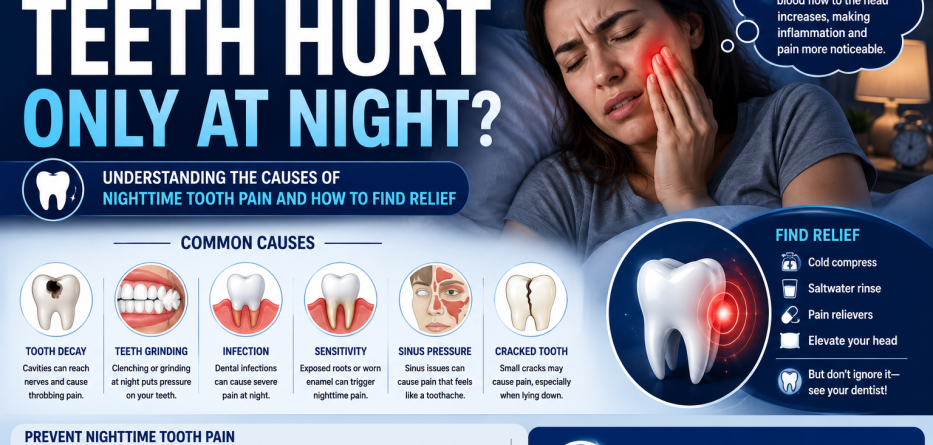
Have you ever gone through your day feeling fine, only to experience a throbbing toothache when you lie down at night? If so, you’re not alone. Many people wonder, “Why do my teeth hurt only at night?” While nighttime tooth pain may seem mysterious, there are several common explanations behind this uncomfortable problem.
Nighttime tooth pain can range from mild sensitivity to severe throbbing that disrupts sleep. In many cases, the pain is a sign of an underlying dental issue that requires attention. Understanding the causes can help you find relief and prevent more serious complications.
In this article, we’ll explore the most common reasons teeth hurt at night, available treatments, and practical steps you can take to protect your oral health.
Why Does Tooth Pain Often Feel Worse at Night?
Many dental problems become more noticeable when you’re trying to sleep.
Several factors contribute to increased nighttime tooth pain:
- Increased blood flow to the head when lying down
- Fewer distractions during quiet nighttime hours
- Teeth grinding during sleep
- Sinus pressure
- Existing dental infections becoming more noticeable
The pain may not actually be worsening—it simply becomes harder to ignore.
Common Causes of Tooth Pain at Night
1. Tooth Decay (Cavities)
One of the most common causes of nighttime tooth pain is tooth decay.
As a cavity progresses, it can reach deeper layers of the tooth, including the dentin and pulp where nerves are located.
Symptoms
- Sharp pain when eating sweets
- Sensitivity to hot and cold foods
- Throbbing pain at night
- Visible holes in teeth
Treatment
- Dental fillings
- Crowns
- Root canal treatment for advanced decay
Early treatment can prevent more serious complications.
2. Teeth Grinding (Bruxism)
Many people unknowingly grind or clench their teeth while sleeping.
Excessive grinding places pressure on:
- Teeth
- Jaw joints
- Supporting tissues
Signs of Bruxism
- Morning jaw soreness
- Headaches
- Worn teeth
- Tooth sensitivity
Treatment
- Custom nightguards
- Stress management
- Bite adjustments
Bruxism is a leading cause of unexplained nighttime dental pain.
3. Dental Abscess or Infection
A dental abscess is a serious bacterial infection that can cause severe throbbing pain.
The pressure from infection often feels worse when lying down.
Symptoms
- Persistent toothache
- Swelling
- Fever
- Bad taste in the mouth
- Gum tenderness
Treatment
- Drainage of infection
- Root canal therapy
- Antibiotics if necessary
A dental abscess should never be ignored.
4. Gum Disease
Inflamed gums can cause discomfort that becomes more noticeable at night.
Advanced gum disease may expose tooth roots, leading to sensitivity and pain.
Symptoms
- Bleeding gums
- Swollen gums
- Gum recession
- Persistent bad breath
Treatment
- Professional cleanings
- Deep scaling and root planing
- Improved oral hygiene
5. Tooth Sensitivity
Sensitive teeth may react strongly to temperature changes and pressure.
Pain often becomes more noticeable at bedtime after a day of eating and drinking.
Causes of Sensitivity
- Worn enamel
- Gum recession
- Cracked teeth
- Aggressive brushing
Treatment
- Desensitizing toothpaste
- Fluoride treatments
- Dental bonding
6. Cracked or Damaged Teeth
Small cracks can expose sensitive inner tooth structures.
The pressure from chewing during the day may trigger inflammation that causes nighttime discomfort.
Symptoms
- Pain when biting
- Sensitivity to temperature
- Intermittent tooth pain
Treatment
- Dental crowns
- Bonding
- Root canal treatment if necessary
7. Impacted Wisdom Teeth
Wisdom teeth that do not erupt properly can create pressure and inflammation.
Symptoms often worsen during periods of rest.
Signs
- Pain at the back of the mouth
- Jaw discomfort
- Swelling
- Difficulty opening the mouth
Treatment
- Monitoring
- Wisdom tooth extraction
8. Sinus Problems
The roots of upper teeth are located close to the sinus cavities.
Sinus congestion or infection can create pressure that feels like tooth pain.
Symptoms
- Facial pressure
- Nasal congestion
- Pain in multiple upper teeth
- Headaches
Treatment
- Addressing the sinus infection
- Decongestants as recommended by a healthcare provider
9. TMJ Disorders
The temporomandibular joint (TMJ) connects the jaw to the skull.
TMJ disorders can cause:
- Jaw pain
- Ear pain
- Facial discomfort
- Referred tooth pain
Treatment
- Nightguards
- Physical therapy
- Stress reduction
Why Does Lying Down Make Tooth Pain Worse?
When you lie down, blood flow to the head increases.
This increased circulation can:
- Intensify inflammation
- Increase pressure around sensitive nerves
- Make existing dental issues more painful
This is why many people experience stronger tooth pain shortly after going to bed.
Home Remedies for Nighttime Tooth Pain
While professional dental treatment is often necessary, temporary relief may include:
Cold Compress
Apply to the outside of the cheek for 15–20 minutes.
Saltwater Rinse
Helps reduce inflammation and cleanse the area.
Elevate Your Head
Sleeping with an extra pillow may reduce blood pressure around the affected tooth.
Over-the-Counter Pain Relief
Use medications according to manufacturer instructions.
Avoid Trigger Foods
Limit:
- Sugary foods
- Extremely hot foods
- Cold beverages
- Acidic foods
These measures provide temporary relief but do not replace dental treatment.
When Should You See a Dentist?
Schedule a dental appointment if:
- Pain lasts more than two days
- Pain wakes you up at night
- You experience swelling
- You notice fever
- Pain becomes severe
- You suspect an infection
Prompt treatment often prevents more extensive procedures later.
How to Prevent Nighttime Tooth Pain
Maintain Excellent Oral Hygiene
- Brush twice daily
- Floss daily
- Use fluoride toothpaste
Attend Regular Dental Checkups
Routine exams help detect problems before symptoms develop.
Wear a nightguard.
If you grind your teeth, a custom nightguard can prevent damage.
Treat Dental Problems Early
Small cavities are easier and less expensive to treat than advanced infections.
Manage Stress
Stress often contributes to teeth grinding and jaw clenching.
Frequently Asked Questions
Why do my teeth hurt only when I lie down?
Lying down increases blood flow to the head, which can intensify inflammation and make existing dental issues more noticeable.
Is nighttime tooth pain serious?
It can be. Persistent nighttime pain may indicate cavities, infection, gum disease, or other dental conditions requiring treatment.
Can stress cause tooth pain at night?
Yes. Stress often contributes to teeth grinding and jaw clenching during sleep.
How can I stop my tooth from hurting at night?
Temporary relief may include cold compresses, saltwater rinses, pain relievers, and sleeping with your head elevated.
When is tooth pain considered an emergency?
Seek immediate care if pain is accompanied by swelling, fever, difficulty swallowing, or signs of infection.
Conclusion
If you’ve been asking, “Why do my teeth hurt only at night?” the answer often lies in underlying dental issues such as tooth decay, infection, gum disease, teeth grinding, or tooth sensitivity. While nighttime pain can sometimes seem harmless, it is often a warning sign that should not be ignored.
The good news is that most causes of nighttime tooth pain can be successfully treated when diagnosed early. If your discomfort persists, worsens, or interferes with sleep, schedule a dental evaluation to identify the cause and restore your oral health.
