
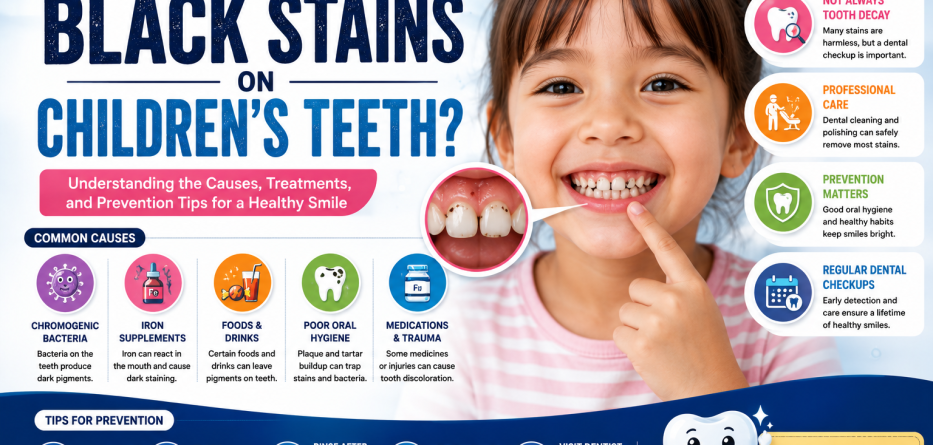
Parents are often concerned when they notice dark or black lines appearing on their child’s teeth. While black stains on children’s teeth can look alarming, they are not always a sign of poor oral hygiene or tooth decay. In many cases, these stains are harmless and can be effectively managed with professional dental care.
Understanding the causes of black stains on children’s teeth is important for maintaining good oral health and preventing future dental problems. Some stains result from bacteria, while others may be linked to diet, supplements, medications, or underlying dental conditions.
In this article, we’ll explore the common causes of black stains on children’s teeth, treatment options, prevention strategies, and when it’s time to visit a pediatric dentist.
What Are Black Stains on Children’s Teeth?
Black stains are dark lines or spots that commonly appear near the gumline of primary (baby) teeth or permanent teeth.
They often appear as the following:
- Thin black lines
- Dark dots
- Brownish-black discoloration
- Stains along the edges of teeth
These stains may affect one tooth or several teeth.
Quick Answer
Black stains on children’s teeth are usually caused by chromogenic bacteria, iron supplements, dietary factors, poor oral hygiene, or certain medications. A dentist can determine the exact cause and recommend treatment.
Common Causes of Black Stains on Children’s Teeth
1. Chromogenic Bacteria
One of the most common causes of black stains in children is a specific type of bacteria known as chromogenic bacteria.
These bacteria produce pigments that react with iron in saliva, creating dark deposits on tooth surfaces.
Characteristics
- Common near the gumline
- Usually painless
- Often difficult to remove with regular brushing
- More common in children than adults
Interestingly, children with these stains sometimes have a lower risk of tooth decay than expected.
2. Iron Supplements
Many children take iron supplements to treat or prevent iron deficiency.
Iron can react with compounds in the mouth and cause dark staining.
Sources of Iron
- Liquid iron supplements
- Multivitamins containing iron
- Iron-fortified foods
These stains are usually cosmetic and do not damage the teeth.
3. Poor Oral Hygiene
Plaque and tartar buildup can trap pigments and bacteria, leading to dark discoloration.
Signs of poor oral hygiene include:
- Plaque accumulation
- Bad breath
- Gum irritation
- Tooth discoloration
Regular brushing and flossing help reduce staining and improve oral health.
4. Certain Foods and Drinks
Some foods contain pigments that can stain teeth over time.
Common Culprits
- Blueberries
- Blackberries
- Dark-colored candies
- Soy sauce
- Cola drinks
- Tea
Frequent consumption may contribute to surface stains.
5. Medications
Certain medications can affect tooth color.
Examples include:
- Iron-containing medicines
- Some antibiotics
- Medicated mouth rinses
Parents should discuss any concerns with their child’s dentist or physician.
6. Tooth Decay
In some cases, black spots may indicate dental cavities rather than surface stains.
Signs of tooth decay include:
- Dark holes in teeth
- Tooth sensitivity
- Pain when eating
- Visible damage
Unlike harmless stains, cavities require prompt treatment.
7. Dental Trauma
An injured tooth may darken over time.
When trauma damages the nerve inside the tooth, discoloration can occur.
Signs of Trauma-Related Staining
- Single dark tooth
- History of injury
- Swelling or sensitivity
- Tooth color changes over weeks or months
A dental evaluation is important following any dental injury.
8. Excessive Tartar Buildup
Tartar forms when plaque hardens on the teeth.
Over time, tartar can absorb pigments and appear dark brown or black.
Professional cleaning is usually necessary to remove tartar deposits.
Are Black Stains Harmful?
Not always.
Many black stains are cosmetic and do not indicate serious dental problems.
However, a dental examination is important because similar discoloration can sometimes result from:
- Cavities
- Tooth infections
- Trauma
- Enamel defects
Only a dentist can accurately diagnose the cause.
How Dentists Diagnose Black Stains
A pediatric dentist may perform the following:
Visual Examination
Evaluates the appearance and location of the stain.
Dental History Review
Considers:
- Medications
- Supplements
- Dietary habits
- Oral hygiene practices
X-Rays
Used when cavities or underlying problems are suspected.
Treatment Options for Black Stains
Professional Dental Cleaning
The most common treatment is a professional cleaning.
Benefits include:
- Removal of surface stains
- Plaque reduction
- Improved appearance
- Better oral health
Polishing Procedures
Special polishing techniques may help remove stubborn discoloration.
Oral Hygiene Education
Dentists often recommend:
- Improved brushing techniques
- Fluoride toothpaste
- Regular flossing
Monitoring
If the stain is harmless and not affecting oral health, monitoring may be sufficient.
How to Prevent Black Stains on Children’s Teeth
Maintain Good Oral Hygiene
Encourage children to:
- Brush twice daily
- Floss regularly
- Use fluoride toothpaste
Schedule Regular Dental Checkups
Routine cleanings help remove plaque and detect issues early.
Rinse After Iron Supplements
Children taking liquid iron supplements should rinse with water afterward.
Limit Staining Foods and Drinks
Moderation can help reduce surface discoloration.
Encourage Healthy Eating Habits
A balanced diet supports strong teeth and healthy gums.
When Should Parents See a Dentist?
Schedule a dental visit if:
- Stains appear suddenly
- The child experiences pain
- A tooth becomes dark after injury
- Discoloration worsens
- Black spots resemble cavities
Early diagnosis helps prevent complications and ensures proper treatment.
Frequently Asked Questions
Why does my child have black stains despite brushing regularly?
Chromogenic bacteria are often responsible and can cause staining even in children with good oral hygiene.
Are black stains permanent?
Most surface stains can be removed through professional dental cleaning.
Do black stains mean cavities?
Not always. Many black stains are harmless, but a dentist should evaluate them to rule out decay.
Can iron supplements stain children’s teeth?
Yes. Liquid iron supplements commonly cause dark discoloration on tooth surfaces.
How can I prevent black stains from returning?
Good oral hygiene, regular dental visits, and proper use of iron supplements can help reduce recurrence.
Conclusion
Black stains on children’s teeth can be concerning for parents, but they are often harmless and manageable. Common causes include chromogenic bacteria, iron supplements, dietary factors, tartar buildup, and occasionally tooth decay or trauma.
The key to protecting your child’s oral health is early evaluation by a dental professional. Regular checkups, proper oral hygiene, and preventive care can help keep your child’s smile healthy, bright, and stain-free.
