
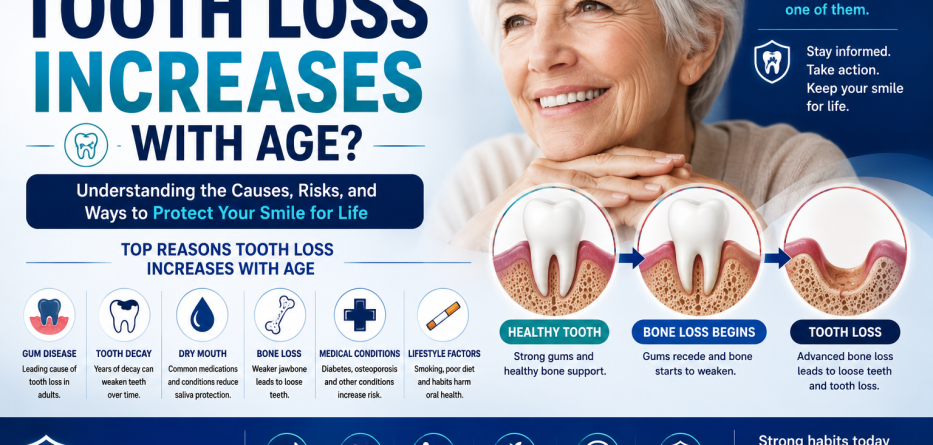
As people grow older, maintaining good oral health becomes increasingly important. While losing teeth is not an inevitable part of aging, tooth loss becomes more common among older adults due to a combination of dental, medical, and lifestyle factors.
Missing teeth can affect more than just your appearance. Tooth loss can impact chewing ability, speech, nutrition, self-confidence, and overall health. Understanding why tooth loss increases with age can help individuals take preventive measures and preserve their natural smile for as long as possible.
In this article, we’ll explore the primary reasons tooth loss becomes more common with age, the potential consequences, and effective ways to protect your teeth throughout life.
Is Tooth Loss a Normal Part of Aging?
A common misconception is that losing teeth is simply part of getting older.
The Truth
Healthy teeth can last a lifetime with proper care.
While aging itself does not directly cause tooth loss, age-related changes and cumulative oral health issues can increase the risk.
Factors such as gum disease, tooth decay, chronic medical conditions, and years of wear and tear contribute to higher tooth loss rates among seniors.
Why Does Tooth Loss Increase With Age?
Several factors work together to make older adults more vulnerable to tooth loss.
1. Gum Disease Becomes More Common
The Leading Cause of Adult Tooth Loss
Periodontal disease (gum disease) is one of the most common reasons older adults lose teeth.
Over time, plaque and bacteria accumulate around the teeth and gums, causing inflammation and infection.
Advanced gum disease can lead to:
- Gum recession
- Bone loss
- Loose teeth
- Tooth loss
Warning Signs
- Bleeding gums
- Swollen gums
- Persistent bad breath
- Receding gums
- Loose teeth
Regular dental cleanings help reduce the risk of periodontal disease.
2. Increased Risk of Tooth Decay
Tooth decay remains a major cause of tooth loss throughout adulthood.
As people age, several factors increase cavity risk:
- Dry mouth
- Receding gums
- Medication side effects
- Difficulty maintaining oral hygiene
Root Decay
Exposed tooth roots are especially vulnerable to decay because they lack the protective enamel found on the crown of the tooth.
Untreated cavities can eventually lead to tooth extraction.
3. Dry Mouth (Xerostomia)
Many older adults experience reduced saliva production.
Saliva plays an essential role in the following:
- Neutralizing acids
- Washing away food particles
- Preventing bacterial growth
Common Causes
- Blood pressure medications
- Antidepressants
- Diabetes medications
- Radiation therapy
- Autoimmune disorders
Without adequate saliva, the risk of tooth decay and gum disease increases significantly.
4. Bone Loss in the Jaw
The jawbone naturally changes over time.
Bone loss may occur due to:
- Missing teeth
- Osteoporosis
- Gum disease
- Reduced bone density
When the bone supporting a tooth weakens, the tooth may become loose and eventually fall out.
Maintaining healthy bone support is critical for long-term tooth retention.
5. Years of Wear and Tear
Your teeth work hard every day.
Decades of chewing, grinding, and exposure to acidic foods can cause:
- Cracks
- Enamel wear
- Tooth fractures
- Structural damage
Although teeth are strong, cumulative wear can increase vulnerability to future dental problems.
6. Chronic Medical Conditions
Many health conditions become more common with age and can indirectly affect oral health.
Conditions Linked to Tooth Loss
- Diabetes
- Osteoporosis
- Cardiovascular disease
- Autoimmune disorders
Poorly controlled diabetes, in particular, increases the risk of severe gum disease and tooth loss.
7. Smoking and Tobacco Use
Long-term tobacco use significantly increases the likelihood of tooth loss.
Smoking contributes to:
- Gum disease
- Bone loss
- Delayed healing
- Increased plaque accumulation
Research consistently shows higher tooth loss rates among smokers compared to non-smokers.
8. Reduced Access to Dental Care
Some older adults may postpone dental visits due to:
- Financial concerns
- Mobility issues
- Transportation challenges
- Lack of dental insurance
Unfortunately, delaying routine care often allows minor problems to develop into serious conditions requiring extraction.
How Tooth Loss Affects Overall Health
Tooth loss can impact more than oral health.
Physical Effects
- Difficulty chewing
- Poor nutrition
- Digestive issues
- Speech difficulties
Emotional Effects
- Reduced self-confidence
- Social anxiety
- Lower quality of life
Oral Health Consequences
- Bone loss
- Shifting teeth
- Bite problems
- Increased risk of additional tooth loss
Early treatment can help prevent these complications.
How to Prevent Tooth Loss as You Age
The good news is that many causes of tooth loss are preventable.
1. Practice Excellent Oral Hygiene
Daily habits should include:
- Brushing twice daily
- Flossing once daily
- Using fluoride toothpaste
2. Visit Your Dentist Regularly
Routine checkups allow dentists to
- Detect problems early
- Remove plaque buildup
- Monitor gum health
- Treat decay before it progresses
3. Manage Medical Conditions
Controlling conditions such as diabetes can reduce oral health complications.
Work closely with both your physician and dentist.
4. Avoid Tobacco Products
Quitting smoking significantly improves oral health outcomes and lowers the risk of tooth loss.
5. Maintain a Healthy Diet
Choose foods rich in:
- Calcium
- Vitamin D
- Phosphorus
- Protein
Strong nutrition supports healthy teeth and jawbones.
Tooth Replacement Options for Older Adults
If tooth loss does occur, several effective treatment options are available.
Dental Implants
Benefits include:
- Long-lasting results
- Bone preservation
- Natural appearance
Dental Bridges
Used to replace one or more missing teeth.
Dentures
A traditional solution for multiple missing teeth.
A dentist can recommend the most appropriate option based on individual needs.
Frequently Asked Questions
Why do older adults lose more teeth?
Older adults face increased risks from gum disease, tooth decay, bone loss, dry mouth, and chronic medical conditions.
Can healthy teeth last a lifetime?
Yes. With proper care and regular dental visits, natural teeth can remain healthy throughout life.
Is tooth loss inevitable with aging?
No. Aging increases risk factors, but tooth loss is not a normal or unavoidable part of aging.
Does osteoporosis cause tooth loss?
Osteoporosis may contribute to jawbone weakening, which can increase the risk of tooth loss.
Are dental implants suitable for seniors?
Yes. Many older adults are excellent candidates for dental implants if they have adequate bone support and overall health.
Conclusion
Although tooth loss becomes more common with age, it is not an inevitable consequence of getting older. Factors such as gum disease, tooth decay, dry mouth, bone loss, chronic health conditions, and lifestyle habits play a significant role in increasing risk.
The good news is that many of these issues are preventable. By maintaining excellent oral hygiene, attending regular dental checkups, managing overall health, and seeking treatment early, individuals can greatly reduce their chances of losing teeth and enjoy a healthy smile for years to come.
